
Middle East Business
Four battery storage plants of 500 MW each are contracted in Riyadh as a service across a term, not bought as an asset
By Staff Writer | 25 August 2026
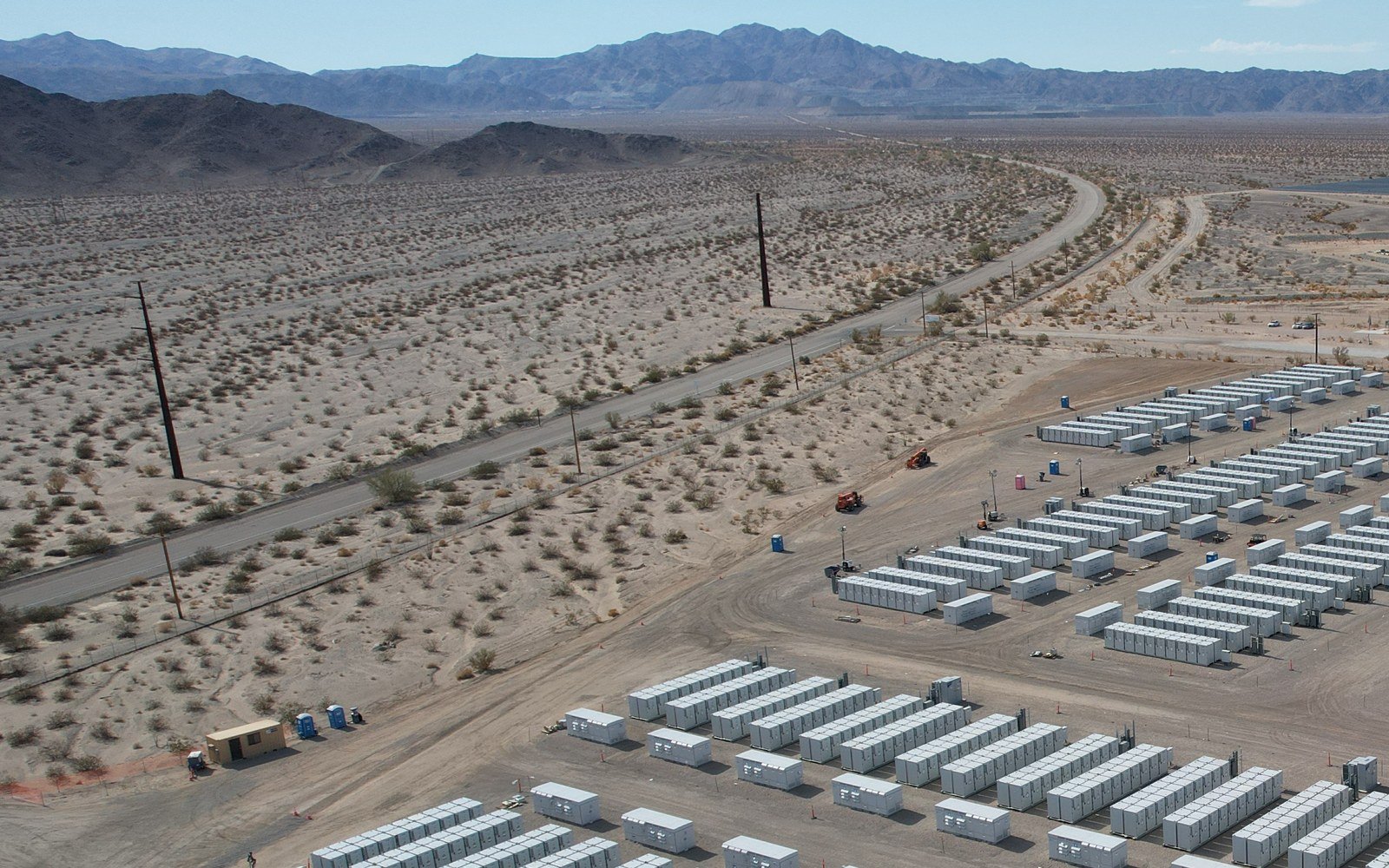
The Saudi Power Procurement Company has signed four storage services agreements covering 2,000 MW held for four hours, at a stated investment above 4.35 billion riyals, with two consortia to build, own and operate the plants.
Four battery energy storage plants have been placed under storage services agreements in Riyadh, the first group of such projects procured by the Saudi Power Procurement Company, which the Ministry of Energy oversees as the country's principal buyer of electricity. The agreements were signed at the Ministry of Energy on 20 August and set out on the official record the following day. Combined capacity is 2,000 MW held for four hours, and total investment is stated at more than 4.35 billion Saudi riyals, about 1.16 billion dollars.
Each of the four plants is rated at 500 MW for four hours. Al Muwyah and Haden are in Makkah Region and Al Kahafa is in Hail Region, and those three were awarded to a consortium of Saudi Energy, Acwa and Al Sharif Contracting and Commercial Development Company. Al Khushaybi, in Qassim Region, went to a consortium of Engie and Haji Abdullah Alireza and Company. All four are procured on a build, own and operate basis.
Storage bought as a service rather than as an asset
The procurement structure is the part worth reading for anyone who works on these contracts. The buyer is not purchasing batteries and is not letting an engineering, procurement and construction contract for them. It is buying a storage service across a term, from a company that finances, builds, owns and operates the plant and carries the performance obligation for the whole of that term. Acwa states a 15-year agreement for each of its three plants and puts the storage capacity of each at 2,000 MWh, 6,000 MWh across the three. The term of the fourth has not been published.
On that model the risk sits in a different place. Availability, round trip efficiency and the rate at which the cells degrade become obligations measured against a schedule year after year, rather than matters to be closed out at completion. Practical completion stops being the end of the developer's exposure and becomes the start of it, and the arguments that arise are about measured performance over time rather than about defects at handover.
Where a plant is bought as an asset, the contractor's exposure is heaviest up to handover. Where the same plant is bought as a service across fifteen years, handover is where the exposure begins.
Energy storage systems has become an essential part of how the Kingdom is developing its power system, rather than simply an addition that comes after renewable energy projects are in place. These plants will hold energy generated through the day and release it when demand reaches its peak. We are delivering them in close step with the Ministry of Energy and the Saudi Power Procurement Company.
Omar Al Hassan, chief executive for Saudi Arabia at Acwa
What the plants are for
The stated purpose is to hold energy produced during the day and release it when demand peaks, so that solar and wind output can be taken onto the system instead of being curtailed. The official record ties the programme to an aim of reaching a generation mix of approximately 50 per cent renewable energy by 2030, against electricity demand that continues to grow.
Storage of this class is not new to the winning developer. Acwa points to Tashkent Riverside in Uzbekistan, where 770 MWh of batteries is paired with 200 MW of solar, and to the Red Sea Project on the Saudi coast, which runs on 1,227 MWh and supplies a development of destination scale with no grid connection at all. Across the country the company holds 41 assets and states a mandate from the Public Investment Fund to develop around 70 per cent of the national renewables pipeline.
What has not been given
No construction contractor has been named for any of the four plants and no battery supplier has been identified. No construction programme has been published, and no date has been given for commercial operation at any of the sites. The 4.35 billion riyal figure has not been broken down between the four locations, or between plant, grid connection and civil works, and no storage tariff has been published for any of them.
For contractors and consultants working in the country, the item to watch is the award of the construction packages beneath these agreements. Four plants of identical rating, tendered together and let to two consortia, invite a repeating design and a repeating build. Whether that repetition reaches the supply chain, or stops at the financing, will show in who takes the first site awards.