
Middle East Business
Enabling works start on Abu Dhabi's 6,000 seat performing arts venue while the main contract bids are still being evaluated
By Staff Writer | 25 August 2026
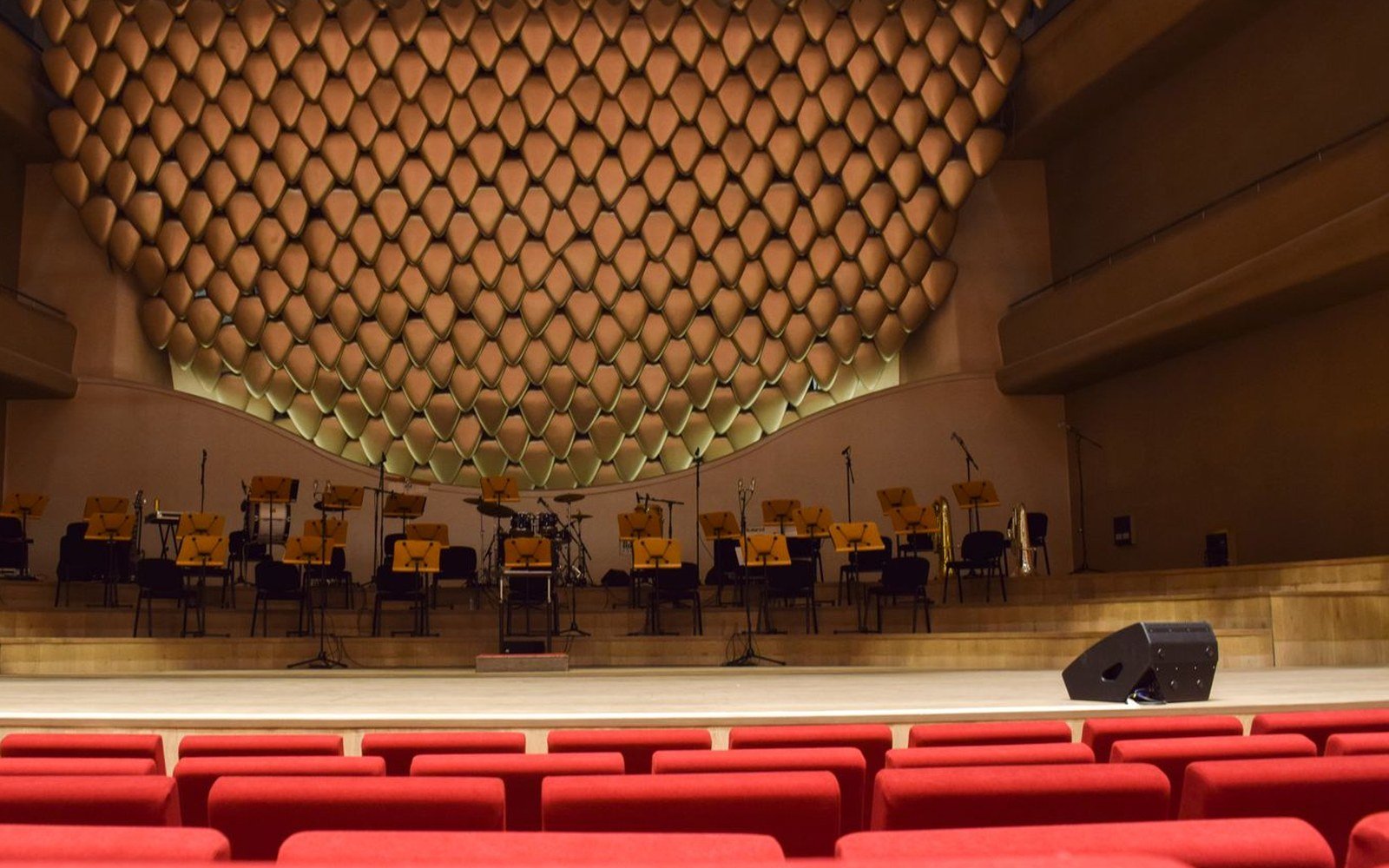
A piling and marine contractor has begun the enabling works on Dar Al-Funoon near the Saadiyat Cultural District. The venue is commissioned by the Department of Culture and Tourism and is scheduled to open in 2030.
Work has begun on the ground at Dar Al-Funoon, the performing arts venue planned near the Saadiyat Cultural District in Abu Dhabi. The Abu Dhabi based piling and marine contractor APCC has started the enabling works. The client is the Department of Culture and Tourism, Abu Dhabi, and the architect was the late Frank Gehry, who also designed Guggenheim Abu Dhabi.
The published brief is four performance spaces: a multipurpose hall seating more than 2,000, an open air amphitheatre of 3,500 seats, a 400 seat studio theatre and a 250 seat jazz venue, giving more than 6,000 seats in total. Opening is scheduled for 2030. On completion it would be among the largest performing arts venues in the region.
Enabling works ahead of the main award
The sequence is worth stating plainly, because it is the part that carries risk. The enabling works are under way while bids for the main construction contract are being evaluated and have not been awarded. That is a common arrangement on a scheme of this scale and it has a predictable consequence: the enabling contractor is working to a design that the main contractor has not yet accepted, and the interface between the two packages is defined by the employer rather than negotiated between them.
Where enabling works run ahead of the main award, the party that inherits the excavation had no say in how it was formed. Whatever the main contract says about the condition it is handed over in becomes the first document anybody reads when the two do not match.
The building is a Gehry design, which means curved and irregular geometry carried through the substructure as well as the envelope. Piling layouts that follow a non orthogonal plan are harder to set out and harder to verify against tolerance, and a piling package let before the main contractor is on board removes the usual route by which those tolerances are agreed between the two parties before the piles go in.
What has not been published
No contract value has been stated for the enabling works, no completion date has been given for that package, and the main construction bidders have not been named. Nor has the Department published a construction programme against the 2030 opening. Those omissions are normal at this stage and they mean the only firm dates in the public record are the start of the enabling works and the opening year.
It will become a permanent home for world-class performances, bringing together leading artists and creative talent from the UAE, the region and around the world.
Mohamed Khalifa Al Mubarak, Chairman of the Department of Culture and Tourism, Abu Dhabi, speaking when the project was announced in June 2026
Where it sits
The venue joins a cluster of cultural buildings on and around Saadiyat Island that has been under construction in stages for well over a decade. The Department has said the building is intended to run programming across the year rather than in seasons, and to support artist residencies and co-productions with institutions elsewhere.
Reported separately when the scheme was announced in June, the Department set out an economic case alongside the cultural one, resting on employment, the development of local creative talent and cultural tourism. No figures were attached to any of those three, and none has been published since.
The reader who works on projects of this size will recognise the position the job is now in. Ground is being moved on a landmark building whose main contractor is not yet appointed, to a 2030 opening that is four years out. The next thing worth watching is the main award, and how much of the design has been fixed by the time it is made.