
Tender
National Highways puts 7.9 billion pound maintenance framework to market
By Staff Writer | 25 August 2026
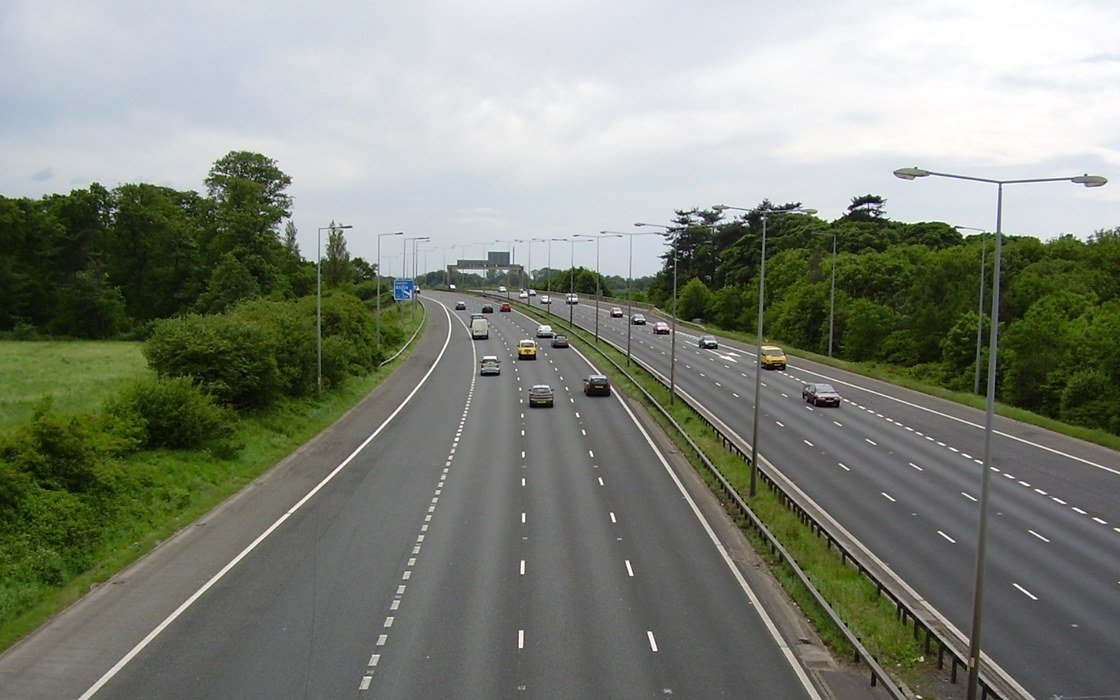
National Highways Limited has published a tender notice for the Maintenance and Response 2 framework, which will carry cyclical maintenance, reactive repair, incident response and winter operations across the strategic road network. The notice was published on 24 August 2026 at 1:05pm under the identifier 080335-2026, records a total estimated framework value of 7,960,713,652 pounds excluding value added tax, and divides the work into seven location based lots.
The procurement is run under the Procurement Act 2023 as a selective competitive flexible procedure. The framework is closed, admits a maximum of seven participants, and operates both with and without reopening competition. A single supplier will be appointed in each location, and each will also join an overarching framework whose stated purpose is resilience across the network if a supplier fails.
The seven lot values, all excluding value added tax, are South West 671,032,885 pounds, South East 1,094,387,452 pounds, East 977,448,602 pounds, Midlands West 799,379,156 pounds, Midlands East 726,467,978 pounds, North West 953,242,302 pounds, and Yorkshire and North East 901,667,512 pounds. Every lot runs from 6 January 2028 to 1 July 2037. The enquiry deadline is 12 October 2026 at 11:59pm and the award period ends on 26 November 2027.
The headline figure is not the sum of the lots
The seven lot values add to 6,123,625,887 pounds excluding value added tax. That is arithmetic on the published lot figures, not a figure the notice states. The framework total the notice does state is 7,960,713,652 pounds, which is 1,837,087,765 pounds higher, and the gross equivalent of that total is 9,552,856,382 pounds, exactly the net plus twenty per cent.
The notice explains the gap itself. It records that the total estimated framework value is greater than the aggregate total of the estimated value of all call-off contracts, and that the total includes a sum for inflation and a level of contingency across total framework spend. The contingency is there to accommodate costs if work has to be reallocated, and to cover amendments to call-off contracts. A bidder pricing a single lot prices against the lot figure, not against a seventh of the headline.
Two routes for moving work, and both are failure routes
The framework carries two mechanisms for reallocating work once it is running, and the notice describes both in terms of a supplier that cannot deliver. The first is award without further competition, available where a call-off contract fails and work is needed while a secondary competition is run, or where the programme is close to expiry and a competition would not be practicable. The contract documents are said to set out how the best supplier for that award is identified.
The second is secondary competition. Where a supplier cannot deliver its call-off contract, that contract may be terminated and a competition held among the remaining framework suppliers for the remaining term. Both mechanisms explain why the framework has to outlast every call-off contract under it, which is the reason the notice gives for the duration: the call-off contracts are anticipated to run for approximately eight and a half years each, from starting dates staggered over about twelve months.
What is in scope, and what the notice leaves out
The notice lists cyclical maintenance, reactive maintenance to address urgent needs, incident response, severe weather operations and winter maintenance, operational roadside technology maintenance and schemes, and selected asset renewal works. The renewal works are not exhaustively defined but the notice names road markings, soft estate, lighting, road signs, road restraint systems and fencing. The network is described on the notice as more than 4,500 miles of motorways and major A roads.
That mix puts three different businesses inside one lot contract. Cyclical maintenance and asset renewal are programmable work, planned and priced against quantities. Incident response and severe weather operations are standby obligations, where the cost driver is availability rather than output. Operational roadside technology maintenance is a third discipline, closer to systems support than to civils, and the classification list on the notice reaches into information technology maintenance and tunnel operation services to cover it.
The notice names no form of contract and gives no payment mechanism, so the balance between a target cost, a schedule of rates and a lump sum for standby availability is not visible from it. It publishes no award criteria and no weightings. It records that award rules, total tender scores and preferencing will decide which call-off contracts a successful supplier receives at framework award, but the rules themselves sit in the tender documents. There is no statement of how the eight and a half year term is to be inflated, only that a sum for inflation sits inside the ceiling. Tendering is through the National Highways eSourcing portal, where the conditions of participation documents carry the commercial substance.