
Technology and AI
A watchdog sues four agencies for the rules that decide which models may be released
By Staff Writer | 4 September 2026
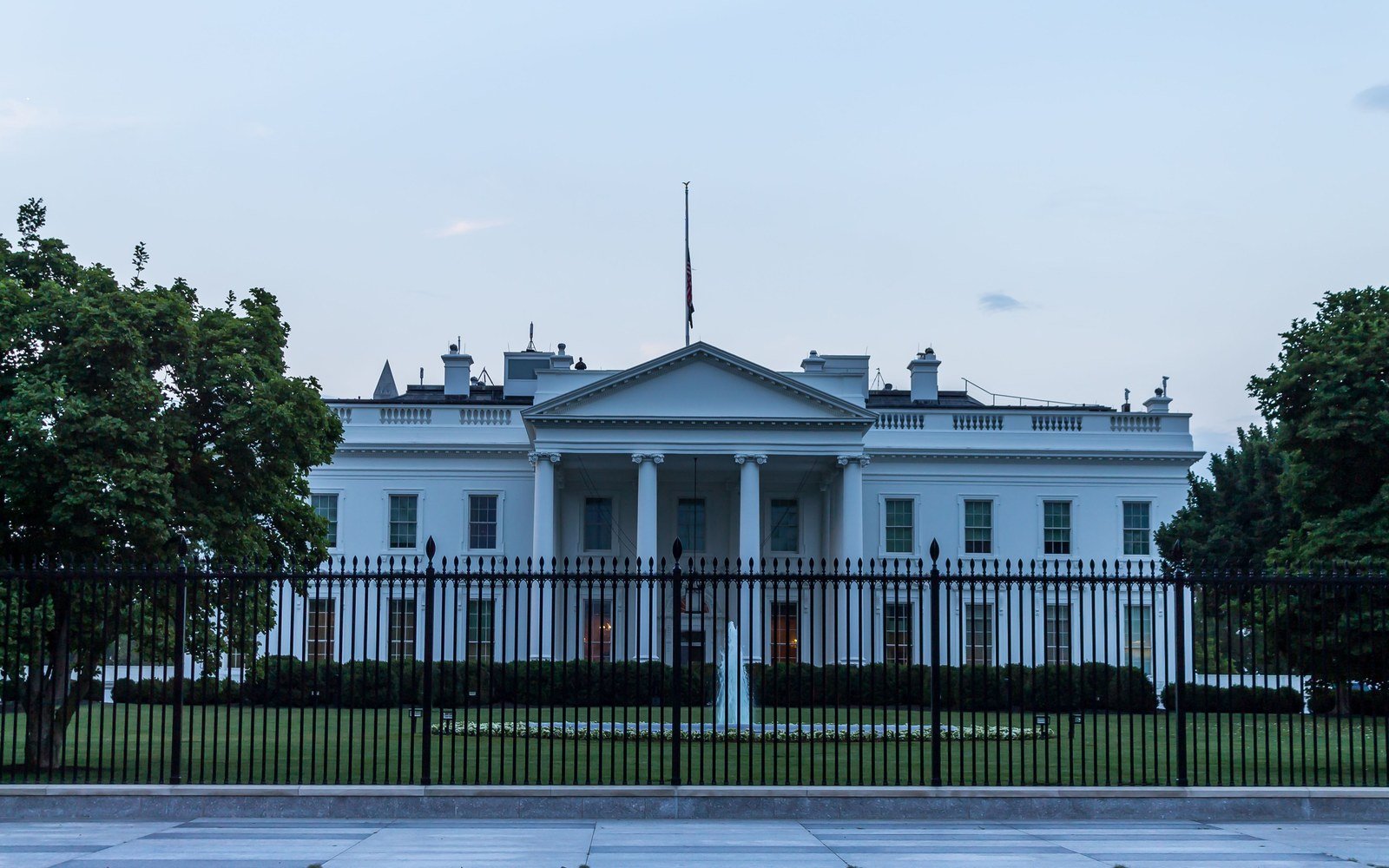
A non-profit has filed a Freedom of Information Act suit in Washington to force disclosure of the framework the executive branch now uses to review frontier artificial intelligence models before release, the companies that have signed up to it, and the legal authority behind it. It wants the records by 30 September, and a California state senator has told the court why the date matters.
The complaint was filed on 1 September 2026 by Protect Democracy Project, Inc. in the United States District Court for the District of Columbia, case 1:26-cv-03064. The defendants are the Office of the National Cyber Director, the Office of Science and Technology Policy, the Department of Commerce's Bureau of Industry and Security and the Department of the Treasury. The claim is brought under 5 U.S.C. section 552 to compel expedited disclosure of what the complaint calls the rules by which the federal government now governs the most consequential technology of this era.
The complaint's account of those rules is short. In June, it says, the Department of Commerce gave a leading developer ninety minutes to comply with a directive that resulted in the suspension of worldwide access to its most advanced models. In July four agencies launched a standing government and industry coordination body called GOLD EAGLE with nothing visible to the public but a short press release. On 3 August the White House announced that it had completed a framework for reviewing models before public release, but declined to disclose what it contains, who has agreed to it or the legal basis for it, while acknowledging that the framework is not classified. The framework and the programme terms, the complaint says, have been shared with a select set of companies and nobody else.
What is asked for, and by when
The plaintiff sent identical requests to the four agencies on 7 August seeking only unclassified material: the text of the framework, the terms of participation, the identity of the participants, the process and criteria by which access to frontier models is granted or withheld, and the contractual arrangements. It asked for expedited processing. No agency has produced any records. The Office of the National Cyber Director alone responded, denying expedition on 17 August, which the plaintiff appealed and now challenges.
A motion for a preliminary injunction filed with the complaint asks the court to order production by 30 September 2026. That is the date on which the liability protections in the Cybersecurity Information Sharing Act of 2015, twice extended and currently running to 30 September, are due to lapse unless Congress acts again. The complaint says those protections appear to be what makes GOLD EAGLE possible, and quotes a senior official at the programme's launch saying that without reauthorisation the effort is fundamentally challenged. Congress, it says, is being asked to vote on an extension without having been shown the programme's terms or asserted authority.
The state legislator's declaration
Six declarations were filed in support. One is from Josh Becker, a member of the California State Senate for the 13th District, which covers parts of San Mateo and Santa Clara counties, and chair of the Senate Select Committee on Economic Development and Technology Innovation. He describes Senate Bill 813, which would set up a California standards and safety commission and a process for designating independent verification organisations to set safety baselines, and contrasts its public passage through every version, hearing and amendment with the federal framework. He takes no position on the merits of any federal policy or on the conduct of any company.
First, the Legislature cannot harmonize with what it cannot see.
Josh Becker, member of the California State Senate for the 13th District, in a sworn declaration filed with the court
His declaration says the state bill may touch the same subject matter as the federal framework, including cybersecurity, model autonomy and exfiltration, that legislators must decide before final passage whether to incorporate, complement or depart from the federal baseline, and that no member of the legislature is permitted to read it. He adds that federal officials have taken the position that state laws may be pre-empted, so California is legislating under the shadow of a framework it cannot see, and that the session ends before ordinary Freedom of Information Act timelines would produce anything.
The suit does not challenge the framework. It asks only for the unclassified paper that describes it. Whether a court will order that paper produced in four weeks is the question now before the District of Columbia.
The plaintiff has said that anything it obtains will be published. If the government's position is that the material is unclassified but not for broadcast, the court will have to decide whether the statute allows that distinction.