
Middle East Construction
Saudi water industry moves six opportunities into seven factories worth SAR 2.8 billion
By Staff Writer | 4 September 2026
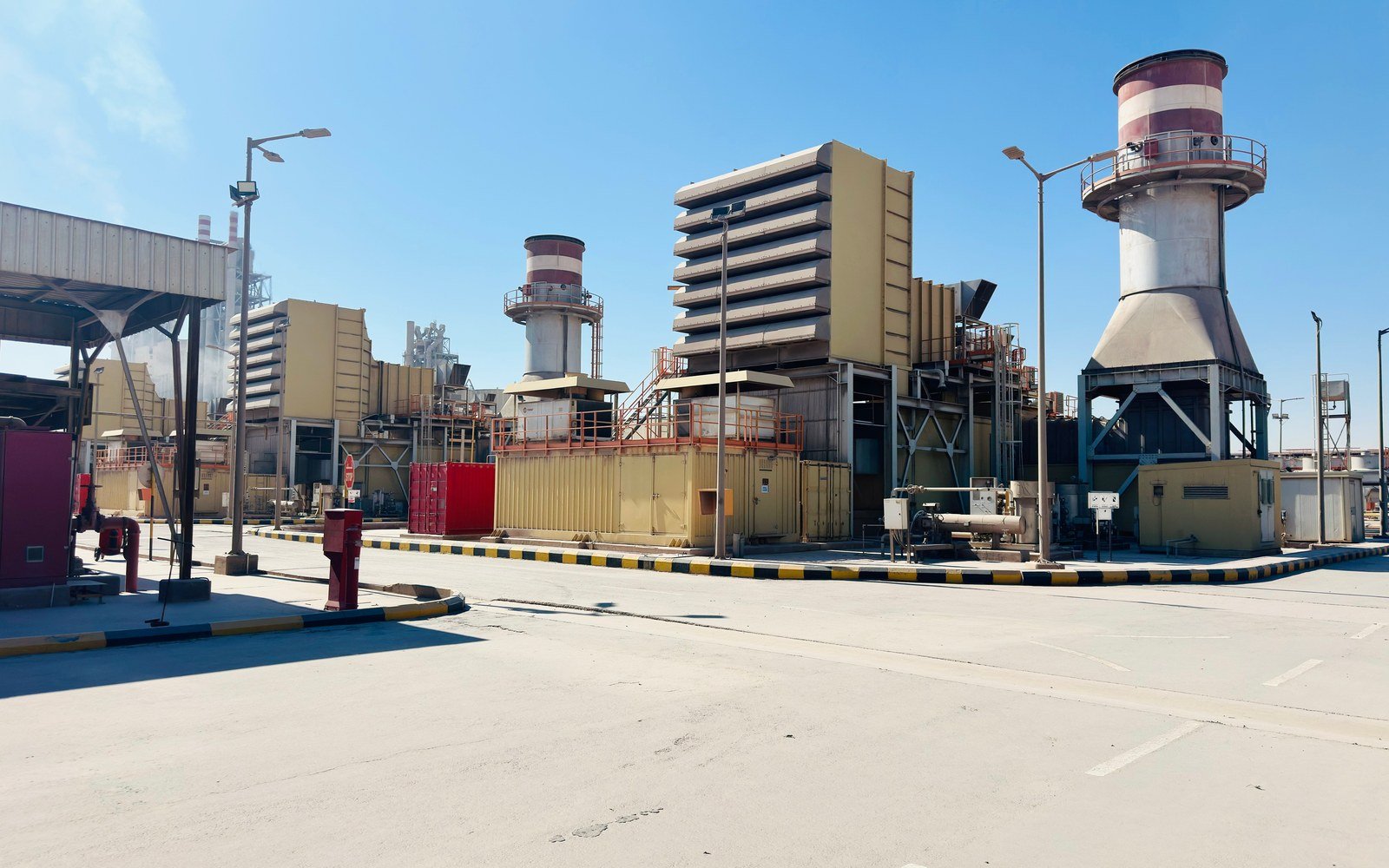
Three localisation agreements and two factory openings in Riyadh this week take six of eighteen water industry components from opportunity to implementation, with seven plants across four cities and total investment of SAR 2.8 billion.
The Saudi Water Authority has moved six investment opportunities into what it calls the industrial implementation phase, five of them new, at a ceremony in Riyadh held under the title Localising the Water Industry: Knowledge Transfer and Capacity Building. Three industrial localisation agreements were signed and two factories were opened. The agreements provide for seven factories, and the authority puts total investment across the six opportunities at SAR 2.8 billion.
The seven plants are four Italmatch Chemicals factories in Wa'ad Al Shamal, Jubail and Jeddah, all scheduled to start production in 2028, with the Wa'ad Al Shamal site described as the company's largest industrial complex outside Italy; a Torishima high pressure pump factory in Jeddah; an Energy Recovery factory for energy recovery devices in Dammam, the company's only manufacturing facility outside the United States; and an alfanar factory in Riyadh for distributed control systems. The Dammam plant is expected to supply about one third of Energy Recovery's customers worldwide from the first quarter of 2027.
What the programme covers
The Water Industries and Services Localisation Programme carries 18 investment opportunities to localise 18 components, which the authority says represent about 90 per cent of the water industry's core components. The products named are reverse osmosis membranes, antiscalants, membrane cleaning chemicals, energy recovery devices, high pressure pumps, distributed control systems and SCADA systems. A Toray reverse osmosis membrane factory in Dammam began production in 2025, which brings the number of factories associated with the programme to eight.
Cumulative local demand for the 18 components is expected to exceed SAR 15 billion to 2033, with demand across the Middle East and North Africa estimated at about SAR 65 billion. The authority states that at least 70 per cent of the production inputs for the targeted components are available within the country, that the water sector supplier base has grown from 739 suppliers in 2022 to 3,441 in 2026, and that local content in the sector rose from 45 per cent in 2020 to 68.27 per cent in the first half of 2026.
The agreements require that no less than 70 per cent of the workforce in specialised positions be Saudi nationals. That is a contractual term of each localisation agreement, not a general labour rule, and it binds the investor who signed it.
The numbers attached to the six opportunities
The six opportunities now in implementation are expected to contribute about SAR 4.36 billion to gross domestic product to 2033 and to create 3,090 direct and indirect specialised engineering and technical jobs. Local demand associated with them is put at about SAR 11.37 billion, with export targets of between 20 and 50 per cent of production depending on the product. The authority also expects the cost of the targeted products to fall by 20 to 30 per cent and lead times for the targeted components to shorten by 50 to 70 per cent.
Across the full programme, attracted investment is expected to reach about SAR 11 billion by 2033 with about 12,000 direct and indirect specialised jobs. Two operational results are already claimed from earlier knowledge exchange: high pressure pump efficiency of 91 per cent, and locally produced reverse osmosis membranes that lifted the capacity of the Al Khobar plant from 600,000 to 700,000 cubic metres a day at no additional cost. The country has also exported locally made membranes to 27 countries.
Saudi Arabia was the largest water consumer and has now become an expert operator. It then became a source of expertise for manufacturers of the system's various components, bringing us to a new stage in which we become a partner in developing the next generation of technologies
Abdullah Al-Abdulkarim, President of the Saudi Water Authority
What is not yet published
No contract value, contractor or programme has been published for the construction of any of the seven factories, and the Italmatch production date of 2028 is the only start date given. The contracting mechanism for industrial localisation and knowledge transfer is overseen by the Local Content and Government Procurement Authority, so the terms an investor signs sit under that authority's framework rather than the water authority's alone. Anyone pricing supply into a Saudi water project from 2027 onwards should assume that the demand figures above are the authority's forecasts and that the local content percentages will be tested against them at tender.
The figure to hold on to is not SAR 2.8 billion. It is seven factories with published cities, and the date each one actually starts production is the measure of whether the localisation has happened.