
Contract award
One contractor takes both Trinity House lighthouse painting contracts
By Staff Writer | 31-08-2026
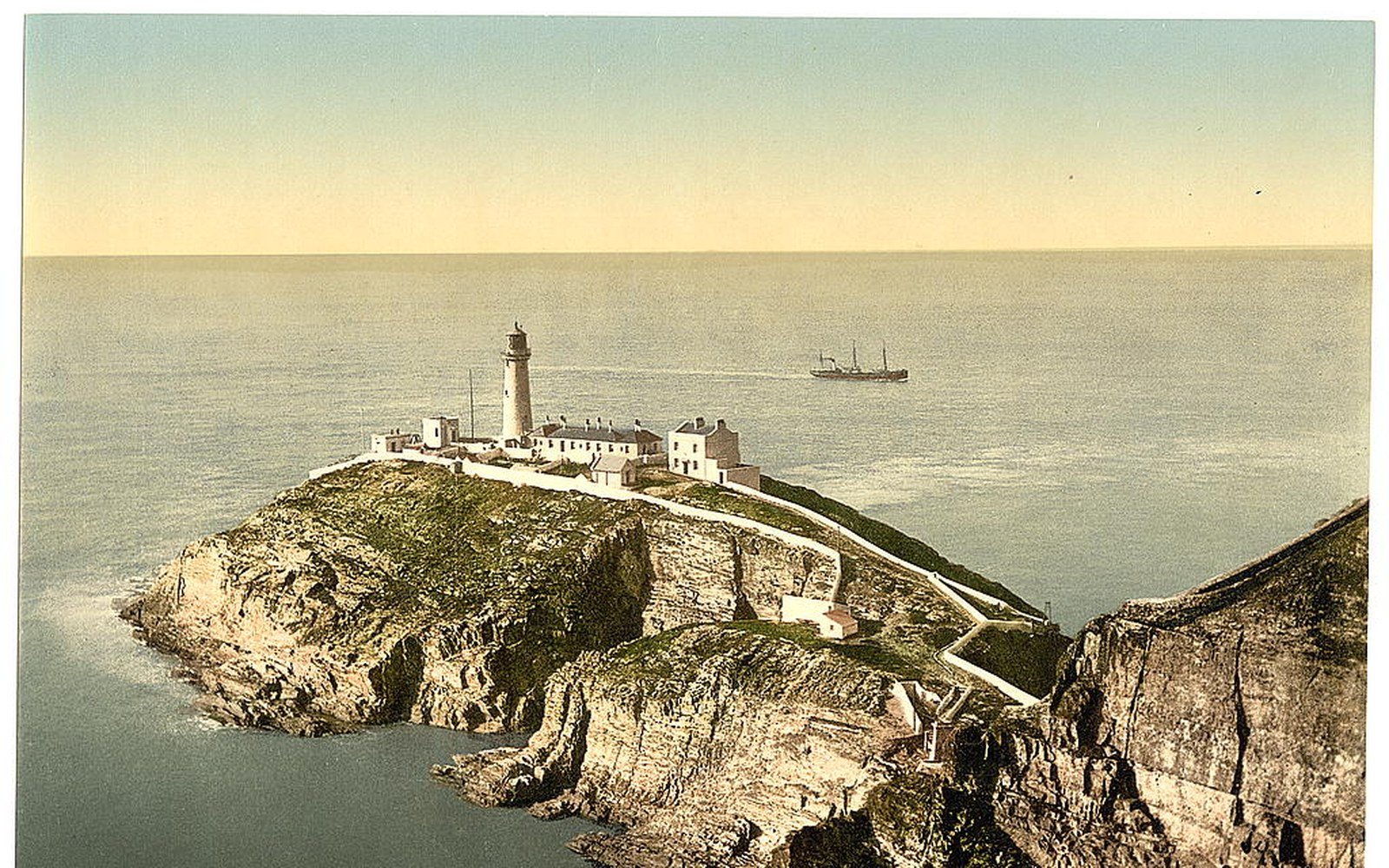
Trinity House has let the painting of two of its lighthouses to Ian Williams under a single restricted procedure. The South Stack contract is recorded at 105,685.75 pounds and the Flatholm contract at 76,862.76 pounds. Both award notices were published on the United Kingdom contract finding service on 30 August 2026, at 13:40 and 14:20, against tender reference T0422.
The two notices carry separate contract references, CM115 for South Stack and CM116 for Flatholm, and separate scopes stated in one line each: for the painting of South Stack Lighthouse, and for the painting of Flatholm Lighthouse. Both are classified as painting work and as works contracts. Both record the award date as 30 July 2026, the same day the tender period closed. Both name the supplier as Ian Williams, of IW House, Quarry Road, Chipping Sodbury, and record that firm as a large enterprise. Both were nevertheless marked as suitable for small and medium sized enterprises when they went out.
The interesting part of these two notices is not the money. It is that the same contractor takes both sites and the two programmes are placed a full year apart.
Two contracts, two summers
The South Stack works run from 15 September 2026 to 31 October 2026. The Flatholm works run from 14 September 2027 to 31 October 2027. Six weeks each, in the same part of the calendar, twelve months apart.
Sequencing them that way is a decision about resource rather than about programme float. Painting an offshore tower is not continuous work. It depends on the weather window, on the sea state that allows a landing, and on temperature and humidity limits for the coating being applied. Two towers on two separate stretches of coast in the same autumn would compete for the same specialist gang and the same access days. Splitting them across two years gives each site the whole of its own window.
The two structures
Trinity House records South Stack Lighthouse as built in 1809, marking an islet off Anglesey at the north west tip of Wales. The tower is 28 metres and the light sits 60 metres above mean high water. The authority describes South Stack Rock as separated from Holyhead Island by 30 metres of turbulent sea, with granite cliffs rising sheer from the sea to 60 metres. It was electrified in 1938 and automated in 1983.
Flatholm Lighthouse is recorded as built in 1737, in the shipping lanes where the Bristol Channel meets the Severn Estuary, with the tower re-engineered in 1820 and again in 1866. That tower is 30 metres and the light sits 50 metres above mean high water. It was automated in 1988.
Neither site is reached by road. Both are rock and island stations where every litre of paint, every item of access equipment and every operative arrives by boat or by air, and leaves the same way. That is what a six week period buys on a job whose painted area would take days on a mainland structure.
How the work was bought
Both contracts were let by restricted procedure, which means the buyer ran a selection stage and then invited tenders from those who came through it. On an asset of this kind that is the ordinary route. The competence being tested at selection is not decorating; it is working at height over water, on an operational aid to navigation, without interrupting the light.
The buyer is Trinity House, of London EC3N 4DH. Both awards are recorded as complete on the tender side and active on the award side. No lot structure is published, and no framework is referenced on either notice. The two contracts stand on their own.
The notices publish no breakdown of preparation, coating specification or access provision, and no figure for the value of any option or extension. What is on the record is the price, the period and the contractor.