
Middle East Business
Riyadh prime office rents rise 3 per cent as Grade A stock stays full
By Staff Writer | 31 August 2026
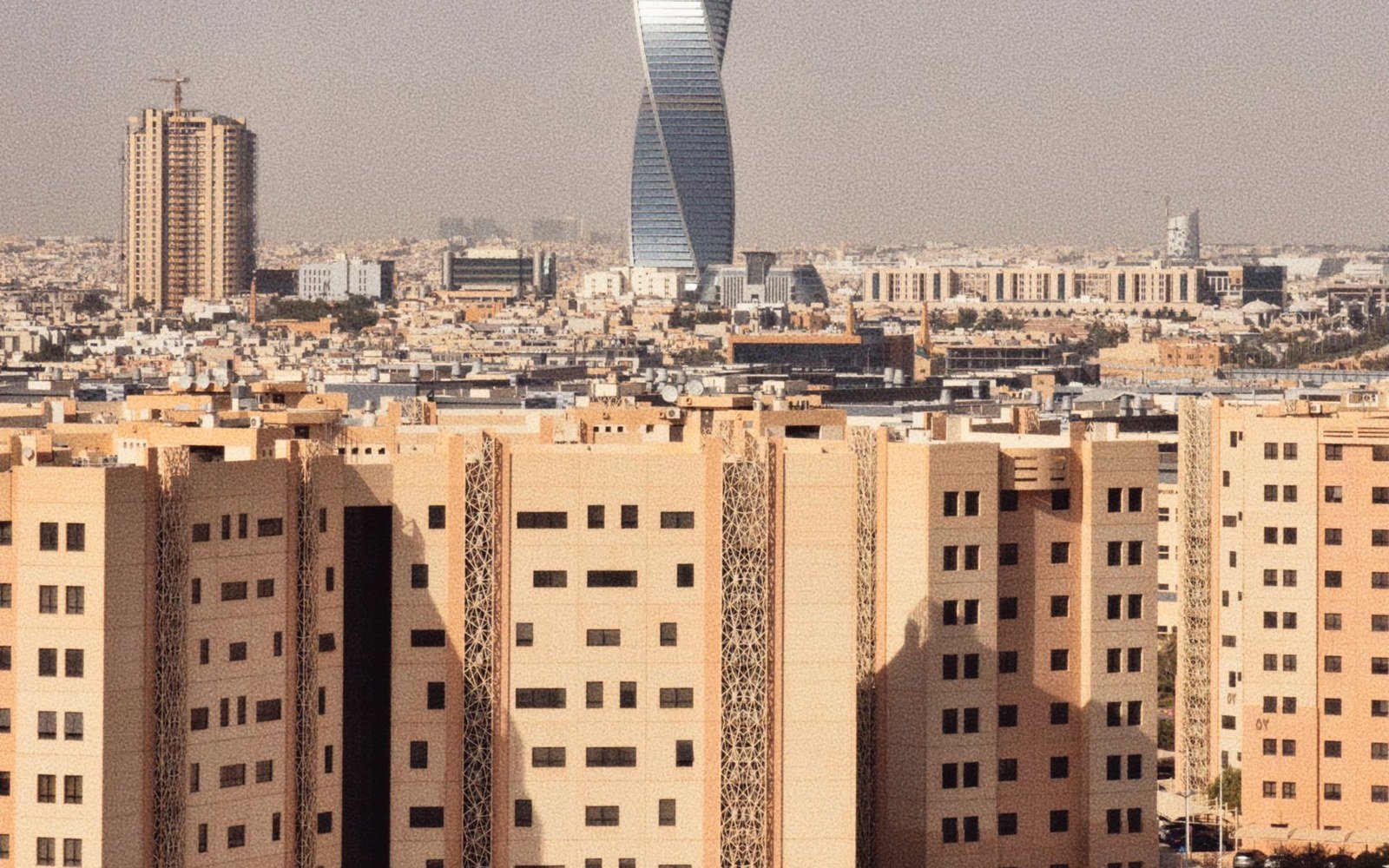
Prime rents reached SR3,320 a square metre in the second quarter, and flexible space is filling the gap left by a shortage of premium floors.
Prime office rents in Riyadh rose 3 per cent in the second quarter of 2026 to SR3,320 a square metre, on figures published in a second quarter review of the Saudi real estate market by a commercial advisory firm. Grade A occupancy in the leading business districts, including the King Abdullah Financial District, sits near capacity, and the review records demand from international firms as the pressure holding it there.
For anyone taking space, or building it, the number on its own is less useful than the shape of the demand behind it.
Three sources of demand, arriving at once
Elias Abou Samra, chief executive of Rafal Real Estate Development Co, set out three drivers. The first is the wave of government entities created under the national mega-project programme, which produced anchor demand through the years after 2020. The second is the Regional Headquarters Programme, which he said has brought more than 600 companies to Riyadh, and whose tenants are now settling and taking more floor space rather than less. The third he described as the one people miss: a generational change in family businesses, with new leadership moving out of Grade B and C buildings into Grade A to match the standard their counterparties expect.
Five years ago, demand was led by government and local firms experiencing double-digit staffing growth. Today, multinationals are driving the expansion, but the real story is the layering, government anchors, regional headquarters tenants, and modernizing family businesses are all competing for the same premium stock.
Elias Abou Samra, chief executive of Rafal Real Estate Development Co
Three distinct groups chasing one grade of building is what a 3 per cent quarterly rise looks like from the inside. It is a supply problem expressed as a price.
Serviced offices, coworking and other short-form arrangements are being taken by occupiers who either cannot secure Grade A floors or will not sign a long lease for them. That covers multinationals setting up in the country, start-ups, and businesses growing faster than a five year commitment allows. The effect is that flexible space now sits inside the same competitive set as conventional leasing rather than beside it.
The specification has moved outside the building
Abou Samra also described a change in what occupiers ask for, and it is the part of this with direct consequences for a design team.
What they're all asking for now goes beyond the four walls. Tenants want mixed-use integration, retail, food and beverage, green spaces, and even residential within walking distance. And critically, they're prioritizing proximity to Transit-Oriented Developments.
Elias Abou Samra, chief executive of Rafal Real Estate Development Co
Proximity to transit is a site selection criterion, not a fit-out one, and it is decided years before a lease is signed. A scheme that cannot answer it is competing on rent alone against buildings that can answer it and hold their rent.
What it means for programme and cost
Tight Grade A supply with rising rents is the condition in which occupiers accept earlier commitments, which pulls pre-lets forward and firms up the funding case for new towers. It is also the condition in which a delay to practical completion is expensive in a way that shows up on somebody's balance sheet immediately, because the tenant has nowhere else at that grade to go and the landlord has a rent it can no longer collect on time.
The figure to watch next is completions. Rents at this level are a signal to build, and the question for 2027 is whether the pipeline arrives evenly or lands at once.