
Contract award
SevenCapital takes over as main contractor at 100 Kensington
By Staff Writer | 18 August 2026
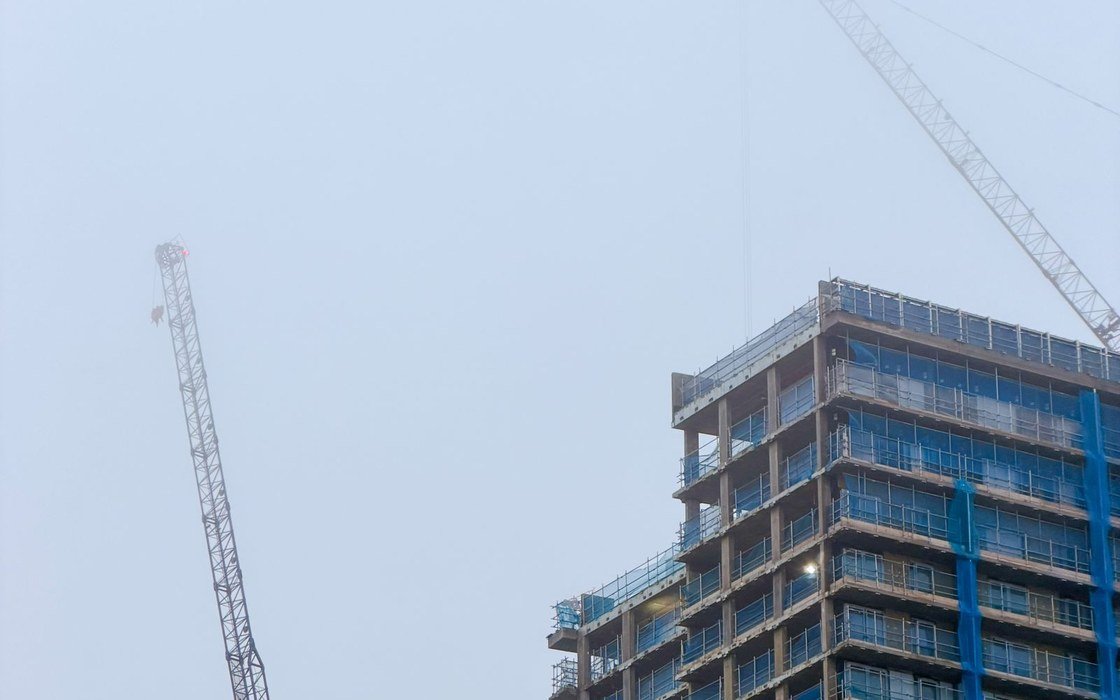
Work has restarted on the 462-home 100 Kensington scheme in west London after the developer took control of construction through a group company, which is now acting as main contractor in place of the administered contractor.
The developer said on 18 August 2026 that Seven Capital (Woodrow) Ltd is now acting as main contractor on the West Cromwell Road project, where construction had been halted. Companies House records that company as number 10393398, incorporated on 26 September 2016, so it is an existing group company rather than one registered for this purpose. The register also records Ardmore Construction Limited, number 01185592, and Ardmore Construction Group Ltd, number 11890551, as in administration.
A new senior construction management team is running the works under the developer's chief operating officer, James Moody, alongside the group's construction director and site management team. The developer expects more than 500 workers to be back on the project by the autumn. The scheme is described as more than 30 per cent complete.
James Moody said: "We had previously been aware of some of the financial issues facing Ardmore, which allowed us the time to develop a solid contingency plan to secure the completion of 100 Kensington should the effective administration happen, and at the same time diversify and extend SevenCapital's capabilities for future schemes."
Existing funding remains in place. Maslow Capital originally provided a 258 million pound four-year development facility for the joint venture between SevenCapital and MARK Capital Management, with the administered company appointed as main contractor at that time.
The development covers 1.7 hectares and will provide 276 private and 186 affordable homes across seven buildings, together with leisure, retail, office and community space. Its centrepiece is the 29-storey Oria tower, containing 129 private apartments and penthouses, which the developer says is due to top out in October. Phased completions are planned from the fourth quarter of 2027, with the scheme as a whole expected to finish around the end of 2027 or the beginning of 2028. John McAslan and Partners produced the architectural masterplan and Corstorphine and Wright were responsible for the detailed design. No contract sum has been published for the new arrangement, and the 500 million pound figure attached to the scheme is the value of the development rather than of any construction contract.
What the practitioner should take from this
Self-delivery by a developer after a main contractor fails is a recognised outcome, but it changes the risk position materially and the change is easy to miss. Under a building contract the employer buys a single point of responsibility for the works, including the co-ordination of the trade packages and, where the form provides for it, design liability. Where the employer's own group company steps into the contractor's position, that single point of responsibility now sits inside the employer's group. The practical question for anyone advising a funder, a purchaser or an incoming occupier is who now carries defects liability, what collateral warranties are available and from whom, and whether the professional indemnity and latent defects cover contemplated by the original security package still answers the new structure.
Continuity of the subcontract chain is the immediate commercial problem on any restart of this kind. Subcontractors on a project stopped by an administration are usually owed money by the insolvent company, hold retention that ranks as an unsecured claim, and have released their labour elsewhere. Getting them back means agreeing new orders with a new counterparty, and the terms on which they return, including whether any part of the old debt is addressed, sets the tone for the remainder of the job. A programme that assumes the original supply chain simply resumes at its previous rates and resourcing tends to be optimistic.
Finally, a contingency plan prepared before a contractor fails is worth more than the same plan prepared afterwards. What is described here is a developer that had time to put a delivery vehicle and a management team in place before the position crystallised. The parties to any contract with a counterparty in visible difficulty should be asking, in advance, what step-in rights exist, what direct agreements the funder holds, whether design and information deliverables are in the employer's possession rather than the contractor's, and what licences to use design material survive termination. Those are the provisions that decide whether a restart takes weeks or quarters.