
Milestone
Sellafield effluent plant reaches three quarters complete after crane lifts
By Staff Writer | 19 August 2026
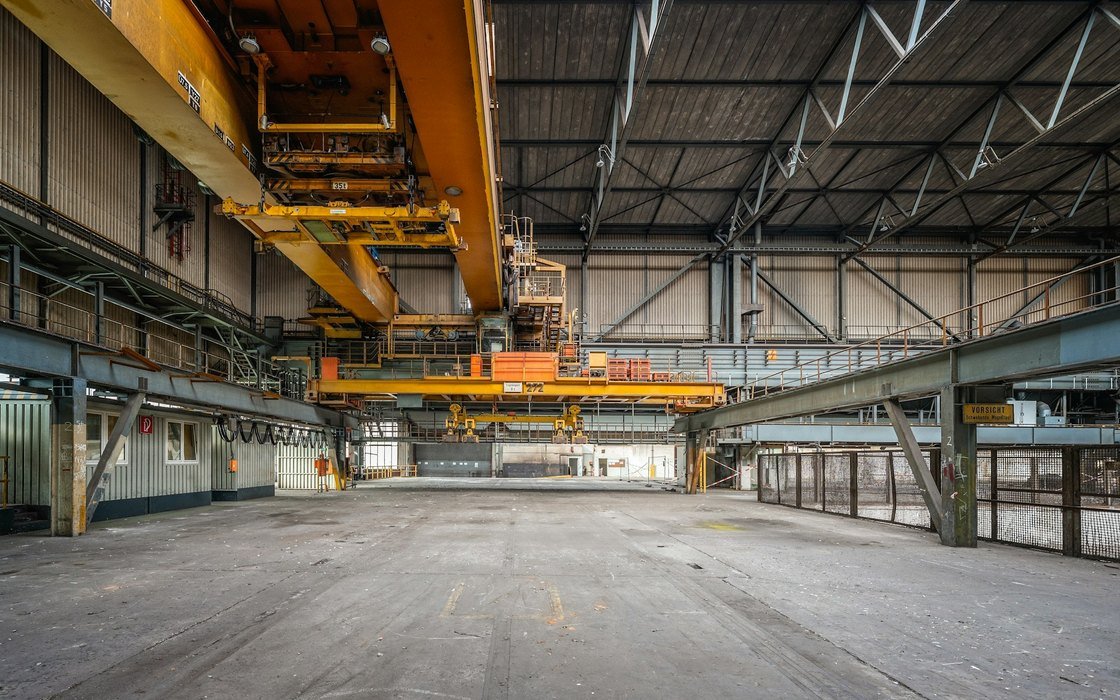
The SIXEP Continuity Plant at Sellafield is now three quarters complete after a series of major crane lifts placed 14 pump and valve modules and a 55 tonne gantry crane inside the finished building, with operations still planned to begin in 2029.
The milestone was announced on 18 August 2026 by Sellafield Ltd. The plant is being built through the Programme and Project Partners arrangement. Its main buildings are finished and weathertight, and work has moved to fitting out the interior and installing specialist equipment.
Each of the 14 pump and valve modules weighs 16 tonnes. The gantry crane installed alongside them weighs 55 tonnes and spans 21 metres across the plant.
The new plant will take over the duty currently performed by the Site Ion Exchange Effluent Plant, which has been in service since 1985. That plant removes radioactive material from water used in site operations before the water is discharged to sea, a function the site describes as acting as its kidneys. The replacement is expected to continue that work until at least 2060.
Steve Harnwell, managing director of the Programme and Project Partners, said: "After years of design, engineering and manufacturing, I'm delighted to see the plant's operational equipment arriving on site. Installing this equipment on a nuclear site is no mean feat. Our teams have had to thoroughly plan every detail."
He set the plant alongside the wider programme at the site, which includes stores for different types of nuclear material, processing plants and analytical facilities.
No contract value has been published for the equipment packages installed during the recent lifts, and none is stated in the announcement.
What the practitioner should take from this
A plant that is structurally complete and weathertight but only three quarters finished is at the point in its life where the commercial centre of gravity moves from the civils to the mechanical and electrical trades, and from the main works contractor to a long tail of specialist suppliers. That transfer is where programme risk concentrates. The building is no longer on the critical path; the delivery dates of manufactured equipment are, and those dates sit in supply contracts that were often placed years earlier on terms that do not mirror the main contract.
Heavy lifts of the kind described carry their own contractual furniture. A 16 tonne module and a 55 tonne gantry crane spanning 21 metres require a lift plan, a temporary works design, and a defined period in which no other trade may work beneath or beside the lift zone. Where several contractors share a building, the entitlement question is rarely whether the lift was properly planned but who bears the cost of the trades that had to stand down around it. That allocation belongs in the contract or in the site rules, and it is worth finding before the first module arrives.
The replacement duty is the point most often missed. The existing plant has run since 1985 and must keep running until its successor takes over, so the new plant cannot simply be completed; it has to be commissioned against a live process with no gap in service. Commissioning obligations of that shape usually turn on the client meeting its own preconditions, providing feeds, effluent, power and access windows on time. Practitioners should check whether the completion definition is physical, operational or regulatory, because a plant that is built but cannot be proved against the duty it is replacing is not complete in any sense that pays.
None of this suggests any difficulty on this project, which is reported to be on programme. These are the ordinary commercial features of a nuclear replacement plant approaching its fit out, and the moment to read them is now.