
Tender
Six consultants bid to design Dubai airport express rail line
By Staff Writer | 18 August 2026
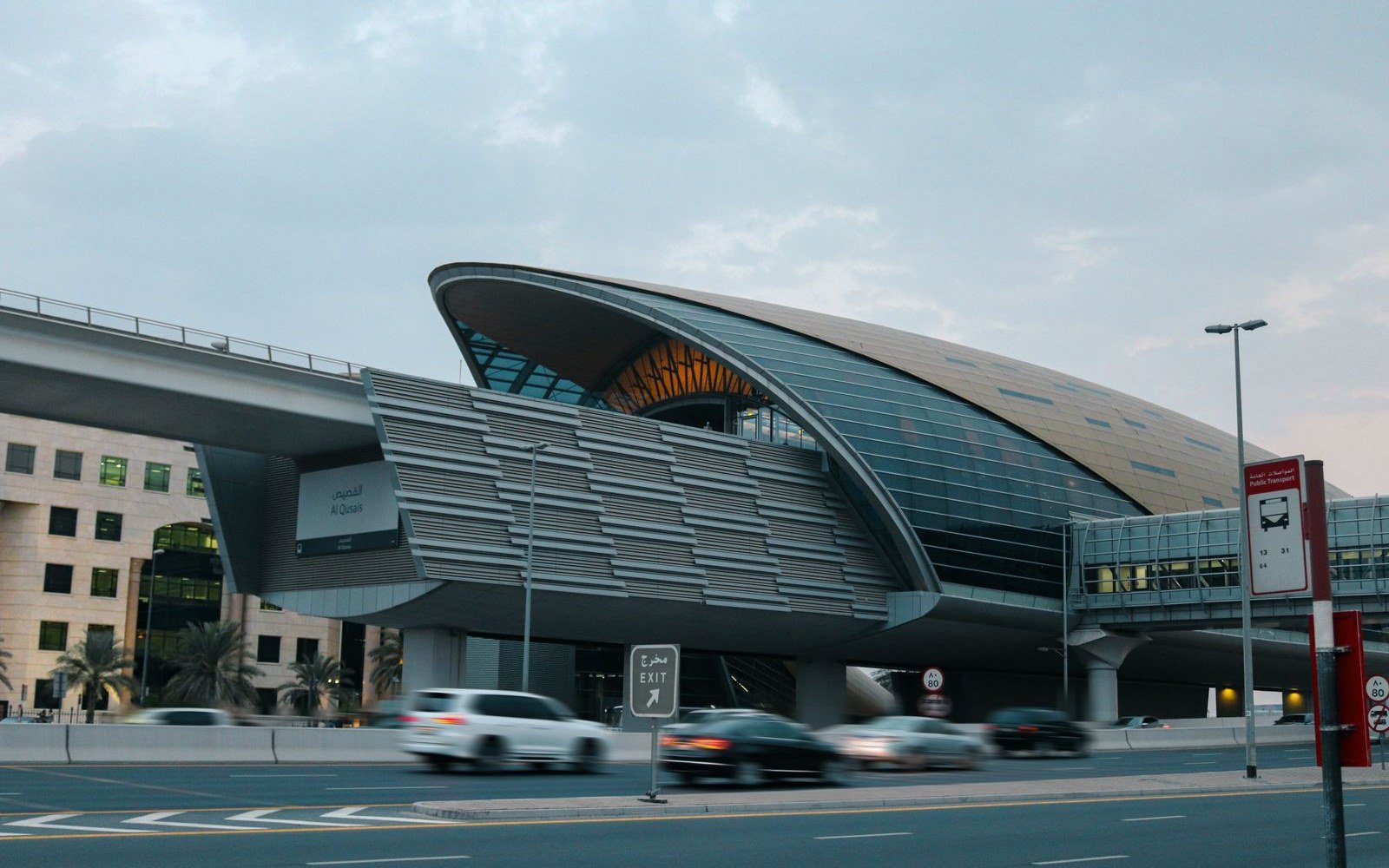
Dubai's Roads and Transport Authority has received six bids for the contract to study and design the Airport Express Line, a 55 kilometre rail corridor of five stations linking Dubai International Airport to Al Maktoum International Airport. No programme and no contract value have been published.
The authority confirmed the six bidders on 18 August 2026. They are Aecom with Surbana Jurong, AtkinsRealis, Jacobs, Parsons with Arup, Systra with Egis, and WSP. All six have worked on rail and infrastructure schemes in the country, among them Etihad Rail, the Dubai Metro and Expo 2020. When the tender was issued in April 2026 the authority invited consultants to bid for a contract to study and design the line, and the six firms that have bid are design and engineering consultancies rather than contractors, so what is being let at this stage is the design commission and not the construction.
The alignment runs 55 kilometres. It begins at the Red Line metro station serving Dubai International in Al Garhoud, passes through Al Jaddaf and then follows Al Khail Road to a new station at Jumeirah Village Circle, before continuing south to Al Maktoum International at Dubai South in Jebel Ali. Two spurs branch from the Jumeirah Village Circle station. One carries a station at Business Bay. The other connects to the Al Fardan Exchange metro station. Five stations are planned across the whole of it.
Stations on the line are reported to be designed for remote airline check-in, baggage drop-off and security screening, which places the scheme closer to a dedicated airport rail product than to an extension of the metro. That distinction matters for the design commission, because check-in halls, baggage handling and screening bring aviation security requirements into a station box otherwise sized for passenger flow alone.
The authority has not confirmed a timeframe for the project, and no figure has been published for the value of the design contract. Neither is recorded here.
The line is separate from the extension of the Route 2020 metro line to Al Maktoum International's West Terminal, which was tendered in January 2026 and runs to about three kilometres with two stations. The Blue and Gold Lines are under construction, with openings expected in 2029 and 2032. Etihad Rail's Al Yalayis station in Dubai is due to open at the end of September 2026, and its high speed service is intended to connect Dubai and Abu Dhabi in 30 minutes by 2030, calling at Zayed International Airport.
The wider context is the move of airport operations. Dubai plans to shift operations from Dubai International to Al Maktoum International in 2032, when the first phase there is complete. Al Maktoum International is scheduled to become the world's largest airport in 2057, with capacity for 260 million passengers a year, 400 boarding gates and five parallel runways, and it is to be the new home of Emirates.
What the practitioner should take from this
Letting the study and design as a standalone consultancy commission, ahead of any construction procurement, sets the design responsibility question that everything downstream will turn on. A consultant appointed directly by an authority ordinarily owes reasonable skill and care. A contractor taking the same design under a design and build or turnkey arrangement is frequently asked to warrant fitness for purpose, and where the original consultant is novated across, the contractor inherits a design produced to the lower standard while carrying the higher one. That gap is where the argument sits when the design proves inadequate years later. Anyone expecting to bid the works should read the novation terms and the professional indemnity position long before pricing, because the cover a consultant carries is written on a skill and care basis and does not respond to a fitness for purpose obligation.
The second point is interface risk, which on a scheme of this shape is usually the largest single source of claim. The corridor ties into an operating railway at Dubai International, at Jumeirah Village Circle and again at the Al Fardan Exchange station, and it follows a live urban arterial for much of its length. Possessions of the running railway, third party approvals and utility diversions are the events that move a programme, and they are rarely within the control of the party that carries them. The provisions worth settling at the earliest stage are those dealing with access and possession dates, sequencing against other contractors, the consequences of a late approval, and the notice periods on which an entitlement to time depends. A design commission let this far ahead of the works lets the client fix those positions while the drawings are still being produced, which is cheaper than fixing them by variation once the corridor is occupied.