
Tech and AI
Researchers model the 1,000-mile cloud that forms each Martian morning by Arsia Mons and find ice may be forming without dust
By Staff Writer | 25 October 2026
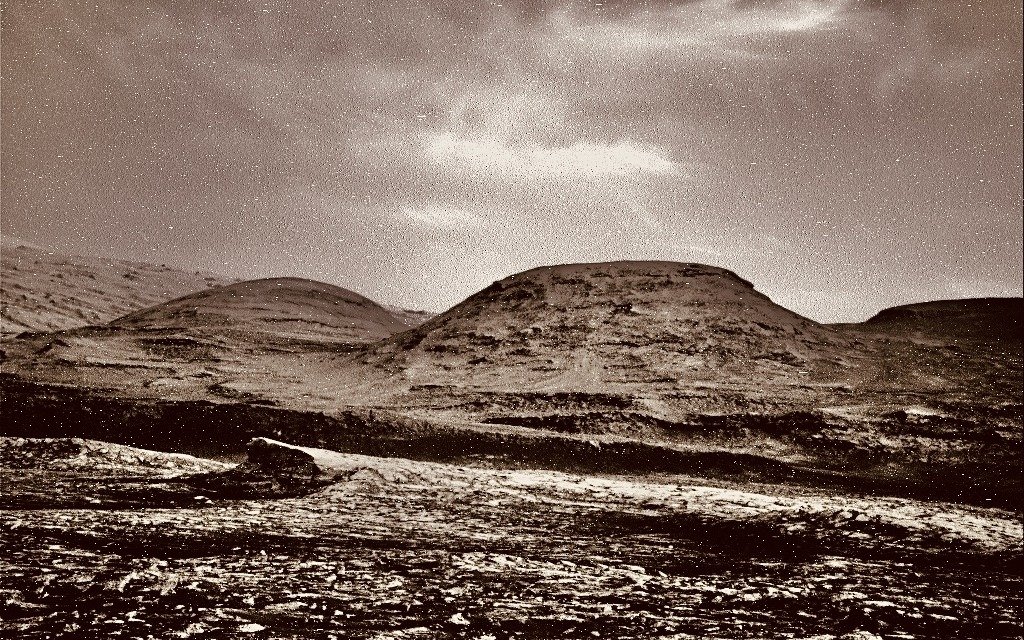
A Sorbonne-led team says the long, thin cloud can only be reproduced if water vapour freezes on its own, a process textbooks describe but no planet's atmosphere has been seen to produce.
Every morning in the Martian spring and summer, a thin white cloud appears beside the volcano Arsia Mons, stretches to more than 1,000 miles, or about 1,800 km, and then disappears. It returns the next morning and repeats the cycle for months. Planetary scientists know it as the Arsia Mons Elongated Cloud, and until now their models could not explain it.
A team led by Jorge Hernández-Bernal, a planetary scientist at Sorbonne Université in Paris, has now reproduced the cloud in a model for the first time. Their study, published in Nature Geoscience, concludes that the cloud may be formed by a process that has never been directly observed in any planet's atmosphere.
Ice with nothing to grow on
On Earth, cloud droplets and ice crystals usually form around tiny particles in the air, such as dust or sea salt. Mars is swept by global dust storms, and earlier models of this cloud relied on dust grains to seed it. When modellers tried that route for this cloud, they produced broad patches of haze or no long tail at all.
The new work points instead to homogeneous nucleation, in which water vapour turns directly into ice crystals without any particle to start from. The process needs extreme conditions, and Arsia Mons supplies them. Winds striking Arsia Mons, a volcano about 20 km high, set up waves in the atmosphere that throw moist air upwards, cooling it by about 30 degrees Celsius within minutes. In summer the air there carries very little dust, about 0.1 grains in each cubic centimetre, so there is almost nothing to absorb the vapour and humidity climbs to levels far above anything measured on Earth, and the vapour freezes out on its own.
It's akin to droplets of condensation appearing in the middle of a room, rather than on a window.
Jorge Hernández-Bernal, planetary scientist, Sorbonne Université, lead author of the study
Other places to look
Homogeneous nucleation has long been treated as something that happens in laboratories rather than in nature, because real atmospheres usually hold enough dust to seed clouds first. Showing that it can happen on Mars opens the question of where else it might occur, from the icy plumes of Saturn's moon Enceladus to the coldest, highest layer of Earth's own atmosphere over the poles.
Before this modelling, nobody knew that humidity on Mars could reach the levels the cloud appears to need.
The result comes from weather and climate models of Mars rather than from a measurement taken inside the cloud. It gives scientists a specific process to look for when the cloud returns each morning.