
Milestone
Charing Cross reopens after 20 million pound renewals closure
By Staff Writer | 17 August 2026
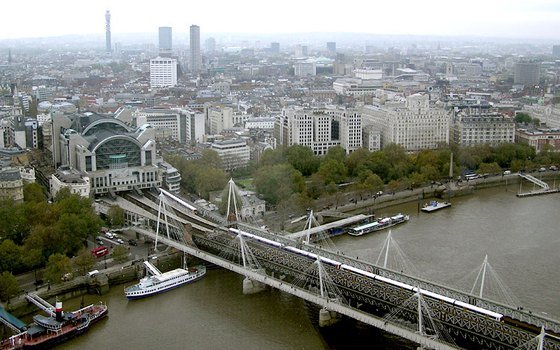
Services have resumed at London Charing Cross and Waterloo East after a 22 day closure for a 20 million pound programme of renewals, in which engineers replaced almost two kilometres of 36 year old track and rebuilt sections of platform at the West End terminus.
The completion was announced on 17 August 2026. During the closure engineers replaced almost two kilometres of track south of Hungerford Bridge, together with the switches and crossings, the moveable rails that allow trains to change paths. They renewed the wheel timbers, which perform the role of sleepers where the track runs over a bridge, and completed structural repairs to sections of the Hungerford bridge steelwork before repainting it.
Teams used the closure to rebuild sections of platform at Charing Cross, removing 540 tonnes of concrete and installing more than 2,000 square metres of glass reinforced plastic. They worked across all six platforms at once, demolishing sections, installing new steelwork and laying new surfaces. At Waterloo East, with the station closed, they cleaned, treated and repainted the footbridge steelwork and replaced window panels with self cleaning glass that admits more light and can be opened for ventilation.
The closure was planned over 18 months, with the renewals combined into a single 22 day programme. Taking the work in one extended summer holiday closure, when commuter numbers are around 20 per cent lower, was chosen over the alternatives of 60 weekend closures or four separate nine day closures.
We are pleased to have reopened the line between Charing Cross and London Bridge after 22 days of intensive work.
Scott Brightwell, Safety, Planning and Performance Director, South Eastern Railway
We know closing two of London's busiest stations for more than three weeks caused inconvenience for many customers, I am sorry for any inconvenience and thank you for your patience. Completing this essential work in one 22-day closure, rather than over 60 weekends, allowed us to carry out station improvement works that would, otherwise, have been impossible to achieve.
Scott Brightwell, Safety, Planning and Performance Director, South Eastern Railway
The successful completion of the Charing Cross and Waterloo East closure is one of the most significant achievements delivered by Southern Renewals Enterprise to date. It demonstrates the power of the Enterprise model, bringing together colleagues from across the SRE, Network Rail, Southeastern and our Ecosystem supply chain partners to safely deliver a huge volume of work in a single coordinated programme.
Liz Baldwin, Southern Integrated Delivery Director, Southern Renewals Enterprise
What the practitioner should take from this
The commercial question behind a full line closure of this kind is settled long before anyone lifts a rail. Choosing one 22 day closure over 60 weekends changes the cost of the work, the disruption payments and the risk profile all at once, and the three do not move in the same direction. Weekend working spreads the risk across many small windows, so a bad shift costs one weekend. A single continuous closure concentrates it: every activity sits on one critical path, and an overrun does not cost a weekend, it costs the reopening date and whatever the disruption payment rules price that at.
Practitioners working under integrated delivery arrangements should be clear about where liability sits when the parties are formally collaborating. Enterprise and alliance models pool resources across the infrastructure manager, the operator and several supply chain firms, and they usually adjust the ordinary allocation of risk. What they cannot do is make the question disappear. Where an overrun arises from the interaction of two workstreams run by different firms, the contract needs to say who carries it, and a pain and gain mechanism is a sharing formula rather than an answer to causation.
The scope here also shows why float in a closure of this length is spent, not saved. Structural repairs to a Victorian river bridge, platform demolition across six roads and track renewal all had to interleave in the same 22 days, and each has different weather sensitivity and different inspection dependencies. Where the works information fixes the sequence, the contractor's ability to reorder in response to a delay is limited, and any delay analysis should recognise that constraint rather than assume the ordinary freedom to resequence.
Nothing here suggests a dispute on this project. It is the ordinary shape of an urban line closure: a decision taken 18 months out, concentrated risk, and a reopening date that carries the whole programme.