
Contract award
Spencer Group wins Humber Bridge anchorage A frame replacement
By Staff Writer | 29-08-2026
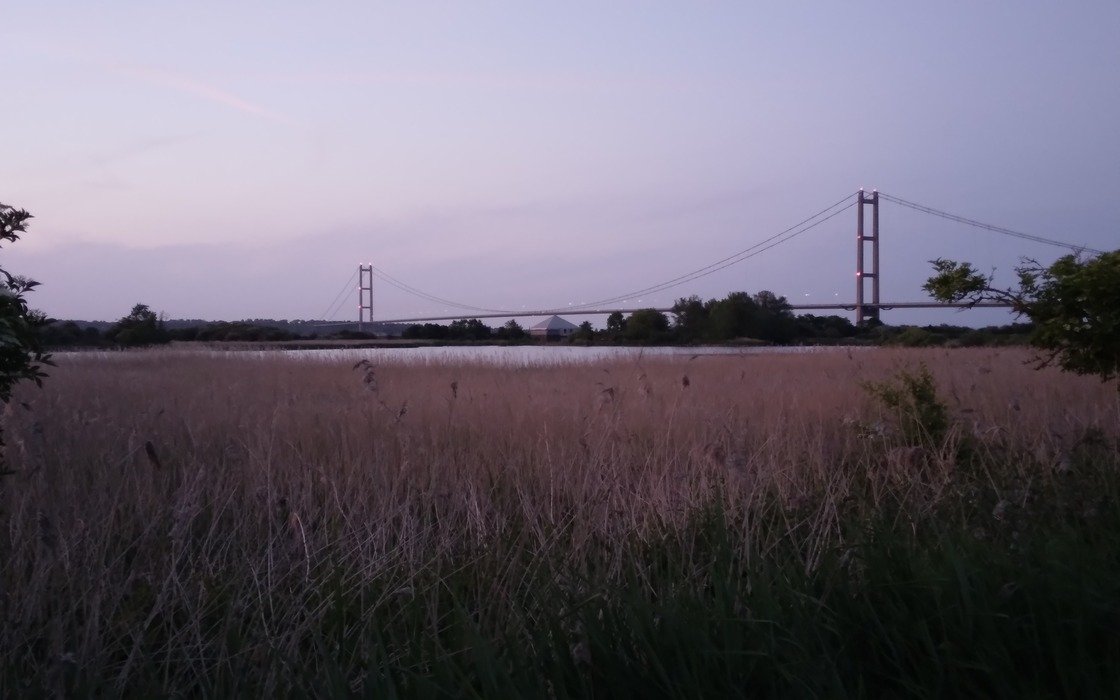
The Humber Bridge Board has named Spencer Group as the contractor for the design and construction of replacement A frames at both anchorages of the Humber Bridge. The contract award notice, identifier 082312-2026, was published on the United Kingdom tender service at 15:51 on 28 August 2026 and records an award value of 5,999,851 pounds excluding value added tax, and 7,199,821.20 pounds including it.
The award is recorded as pending rather than active. A standstill period runs to 9 September 2026 and the notice gives a scheduled signature date of 25 September 2026.
The scheme replaces the existing A frame rocker bearings at the Hessle and Barton anchorages with a pair of vertically orientated pendels and a wind shoe designed to take all current load and translation requirements.
What is being replaced
The buyer's own description is precise about the boundary of the work. The contractor is to develop the conceptual design already prepared for the scheme into a detailed design, then build it. That is a design and build appointment on a client concept, not a contractor led design from a blank sheet, and it explains why the award carries works as its main procurement category with services as an additional one.
The replacement swaps one movement mechanism for another. The existing arrangement uses A frames with rocker bearings at each anchorage. The replacement uses vertically orientated pendels together with a wind shoe. The notice states the replacement must accommodate all current load and translation requirements, which is the plain language way of saying the new arrangement has to do everything the old one does under the loads the bridge sees today.
Where the extensions sit
Two future stages are written into the award rather than left to a later procurement. The buyer records an option covering the design and replacement of the tower A frames, and the development of the full scope for an A frames monument that is to be retained and built as part of this contract. Separately, the buyer records a right to extend the contract for the replacement of the tower A frames.
The contract period runs from 16 October 2026 to 16 August 2028, with a maximum extent date of 16 October 2031. The gap between those two dates is where the tower A frame work and the monument would sit if the options are taken. Anyone reading the 5,999,851 pound figure as the total value of the programme would be reading it wrongly: it is the value of the awarded scope, and the notice puts two further tranches of work outside it.
The competition
The route was an open procedure under the Procurement Act 2023, and the award is recorded as above threshold. The bid statistics on the notice are worth reading. Two bids were received. One reached the final stage. Neither the successful bid nor any other final stage bid came from a small or medium sized enterprise, and none came from a voluntary, community or social enterprise.
A single final stage bid on a bridge engineering contract of this size is not surprising, but it is a fact the buyer has published about its own competition. The successful contractor is registered at Humber Quays in Hull, on the north bank, and the buyer is at Ferriby Road in Hessle, at the northern anchorage itself.
The notice names two anchorages, Hessle on one bank and Barton on the other. The awarded scope is confined to the A frames and their bearings at those two locations. The tower A frames are expressly held back, first as an option and again as a ground for extension, so the buyer has kept the choice of when to buy that work and from whom.
The classifications the buyer applied to the award are engineering services and civil engineering consultancy services alongside the works code. That mix, and the requirement to take a conceptual design through to a detailed one, tells a tenderer where the risk was placed. The contractor carries responsibility for making the client's concept work, and the tender identifier the buyer used for the procurement, MJ3030, is the reference to quote when the signed contract follows in late September.