
Contract award
Enfield awards 3.8 million pound roofing and scaffolding contract
By Staff Writer | 28 August 2026
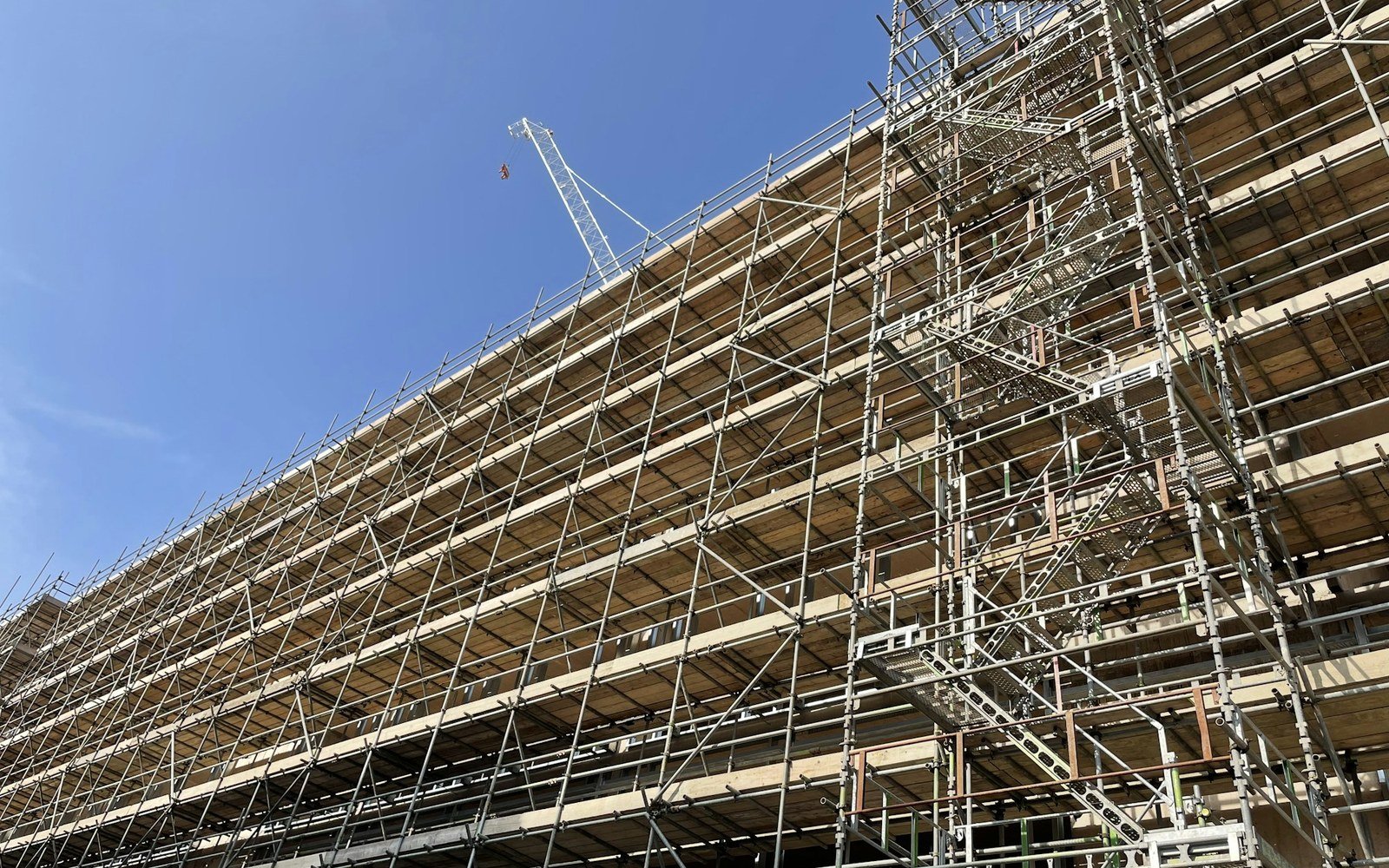
The London Borough of Enfield has awarded a roofing and scaffolding contract for its housing stock to Lura Constructions Ltd at 3,840,000 pounds net, or 4,608,000 pounds including VAT. The contract award notice, identifier 081824-2026, was published on 27 August 2026 at 2:47pm.
The award itself is dated 4 June 2026, almost three months before the notice appeared. The contract period recorded on the notice runs from 27 August 2026 to 31 March 2029, so the contract starts on the day of publication and the term is two years and seven months.
The council describes the appointment as covering responsive and planned roofing repairs, together with the provision of associated scaffolding. Putting the access into the same contract as the trade is the operative decision here, and it is the one that determines how disputes about waiting time and standing scaffold will be argued for the next two and a half years.
How it was let
The notice records the procurement method as limited, under a below threshold limited competition, with the Procurement Act 2023 as the legal basis. The council states in its own description that a mini-competition was undertaken to appoint a contractor to deliver roofing and scaffolding repairs and maintenance services for the borough's housing stock, and that the contract has been awarded to Lura Constructions Ltd.
The single classification carried by the award item is 45261910, roof repair. There is one lot and one supplier.
Why the scaffolding line matters
Responsive and planned roofing on a housing stock are two different operations sharing one contract. Planned work is programmed, batched by block or by street, and the access can be priced against a known duration. Responsive work is called out singly, often after a leak has already been reported, and the access has to be struck and re-erected each time.
Where scaffolding sits with a specialist subcontractor, the interface between the two is a common source of standing time claims: the scaffold goes up, the roofer is not released to the property, and the argument is about who carries the hire. Where the roofing contractor also provides the scaffolding, as here, that interface disappears into a single supply chain and the council's exposure changes shape rather than disappearing. It moves from an interface risk to a rate risk, because the standing charge is now priced inside the same schedule as the tiles.
What the notice does not tell a reader
The notice gives no property count, no number of blocks and no split between responsive and planned work. It does not state the pricing basis, so whether the 3,840,000 pounds represents a schedule of rates ceiling or a forecast spend cannot be established from it. It does not name the framework or dynamic market, if any, through which the mini-competition was run, and it does not record how many suppliers were invited or how many bid.
Nor does it explain the gap between the 4 June award date and the 27 August publication date. Under the below threshold arrangements the timing is not in itself irregular, but the effect is that the contract term as published begins on the day the market first learns of the appointment.
For contractors working the London housing repairs market, the readable part is the shape rather than the sum. A borough has chosen to buy roofing and its access together, below threshold, by limited competition, for a term that runs to the end of the 2028 to 2029 financial year.