
World News
American forces strike Iranian tankers off Jask and Kharg, and Tehran says it seized an American underwater drone
By Staff Writer | 9 September 2026
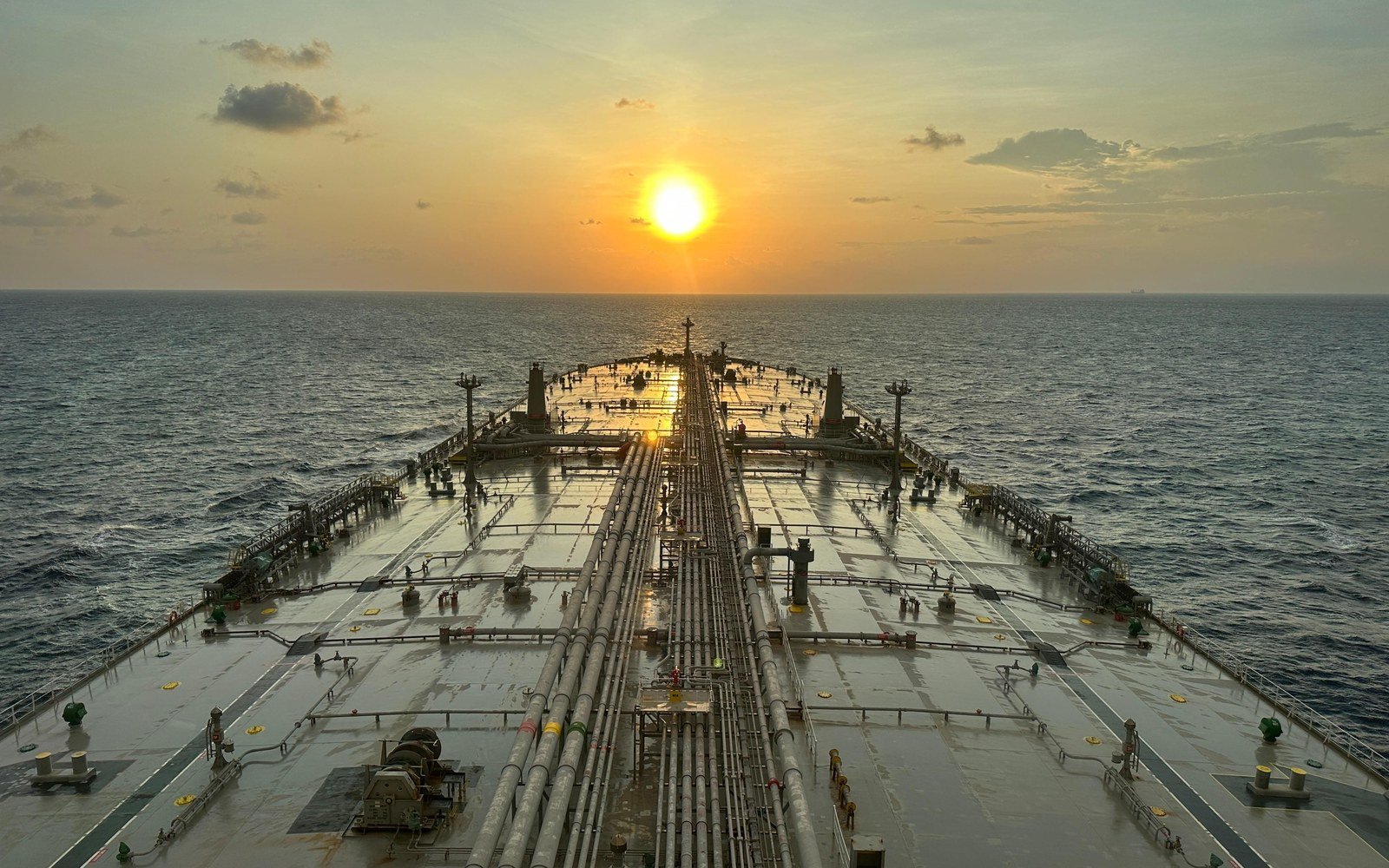
A United States official said the strikes answered new attempted missile attacks on a Navy warship. Iranian state television said tankers were hit near Jask and in the Kharg anchorage and that the crews were taken off by lifeboat. The Revolutionary Guard said it captured an unmanned submarine at the entrance to the Strait; Central Command said an older drone had malfunctioned. Each account is given as its own.
United States forces struck several Iranian tankers on Tuesday. A US official said the vessels were tied to the Islamic Revolutionary Guard Corps and that the strikes came in response to several new attempted missile attacks on a US Navy warship. Central Command had not issued a statement on the strikes by the end of the day and Tehran had not released an official one either; the detail below comes from the two sides' own media and officials, and is attributed to them.
Iranian state television reported that American forces attacked tankers near the southern port of Jask, on the Gulf of Oman, and near Kharg Island in the Gulf, from which most of the country's oil is exported. A state television reporter in Jask said one tanker was struck near the coast of Yekbeni and that a second was later attacked in waters off the port, with the crews of both taken off by lifeboat towards the Jask coast. State television separately reported an attack on a tanker in the Kharg anchorage, saying the crew was evacuated shortly after. Iran's Tasnim agency said a small tanker had been hit by a projectile four miles from Kharg and that there were no casualties, and the Mehr agency reported explosions heard on the island.
After the strikes, according to Mehr, the Revolutionary Guard's naval forces warned the crews of tankers in Kuwaiti and Bahraini ports to abandon ship because they would be targeted, and said the two countries were hosting American forces. That is the Guard's statement and its threat; neither government had responded by the time of writing.
The underwater drone
Earlier on Tuesday the Revolutionary Guard said in a statement carried by state television that its naval forces had captured one of the most modern unmanned submarines of the American fleet at the entrance to the Strait of Hormuz, at dawn, in what it called a complex intelligence and operational action. It said the vehicle had been delivered to the US fleet in 2025; Iranian media said its capabilities included seabed mapping, mine detection and inspection of submarine cables and pipelines. Central Command's account, given by Navy Captain Tim Hawkins, was that an underwater drone operated by US forces had malfunctioned more than a day earlier while surveying regional waters.
The defective drone was an older model that neither collected sensitive data nor carried any classified sonar or radar equipment. US operations in area waters continue.
Captain Tim Hawkins, United States Navy, in a statement for Central Command
Where the war stands
A ceasefire between Tehran and Washington agreed in April broke down in July, but both sides then held back and talks began on reopening the Strait of Hormuz, which Iran closed at the start of the war in late February and which normally carries about a fifth of the world's seaborne oil and liquefied natural gas. In August the United States carried out a series of strikes on Iranian targets, saying Iran was trying to lay mines in the strait again; Iran answered with ballistic missile strikes on American bases, including one in Jordan. On Saturday the US military said it had struck three Iranian tankers after its warships were targeted with ballistic missiles. The United States maintains a counter-blockade of Iranian ports, and Iran says it plans to charge fees on vessels transiting the strait. Brent crude was above 99 dollars a barrel on Tuesday.
The Gulf's position on the fee was put on the record the same day by the UAE's Minister of Foreign Trade, Dr Thani Al Zeyoudi, at the Hili Forum in Abu Dhabi.
No country owns the Strait of Hormuz, and no country should determine who can and can't access it. This is a red line for the UAE and should be for every country in the Gulf.
Dr Thani Al Zeyoudi, Minister of Foreign Trade of the United Arab Emirates
He said the UAE has set up logistics corridors from the Arabian Gulf to the Red Sea and the Gulf of Oman, is processing UAE-bound cargo through the Omani ports of Sohar and Duqm, has accelerated its east coast ports at Khor Fakkan and Fujairah, outside the strait, and is building a new pipeline for Abu Dhabi crude through the Gulf of Oman. Those are the projects the closure has already produced. Tuesday's strikes are the reason they are being built quickly.