
UK Construction and Law
A council letter that only restates a decision not to enforce does not restart the judicial review clock, and a surveyor's report sent afterwards does not turn the reply into a fresh decision
By Staff Writer | 20 August 2026
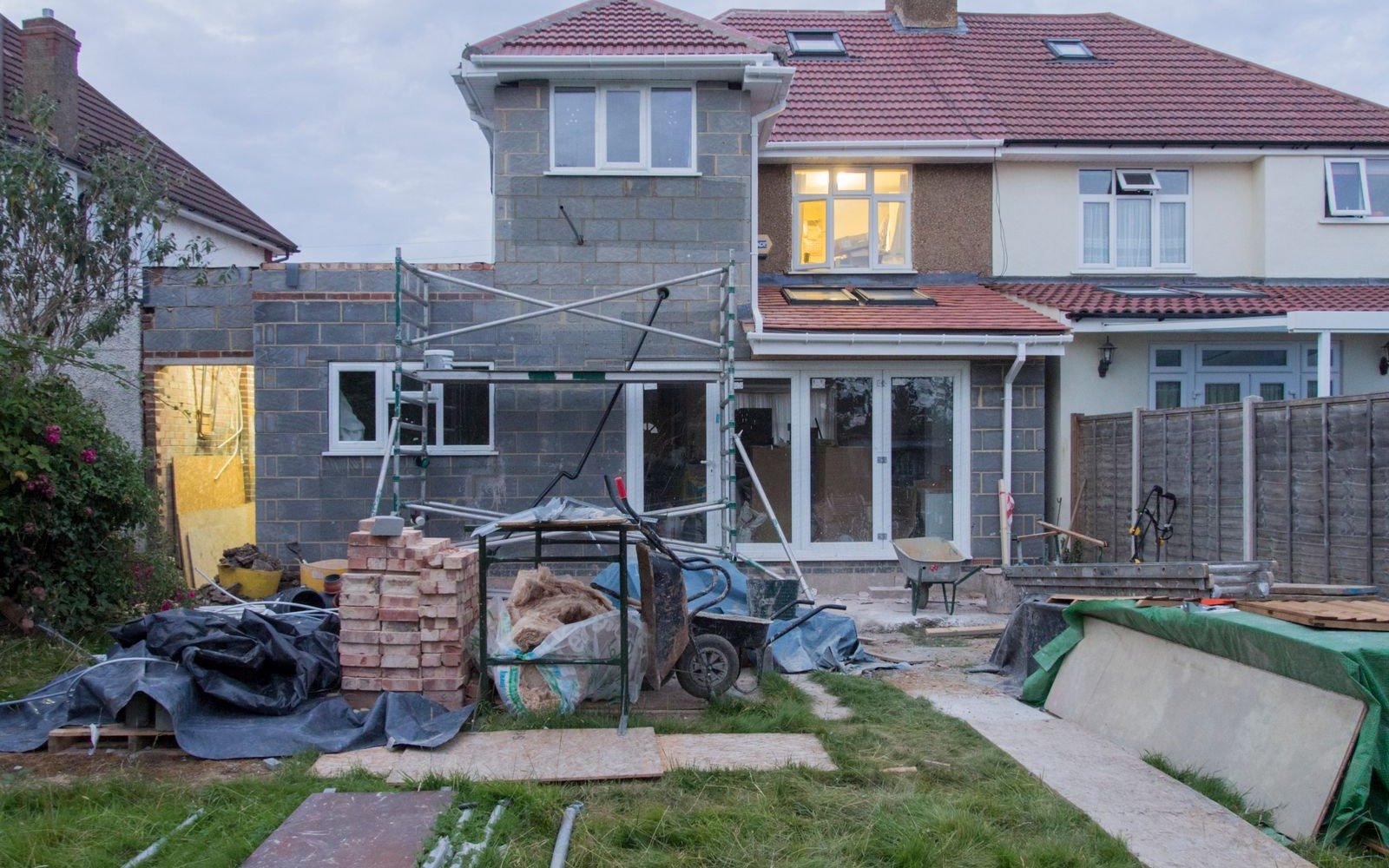
A neighbour challenged West Oxfordshire District Council over its decision not to take enforcement action against a garage and extensions built otherwise than in accordance with permission. The Planning Court held there were two decisions, in June and August 2025, and that the council's February 2026 letter was neither of them. The claim was out of time and all three grounds were unarguable.
R (Kelly) v West Oxfordshire District Council was handed down remotely at 2pm on 11 August 2026 by Timothy Corner KC, sitting as a Deputy High Court Judge in the Planning Court. It was a renewed application for permission to apply for judicial review after refusal on the papers. Permission was refused again, on time and on the merits.
The site is a property in Wroslyn Road, Oxfordshire, and the claimant lives next door. In March 2023 the council granted permission for a garage and store in the rear garden. What was built differed from the approved plans in its proximity to the claimant's southern boundary and in its height, which was materially larger than approved. Two applications under section 73 of the Town and Country Planning Act 1990 followed in January 2024. The one concerning the house extensions was approved; the one concerning the garage was refused, against the case officer's recommendation, as overbearing on the neighbouring property. An inspector allowed the appeal in January 2025, and that decision letter is the subject of a separate challenge on which judgment is reserved.
The correspondence, and why it did not count
Between April 2025 and February 2026 the claimant's solicitors and the council exchanged letters. On 17 June 2025 the council declined to take enforcement action and turned down an offer to pay for an independent surveyor. On 29 August 2025 it wrote again, saying it had reconsidered the case as requested and that on the facts as they then appeared no further action was appropriate. The claimant then instructed surveyors, whose report of 19 September 2025 recorded that the rear extension had been built out to a depth of 890mm, that its height was increased by approximately 450mm, and that the front extension protruded to the west by an extra 175mm. The report went to the council on 1 October 2025 and a further letter drew attention to it in January 2026. The council replied on 12 February 2026, and the claim was filed within six weeks of that reply.
The court held that the question is whether a fresh decision was in fact made, not whether one should have been made. Correspondence that only articulates a decision already taken does not set the clock running again. The exception, where a decision-maker agrees to conduct an internal review and says it is holding off while it considers the points raised, did not apply here.
There is nothing in that letter to indicate that the Council is agreeing to review its previous decision or decisions or to make a fresh decision.
Timothy Corner KC, sitting as a Deputy High Court Judge
Two further points closed it off. If a late report or a late argument could create a fresh decision, an objector could keep the limit open indefinitely by writing again, which would subvert the certainty the time limit exists to provide. And the material relied on was not in fact new in 2026: both the surveyor's report and the allegation of intentional unauthorised development had been put to the council months earlier.
The grounds, taken anyway
The judge went on to consider the substance on the assumption that the February letter was a decision. On the first ground, a ministerial policy announcement of December 2015 makes intentional unauthorised development a material consideration. Reading the correspondence as a whole, the court held the council was saying only that there was no harm to public amenity, to the character of the area or to neighbours' amenity, and that intention was irrelevant to that question. In any event, applying section 31(3C) and (3D) of the Senior Courts Act 1981 and Court of Appeal guidance from 2025, it was highly likely the outcome would have been the same.
On the second ground, a decision-maker departing from its own earlier decision must give reasons, and the council had given them in August 2025: an inspector had agreed with the officer recommendation, and three further planning officers had visited and found no harm. On the third, a rationality challenge to planning judgement sets a high hurdle and this claim came nowhere near it.
The practical point for an objector is about dates rather than merits. The letter that matters is the one that decides, not the one that answers, and a report obtained after the decision is evidence for a fresh application rather than a lever to reopen the six weeks.