
Project launch
Samana launches three Dubai schemes adding 630 apartments
By Staff Writer | 19 August 2026
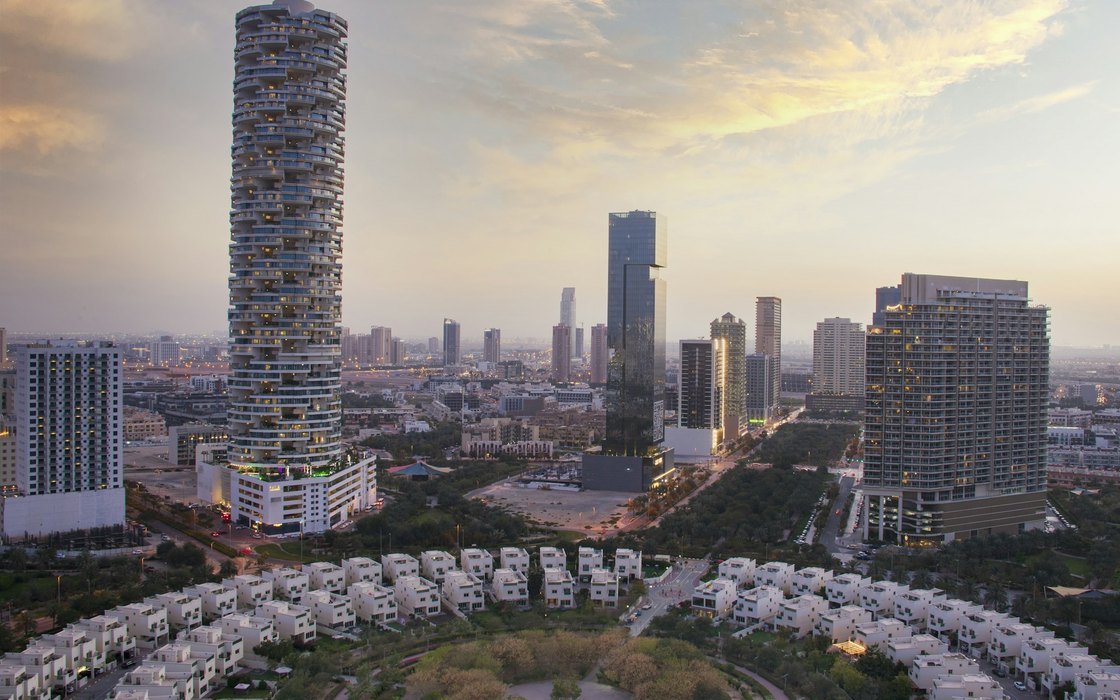
Samana Developers has launched three residential projects in Dubai in less than a month, adding 630 apartments across Warsan Fourth, Jebel Ali Industrial Area 2 and the Dubai South corridor, and has committed to launching and delivering 20 projects over the next 18 months.
The launches were announced on 18 August 2026. The three schemes are Samana Greenfield 2, Samana Portside and Samana South Haven. No construction contract values have been published for any of the three, and no main contractor is named.
Samana Greenfield 2, in Warsan Fourth, is an 18 storey mixed use tower of 304 apartments, made up of 234 one bedroom and 70 two bedroom homes, alongside three retail units. The development is to include panoramic views, technology enabled conference rooms and a sunken seating area.
Samana Portside, in Jebel Ali Industrial Area 2, is an eight storey development of 126 apartments, made up of 110 one bedroom and 16 two bedroom homes, with six retail units. It sits within reach of the Dubai Metro Red Line, and is to include private pools within selected apartments, an open air cinema and large energy efficient windows.
Samana South Haven sits within Dubai Industrial City and the Dubai South corridor. It is a six storey development of 200 apartments ranging from studios to two bedroom homes, with an infinity pool for adults, a rooftop indoor gym and an outdoor gaming arcade.
The three schemes together account for 630 apartments. The developer said it exercises direct oversight of construction, procurement and the supply chain, and presented that as the means by which it intends to hold delivery confidence as it expands.
Imran Farooq, Chief Executive of Samana Developers, said: "Launching three projects in less than one month is an important milestone for us, but growth has never been about numbers alone. Behind every apartment is a person or family placing their trust in us; whether it is the home they will live in or an investment they have worked hard to make."
He added: "By managing construction, procurement and the supply chain directly, we maintain close oversight at every stage and protect that promise as we grow."
What the practitioner should take from this
A developer that launches three schemes in a month and undertakes 20 in 18 months is making a supply chain commitment before it is making a construction commitment. The binding constraint on that programme is rarely design or consent; it is the availability of subcontract capacity, of tower cranes, and of the finishing trades that determine handover. Anyone pricing a package inside such a programme should look at how many of the developer's other sites will be in the same trade window, because a supply chain shared across a portfolio is a resource risk that ordinary extension of time clauses do not address.
Direct management of construction and procurement, which the developer presents as a strength, changes the contractual shape for everyone below it. Where a developer takes the coordinating role in house rather than appointing a main contractor, the interfaces between packages become the developer's risk in principle, but in practice they are pushed down through attendance and coordination obligations in each trade contract. Practitioners should read those obligations closely: an attendance clause that requires a package contractor to work around others without a defined sequence is, in substance, an unpriced coordination duty.
Three towers of eight, six and 18 storeys in different districts also raise a straightforward point about repeated design. Where a developer reuses a standard apartment layout across schemes, defects tend to repeat as well, and a defect found in one building is a reason to inspect the others. Warranty and defects liability provisions written project by project can leave a purchaser with a remedy on one tower and none on the next, even though the fault has a single origin.
Nothing here suggests any difficulty on these three schemes, which have only just been launched. These are the ordinary commercial features of a rapid multi site residential programme, and the moment to read them is at launch.