
Contract award
Rovuma LNG partners award 1.1 billion dollars of equipment contracts
By Staff Writer | 19 August 2026
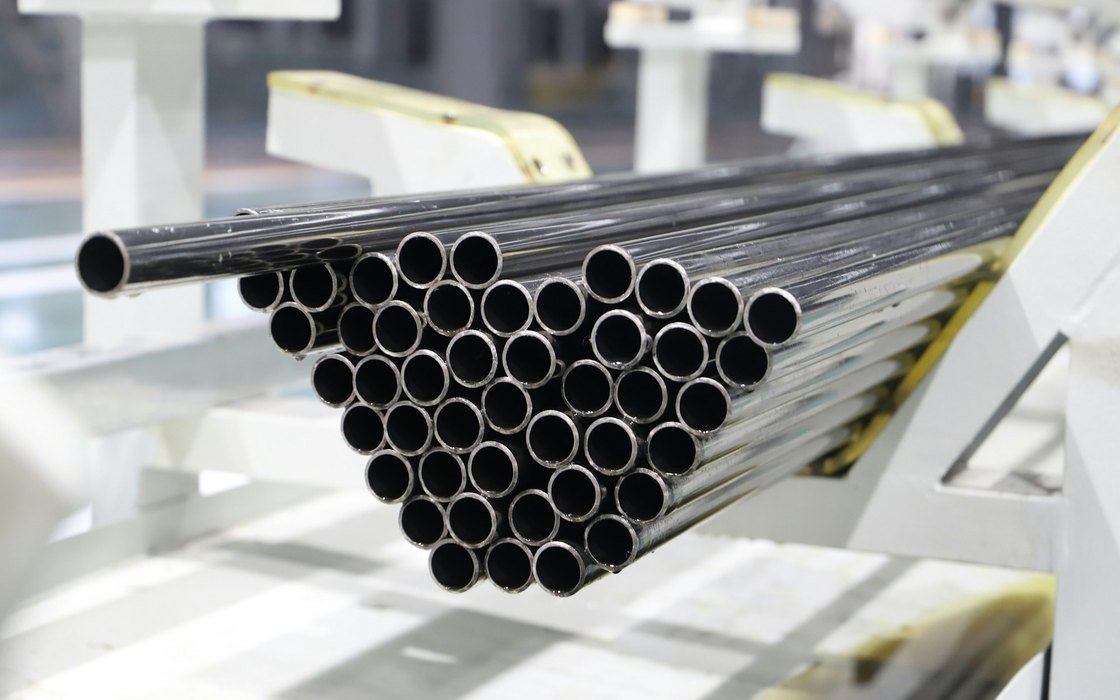
The Area 4 co-venturers have awarded approximately 1.1 billion United States dollars of pre-investment contracts for long lead upstream equipment on Rovuma LNG Phase 1 in Mozambique, placed ahead of any final investment decision on the project.
The awards were announced on 17 August 2026 by ExxonMobil Mocambique, Limitada, acting on behalf of the co-venturers. Those co-venturers are ENH, CNPC, ENI, KOGAS and XRG. The development is in Cabo Delgado.
The contracts cover the engineering, procurement and manufacturing of subsea production systems, large bore production valves and offshore line pipe. They are described as pre-investment awards for long lead upstream equipment and early site construction activities, placed before the final investment decision.
The largest contract was granted to OneSubsea UK Limited and OneSubsea AS, with in country work to be supported by Aker Solutions Mozambique, Limitada, for engineering, procurement, fabrication and manufacturing services related to subsea production systems, controls and umbilicals.
Four further contracts were awarded. Advanced Technology Valve S.p.A. takes the engineering, procurement, fabrication, testing and delivery of large bore production valves. Corinth Pipeworks Pipe Industry Single Member S.A. takes the manufacture, coating, testing, preservation and storage of submerged arc welded line pipe. Sumitomo Corporation of America takes the same scope for line pipe manufactured without a weld seam. Zhejiang Jiuli Hi-Tech Metals Co., Ltd takes the manufacture and supply of mechanically lined pipe, induction bends, weld overlay products and associated line pipe systems.
Johanna Boothey, lead country manager of ExxonMobil Mocambique, Limitada, described the awards as a further step forward for the project and as evidence of the commitment of the Area 4 co-venturers to the responsible development of the country's natural gas.
She said: "By securing critical long-lead equipment, we are positioning the project for efficient execution and supporting the long-term economic potential of this strategic investment for Mozambique."
No individual contract values have been published, and no split of the 1.1 billion dollar figure between the five suppliers is stated in the announcement.
What the practitioner should take from this
Placing a billion dollars of equipment orders before a final investment decision is a deliberate exchange of one risk for another. The purchasers buy programme certainty on items whose manufacturing lead times run to years, and accept in return that they are committed to expenditure on a project that has not been sanctioned. The contractual expression of that exchange is the cancellation and suspension provisions, and they are the first thing a practitioner should read in an agreement of this kind. What is payable if the decision is negative, at what point the liability steps up, and whether the purchaser can suspend rather than terminate are the provisions that carry the money.
Long lead equipment contracts also invert the usual delay analysis. On a construction contract the contractor is normally the party at risk of late completion. Here the equipment supplier is manufacturing against a project programme that does not yet exist in fixed form, and the more common dispute is not late delivery but the storage, preservation and re-testing of equipment that arrives before the site can receive it. The scopes described include preservation and storage for a reason, and the practitioner should check who pays for extended preservation, who carries the risk of deterioration, and when title and risk pass.
The split of a single package between a subsea systems provider and four separate pipe and valve manufacturers raises the interface point. Line pipe, induction bends, weld overlay products and mechanically lined pipe from different suppliers have to be welded together in the field to a single specification, and welding procedure qualification is where mixed supply usually shows its cost. Where a purchaser buys the components separately rather than buying an integrated system, it retains the integration risk, whatever the individual supply contracts say about compliance with specification.
Nothing here suggests any difficulty on these awards, which have only just been placed. These are the ordinary commercial features of pre-sanction long lead procurement on a major gas development, and the moment to read them is at order.