
UK Construction and Law
Contract administrator clawed back £650,000 of advance payments before the conditions were met, and the court has enforced the decision that says he could not
By Staff Writer | 19 August 2026
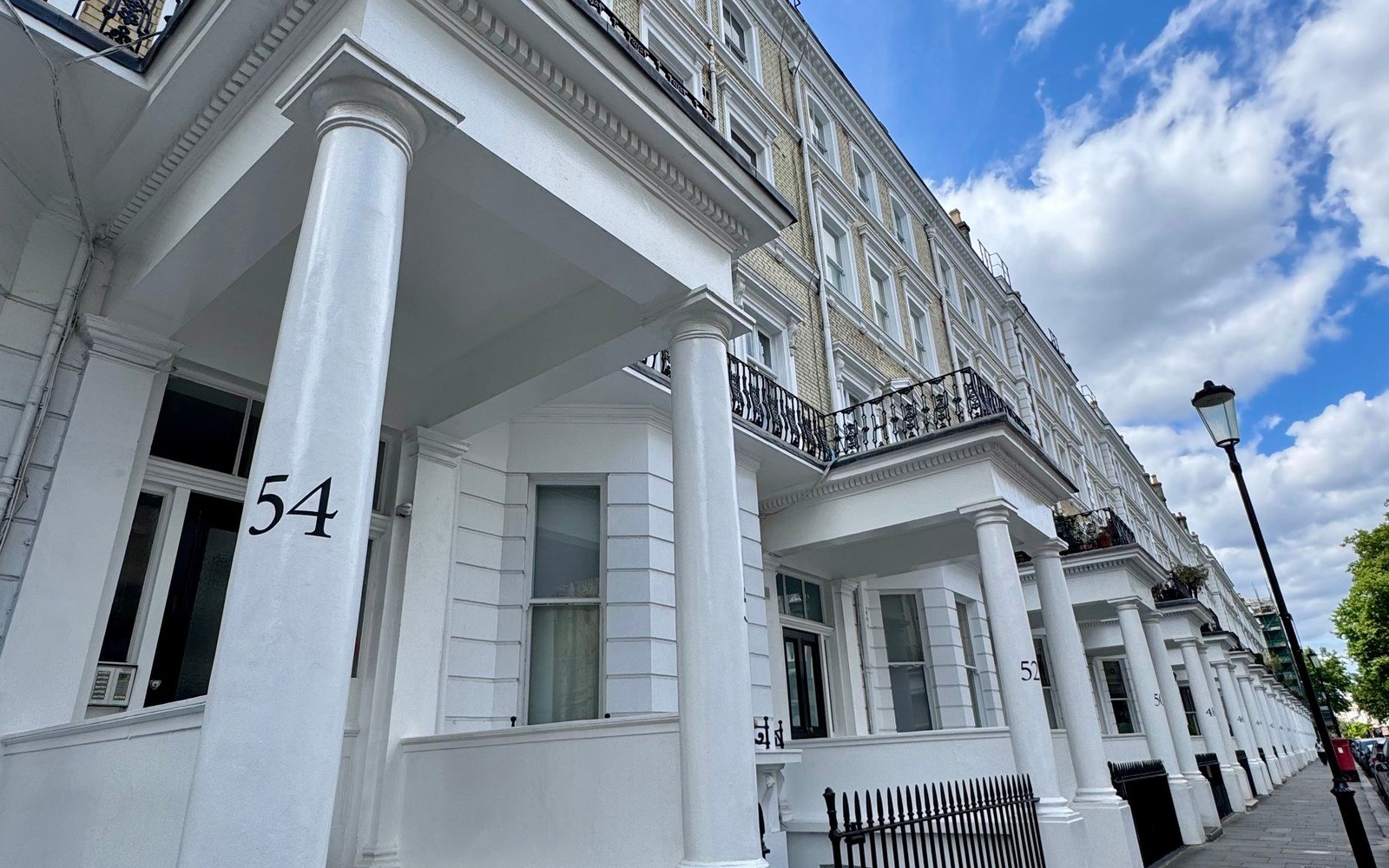
A contract administrator on a £9.99m house in St John's Wood took two advance payments back out of the gross valuation at interim certificate 25, months before the final account was agreed. The contractor had refused a request to amend the clause eleven months earlier. An adjudicator ordered the money paid and the Technology and Construction Court has enforced the decision, refused a stay and awarded indemnity costs.
Westgreen Construction Limited v Kiryukhina was handed down remotely at 10.30am on Tuesday 18 August 2026 by Mrs Justice O'Farrell, sitting in the Technology and Construction Court at the Rolls Building. The contractor applied for summary judgment to enforce an adjudication decision of 7 May 2026. The employer resisted on jurisdiction and natural justice, and applied in the alternative for a stay of execution under CPR 83.7(1). Every argument failed.
The contract was a JCT Standard Building Contract without Quantities, 2016 edition, with bespoke amendments, executed on 24 June 2024 for construction and refurbishment works to a residential property in St John's Wood, London NW8. The contract sum was £9,989,324.55. Clause 4.7 and the Contract Particulars provided for two advance payments, £350,000 on appointment and £300,000 at 25 per cent of contract duration, certified on 6 March 2024 and 19 August 2024 and both paid.
The clause the employer asked to change
Reimbursement of the £650,000 was tied to stated events: agreement of the final account and payment in full for it, or joint issue of the Making Good Defects Certificate and the Final Certificate together with payment, or a valuation under the termination provisions in clause 8.12. On 1 May 2025 the contract administrator asked the contractor to agree an amendment allowing the employer to draw the advance payments down against the last certificates instead. The contractor refused the same day, recording that the drafting was designed to prevent depletion of its security until it had been paid in full.
From interim certificate 23 the second advance payment stopped appearing in the gross valuation. In interim certificate 25, dated 25 March 2026, neither advance payment was in the gross valuation, although both remained in the amounts previously certified. The arithmetic recovered the whole £650,000. The contract administrator confirmed that effect by email on 30 March 2026. Practical completion was certified two days later, on 27 March 2026.
The adjudicator decided that the payment due under certificate 25 should have been £756,062.40 rather than £106,062.40, that the sum stated in the pay less notice should have been £733,062.40 rather than £83,062.40, and ordered payment of £733,062.40 within seven days. The employer had already paid the £83,062.40 it had notified. The balance went unpaid, the contractor suspended on 26 May 2026, and the employer purported to terminate on 24 June 2026.
Reasons are not a frolic
The jurisdiction challenge was that the adjudicator had gone off and decided the parties' course of dealing on earlier certificates, which had not been referred. The court held the referred dispute was the essential claim for £650,000, and that the adjudicator could consider any argument or evidence the parties themselves put in. Reliance on the earlier certificates was in the referral, and the employer had answered it in her rejoinder.
On natural justice the court accepted there was some force in the point that the adjudicator went further than he needed to in finding a breach of clause 4.7, since neither party had asked for that finding or for damages. It made no difference. He had invited both parties to respond to the point, he recorded that no damages claim was made, and the finding formed no part of the operative decision or the relief.
In conclusion, none of the conditions that would entitle the defendant to reimbursement of the advance payments has occurred. There are no other special circumstances which render it inexpedient to enforce the summary judgment. The application for a stay of execution is refused.
Mrs Justice O'Farrell, paragraph 73
The stay argument is the part worth carrying away. The employer said the advance payment was about to become repayable anyway, because the contract had been terminated at common law. The court held that the Contract Particulars provide for contractual termination and not for common law termination, and that even on a contractual termination the condition is an agreed or adjudicated final account, which had not happened. Practical completion four months earlier did not help either: the final account process had a documentation date of 27 September 2026 and no fixed end.
Judgment was entered for £650,000 plus VAT of £43,615, the adjudicator's fee of £19,866 and interest of £2,493.12, continuing at £155.82 a day, with costs on the indemnity basis. An advance payment is security until the contract says it stops being security. Whether a certificate can take it back early was the adjudicator's question and not the court's, and his answer holds until the final account is agreed or a court or arbitrator says otherwise.