
Tech and AI
A bolt-on kit that turns any excavator autonomous takes 200 million dollars in the largest construction robotics Series A yet
By Staff Writer | 18 August 2026
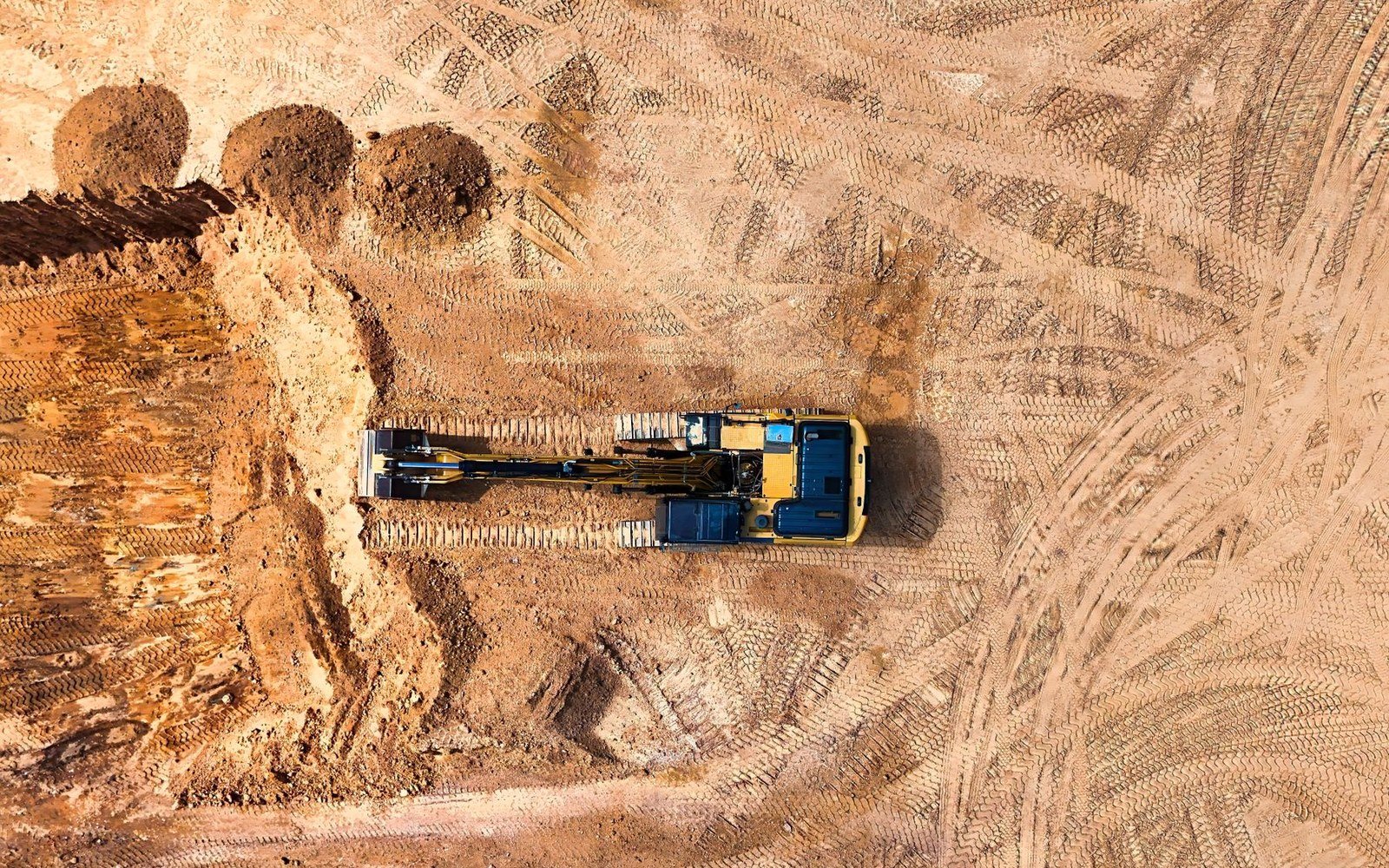
Gravis Robotics, spun out of a Swiss university in 2022, sells a roof-mounted control unit that retrofits to machines from ten different manufacturers rather than asking contractors to replace their fleets. SoftBank has put 200 million dollars behind it, and the company is already leading an 8 million dollar retrofit project in Britain.
Most attempts to automate an excavator have started from the wrong end, by building a new machine. The commercial problem with that is obvious to anyone who has priced a fleet: contractors buy on regional service relationships and on what they already own, and nobody replaces a yard full of serviceable plant to acquire software.
Gravis Robotics has taken the other route. Its Gravis Rack is a flat computing appliance that sits on the roof of an existing machine, carrying the processor that runs the control software along with cameras and a lidar sensor. Further cameras, lidar modules and a satellite positioning receiver are carried on two rear masts. A tablet interface, Slate, lets an operator work the machine remotely, showing live sensor footage with buried services and other hazards marked on the picture.
Why earthmoving is the hard case
Most physical AI is designed to move through the world without disturbing it. An excavator exists to do the opposite, which is why the driving models do not transfer.
The company's answer is training in simulation against soil behaviour rather than against fixed geometry, moving what it describes as billions of cubic yards of virtual material from soft clay to rock-filled ground, so that the software arrives on site with something like the physical intuition an experienced operator carries.
Skilled operators read the earth through subtle physical feedback, listening to the engine strain, sensing the machine vibration and reacting to hydraulic resistance. Our AI takes that same physical input and grounds it in machine telemetry, responding to varying subterranean forces and soil mechanics at microsecond speeds.
Dominic Jud, co-founder and chief technology officer, Gravis Robotics
Dominic Jud added that the company "didn't try to simplify the world for our software", giving it instead the physical intuition to handle live sites.
Built for mixed fleets, which is the commercial point
Roughly two thirds of global demand for heavy equipment sits outside the three largest manufacturers, and the company argues that a closed single-brand system is therefore unsellable to most of the market. The Rack has been installed on machines from Caterpillar, Case, Develon, John Deere, JCB, Hitachi, Sumitomo, Yanmar and Volvo among others, and the company says the same core software runs a compact excavator and a machine five times its size without custom reprogramming.
Operation is graduated rather than binary. With Copilot the operator stays in the cab and works with real-time three dimensional guidance and hazard detection. With full autonomy engaged, one person supervises several machines. In either mode every fitted machine works as a mobile survey instrument, mapping ground and hazards while it digs. The company claims productivity up to 30 per cent above peak manual operation.
Whether we are building housing, modernizing energy grids, or scaling data centers, every project starts with moving earth. That foundational work has been the bottleneck slowing down the entire built environment.
Ryan Luke Johns, co-founder and chief executive, Gravis Robotics
The British project
The company has been selected to lead an 8 million dollar government-backed connected and automated mobility project with Flannery Plant Hire, and describes the aim as giving contractors on-demand access to autonomous machinery through retrofitted rental fleets. A rental route matters more than it sounds: it puts the technology in front of firms that will never buy a robot, and it lets a main contractor try autonomy on one operation without a capital decision.
Two claims about deployment differ between the accounts read. One says systems are in use across four continents; the other says dozens of sites globally. Both are the company's own statements rather than independently measured, and neither host tested them.
What the round does not settle is liability. A machine that digs unattended, beside live services, on a site where a principal contractor owes duties to everyone present, sits awkwardly against contracts and insurance arrangements written for a person in a cab. Nobody involved in this announcement addressed that, and it is the question the first serious incident will ask.