
Project launch
Grimsby Dock Tower conservation put to specialist heritage contractors
By Staff Writer | 28 August 2026
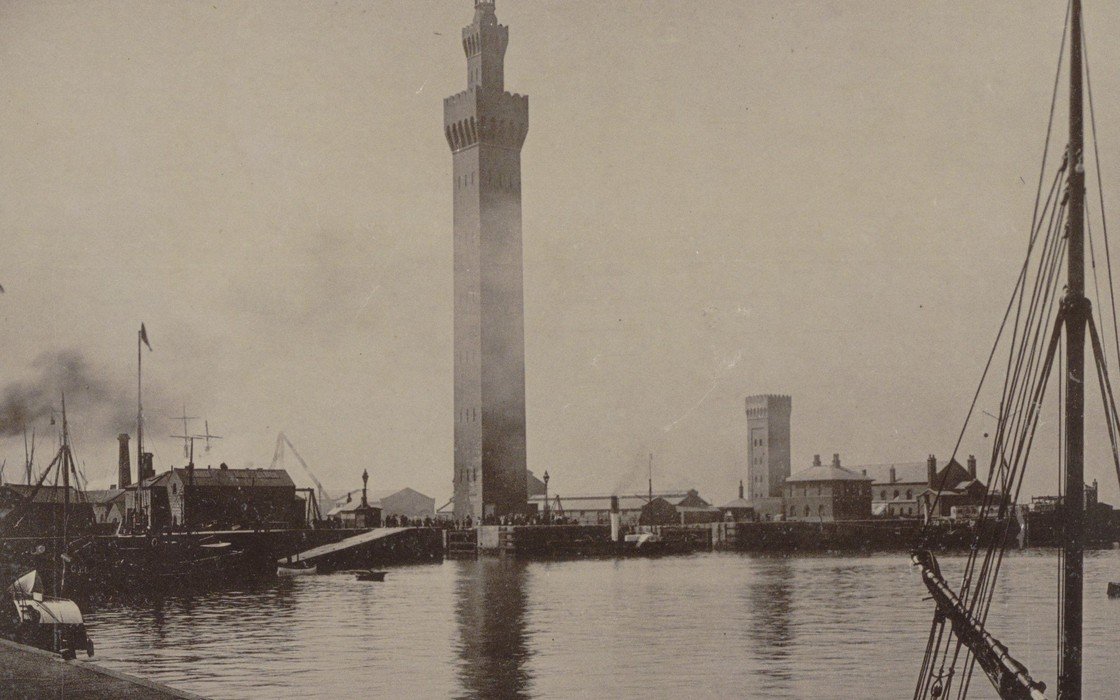
Associated British Ports has told the market it will procure the conservation, refurbishment and restoration of the Grade I listed Grimsby Dock Tower by closed, invitation only tender rather than open competition. The preliminary engagement notice, identifier 082067-2026, was published on the United Kingdom tender service on 28 August 2026.
A preliminary engagement notice is not a call for competition. Its stated purpose is to give advance information to specialist heritage contractors with experience of listed structures of national importance. Nothing is being awarded and no closing date is published.
The buyer describes the tower as a Grade I listed structure representing the highest level of protection afforded by The Historic Buildings and Monuments Commission for England, and as a heritage asset of national importance within the Port of Grimsby.
What the contractor would be asked to do
The buyer proposes to appoint one suitably qualified contractor to carry out detailed design as well as the conservation, refurbishment and restoration works. Design and construction therefore sit with the same party, which for a listed structure is defensible because the design has to respond to what is found once access is taken.
The scope named on the notice runs to the replacement, refurbishment and conservation of original listed features, including water pipes, access structures, parapets, decking and the tower spire, and to conservation work to preserve the original spiral staircase and the historic water supply infrastructure.
The national heritage list entry, number 1379870, first listed on 28 April 1972, shows why those items are named. It records a hydraulic tower of 1851 to 1852 by JW Wild for The Grimsby Dock Company, red brick on a limestone plinth, approximately 94 metres tall, with a tall parapet carrying brick coped crenellations and, at the head, an octagonal iron lantern crowned by an openwork spire and finial. The entry states that it contains hydraulic gear which originally operated the gates to the adjacent locks and the dockside cranes, and that it is the largest and architecturally the most distinguished hydraulic tower in the United Kingdom. The parapets, the spire and the pipework named in the procurement are therefore among the reasons the structure carries the grade it does.
The condition, and the enforcement risk
The buyer does not soften its description. The condition of several key elements has badly deteriorated and has reached a stage where they have either failed or have no remaining serviceable life. That is a statement about elements already past the end of their working life rather than approaching it.
The notice also states what happens if the work is not done. Failure to undertake it could result in further deterioration, potential enforcement action by Historic England and adverse local and national publicity. Buyers rarely put enforcement risk on the face of a notice. Doing so tells a tenderer the programme is driven by the condition of the fabric and by a regulator, not only by the owner's investment plan.
How the work will be bought and judged
The buyer states that the estimated contract value is below the applicable threshold for works contracts under the Procurement Act 2023 and the associated Procurement Regulations 2024. No figure is published on the notice, so no value is reported here. Being below threshold is the reason given for the route: a closed process, with a select number of specialist heritage and conservation contractors invited, each required to show experience of works to Grade I and other highly protected historic structures.
The buyer is classified on its own notice as a private utility, which together with the below threshold position explains a route that would otherwise look restrictive.
Tenders will be evaluated on quality and price. The quality assessment is expected to consider project delivery methodology, construction programme and sequencing, health and safety management, experience of heritage conservation and listed building works, the proposed team and key personnel, and risk management arrangements. Price is to be assessed using what the buyer calls a transparent like for like comparison methodology.
Two of those six headings are worth noting by anyone pricing the job. Programme and sequencing sits second, ahead of experience, on a structure where access is the hard problem: a tower of that height and slenderness cannot be scaffolded, worked and struck in whatever order suits the contractor. Risk management sits last but describes the commercial reality of conservation work, where the extent of repair to parapets, decking and pipework is not knowable until the elements are opened up.
A like for like price comparison also assumes the tenderers are pricing the same thing. On failed historic fabric that assumption holds only as far as the survey information the buyer issues, and the treatment of provisional and undefined work is where two apparently comparable prices part company.