
UK Construction and Law
Permission granted for the taking down of Grenfell Tower, with the emergency permitted development rights due to run out next month
By Staff Writer | 26 August 2026
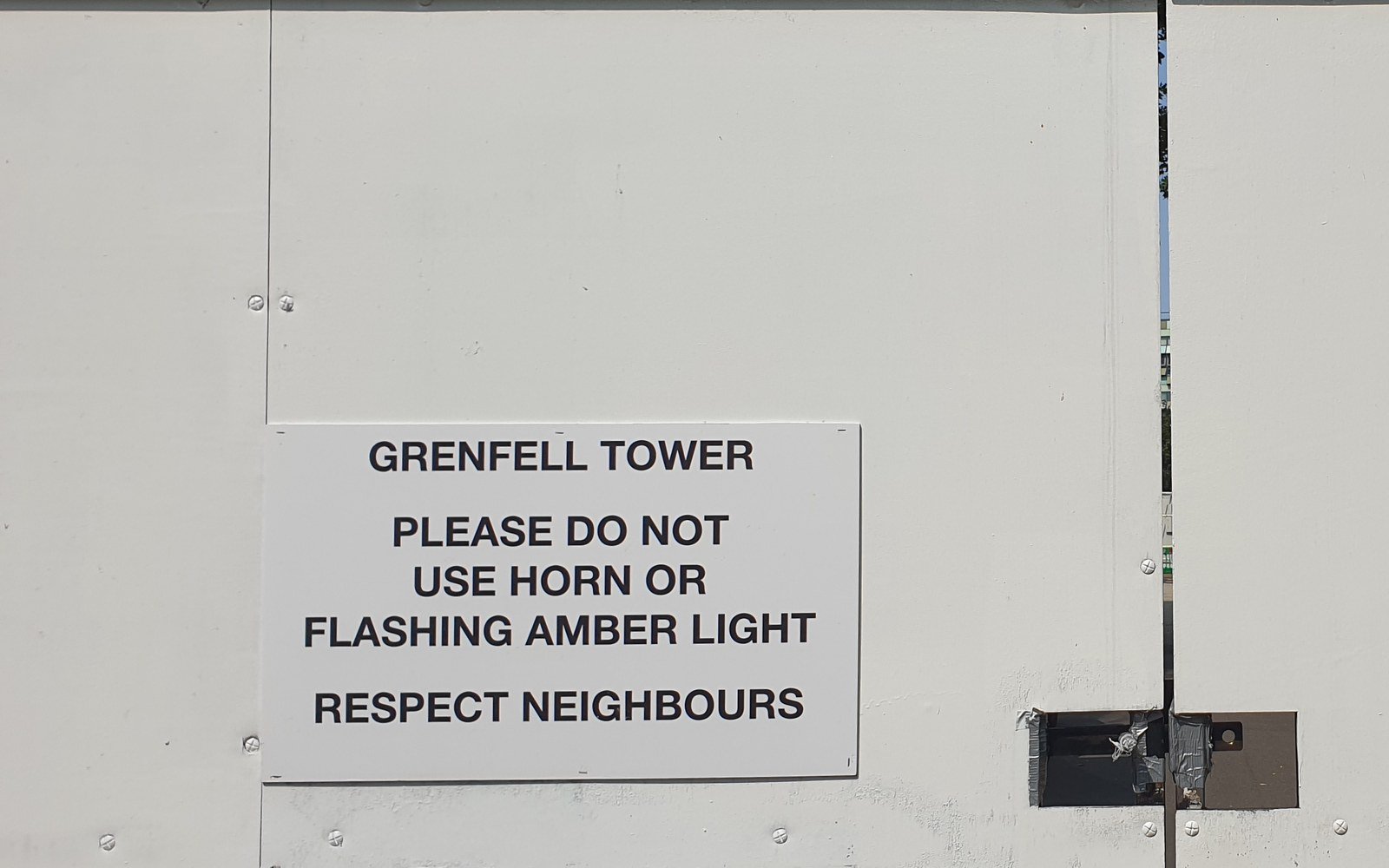
Work began in September 2025 under Crown emergency permitted development rights that expire on 23 September 2026. Those rights will lapse before the job is finished, so the department applied through the new Crown development route and an appointed inspector has now granted permission, subject to a single condition.
The application was made under section 293D of the Town and Country Planning Act 1990 by the Ministry of Housing, Communities and Local Government. It was dated 30 April 2026, was accepted for consideration on 27 May 2026, and was decided on 25 August 2026 under reference CROWN/2026/0000003. The development is described in five words: the works to take down Grenfell Tower. The site sits in the area of the Royal Borough of Kensington and Chelsea, which takes no part in deciding anything about it but supplied documents and technical comments.
The reason an application was needed at all is a timing point familiar to anyone who has relied on permitted development for a long programme. Work started in September 2025 under Schedule 2, Part 19, Class Q of the 2015 Order, which allows development by the Crown relating to an emergency. Those rights last twelve months from the day the development began, so they run out on 23 September 2026. The works will not be complete by then. Because development has already started, section 73A of the 1990 Act applied, and the permission granted covers what has been done as well as what remains.
The route, and how it was decided
The Crown development route allows an appropriate authority to apply directly to the Planning Inspectorate where the Secretary of State considers a development to be of national importance. On 27 May 2026 the department wrote to interested parties, including the local Member of Parliament, confirming that view had been taken on the ground of strong social effects and strong interest at regional and national levels. An inspector was appointed on 9 July 2026 under section 293I, which confers the same powers the Secretary of State would have had.
The procedure was written representations. Consultation ran from 15 June to 6 July 2026, with four site notices posted nearby and letters to statutory consultees. Five bodies responded: the council, the Mayor of London, Transport for London Infrastructure Protection, the Environment Agency and the Defence Infrastructure Organisation. No representations were received from any other interested person. The inspector carried out a formal site inspection on 12 August 2026. The application was screened twice and found not to be development requiring environmental impact assessment.
One condition, and no CIL
The permission carries a single condition, requiring the works to be carried out in accordance with a schedule of approved plans, assessments and management documents. That is a direct consequence of the timing.
As the development has already commenced, the only condition necessary would be one specifying the approved plans and documents for compliance purposes
Tom Gilbert-Wooldridge, the inspector appointed under section 293I of the Town and Country Planning Act 1990 to determine the application
No other conditions were suggested by any statutory consultee. The mitigation that matters in practice therefore sits inside the approved documents rather than in separate conditions: water mist suppression and hoarding for dust, regular particulate monitoring, noise and vibration monitoring with community liaison, and a traffic management and logistics plan. The inspector recorded that the works represent a high risk for both dust and noise, and that the measures already in place are expected to continue.
Two further points are worth noting. The site is in Flood Zone 1 but carries a 3.3 per cent annual chance of surface water flooding and sits in a critical drainage area; no site specific flood risk assessment was provided, and the inspector was satisfied because the existing attenuation storage remains and taking the building down does not affect it. Future drainage was left to the separate memorial application. And no Community Infrastructure Levy is payable, by either the council or the Mayor, because no new floorspace is created.
What happens next
The decision of an appointed person on a Crown development application is final and there is no right of appeal. The only route of challenge is an application to the High Court under section 288(1) of the 1990 Act, which must be made within six weeks beginning with the day after the decision date. On biodiversity net gain, the informative is candid that it is not possible to say whether the gain condition applies, given that development has already begun and a separate application for the site is planned.
For practitioners, the transferable lesson is the arithmetic rather than the site. Emergency permitted development rights are time limited from the day work starts, and a programme that overruns them needs a permission in place before they lapse. Here the application was made in April for rights that expire in September, and the decision arrived with four weeks to spare.