
World News
Half a million lost power across Latvia and Lithuania in a cyclone that killed two, one of them when part of a building came down
By Staff Writer | 24 August 2026
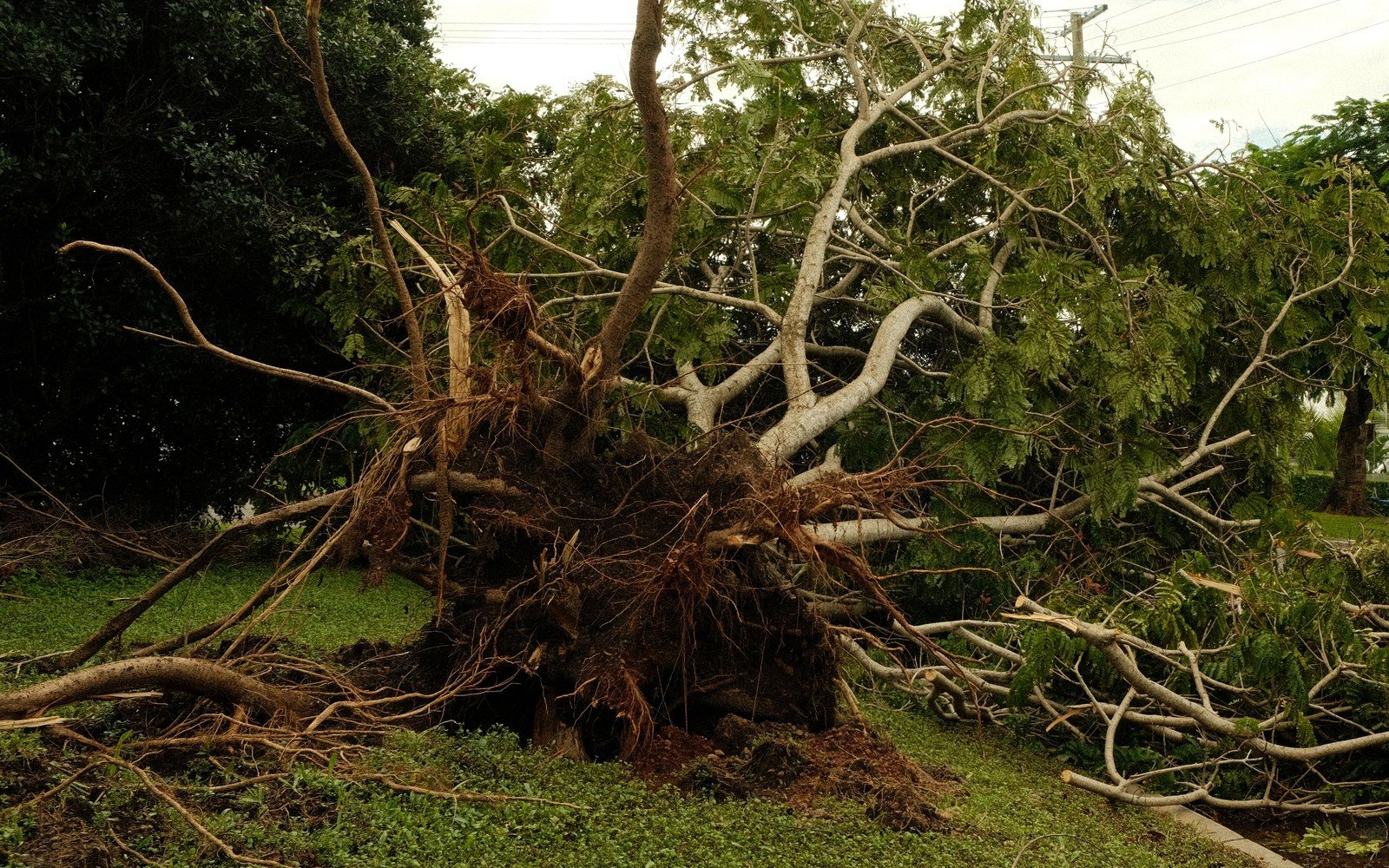
The storm crossed the region on Saturday and into Sunday morning. One person died in Jelgava in central Latvia when part of a building collapsed, and another in Lithuania under a falling tree. Wind at Riga passed 67 miles an hour, many stations recorded half a month of rain in a day, and the Latvian state meteorological service puts it above anything the country has seen since 2005.
Two people died and around half a million were left without electricity across Latvia and Lithuania after a cyclone carrying heavy rain and strong winds crossed the region on Saturday and into Sunday morning. One died in Jelgava, in central Latvia, when part of a building collapsed on Saturday. The other died in neighbouring Lithuania after being struck by a falling tree. Others were injured in both countries.
Wind speed in the Latvian capital passed 67 miles an hour on Saturday. At many measuring stations, half of the average monthly rainfall was recorded on that one day.
This seems to be the most severe storm in Latvia since 2005 in terms of its overall impact
Andris Viksna, Latvian Environment, Geology and Meteorology Centre
What went off supply, and what stopped moving
By Sunday, 254,000 people in Latvia and 256,000 in Lithuania were without electricity. In Poland some 145,000 lost supply on Saturday and 18,000 were still off it on Sunday. In Estonia the figure was 3,400. Mobile services were disrupted in Latvia alongside the power.
Rail and other public transport were affected by trees and other objects falling on infrastructure. The airport at Riga said on Sunday morning that flights could be delayed or rerouted after the overnight storm. Strong winds also reached Estonia, worst in the west and north and on the islands, where ferry services were interrupted and trains arriving from Latvia and Lithuania ran late. Rainfall there was forecast to reach 90 millimetres in 24 hours in places. Firefighters in Lithuania took more than 1,200 storm related calls and one woman was hurt. In northern Poland the figure was about 850 calls on Saturday, with three people injured by falling trees.
Half a million customers off supply across two small countries is not a failure of generation. It is the last few miles of the network, overhead lines strung through mature trees, and it comes back pole by pole in the order crews can physically reach the faults.
What a practitioner takes from a storm like this
The question a construction contract asks about weather is rarely how strong the wind was. It is usually whether the conditions were exceptional measured against something, and that something is normally recorded data for that place and that time of year rather than a description of the event in the press. Figures of the sort now on the record here, a wind speed at a named station and a day's rainfall set against the monthly average, are the material that comparison gets made on. They are worth capturing while they are still published, because the argument about them tends to arrive months later.
Loss of power sits in a different box from damage. A site that cannot draw supply has not necessarily suffered any harm to the works, and contracts and policies generally treat the two differently. Where the works are sound and the delay comes from a distribution network the contractor neither owns nor can repair, the route to relief usually runs through whatever the contract says about utilities, about services outside a party's control and about prevention, rather than through the weather provision. Recording the outage, its duration and the point at which supply was restored is the part that has to be done at the time.
Conditions were expected to ease on Sunday and to have settled by Monday. Asked about the part climate change had played, Viksna said it cannot properly be assessed yet, though "it is plausible that human-caused climate change may have intensified the rainfall associated with the cyclone."