
Middle East Business
UAE minister puts cross border grid investment at the centre of supply
By Staff Writer | 2 September 2026
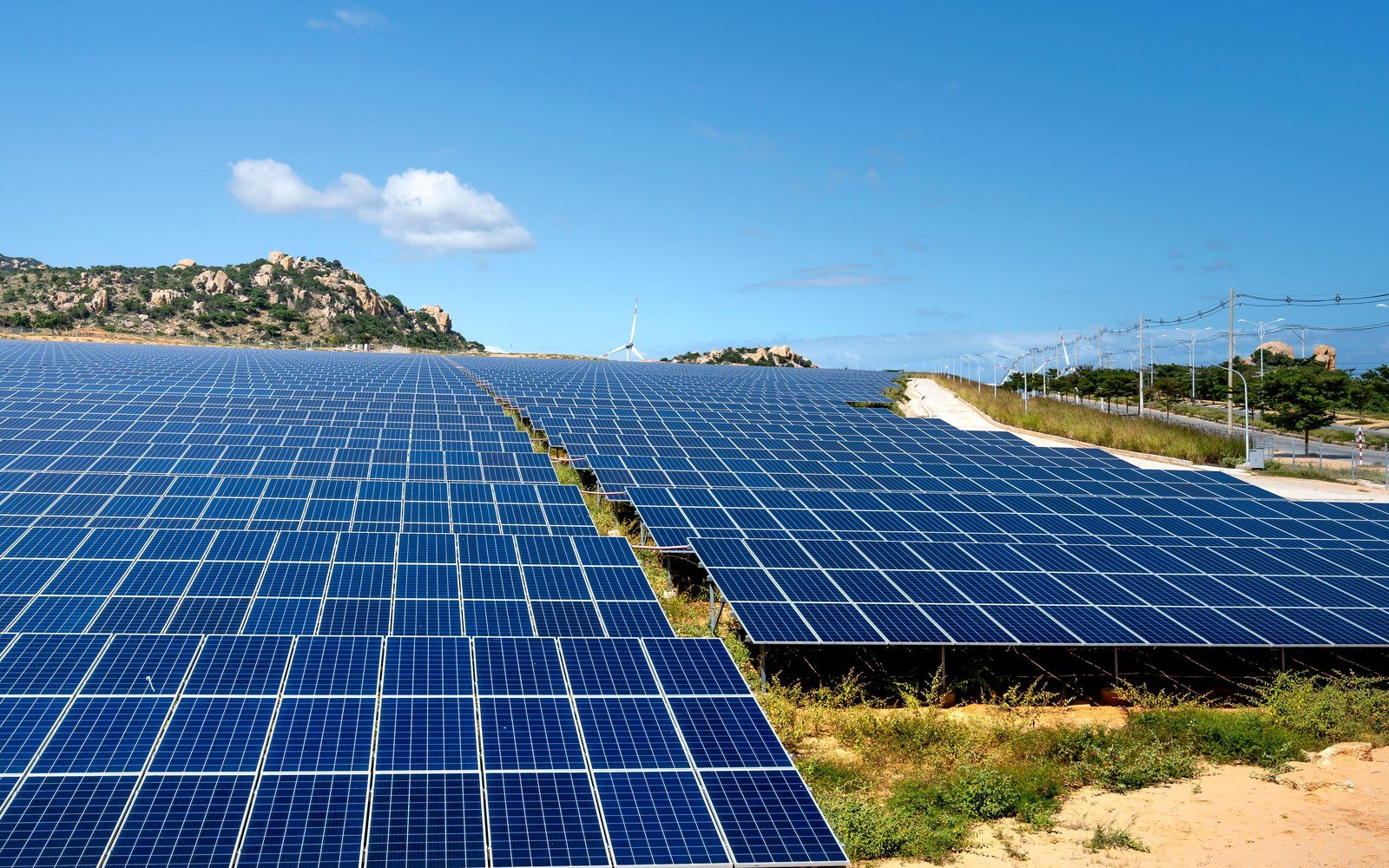
Opening the fiftieth Middle East Energy in Dubai, the Minister of Energy and Infrastructure named electricity interconnection between countries as the next area of spending, alongside a planned 5.2 GW solar and 19 GWh storage scheme.
Middle East Energy 2026 opened at Dubai World Trade Centre on 1 September and runs until 3 September. This is the fiftieth edition of the event.
In his opening address, Suhail Mohamed Al Mazrouei, Minister of Energy and Infrastructure of the United Arab Emirates, set out the country's generating position. He named the Barakah nuclear energy plant and a planned solar and storage scheme carrying 5.2 GW of solar capacity with 19 GWh of battery storage, which he described as the world's largest continuous solar plus storage project, and said the portfolio demonstrated that supply security, sustainability and economic growth can proceed together.
The spending he pointed at
The part of the address with the most direct consequence for contractors was about wires rather than generation.
Greater investment in electricity interconnectivity between countries and regions will also be essential to building more efficient, resilient, and optimized energy systems. Stronger interconnected grids can unlock significant economic and operational value, improve energy security, and enable cleaner energy to be shared more effectively across borders.
Suhail Mohamed Al Mazrouei, Minister of Energy and Infrastructure of the United Arab Emirates
He also called for work on efficiency, on reducing costs and on technologies that capture and reduce losses across systems, and said that governments, industry, investors, technology companies, academia and financial institutions would each have a part in meeting demand.
Interconnection is a different procurement animal from generation. It runs across jurisdictions, it is priced in decades, and the interface risk sits between parties who are not in contract with each other.
The Bahraini position
Yaser Bin Ebrahim Humaidan, Minister of Electricity and Water Affairs of the Kingdom of Bahrain, addressed the region's place in global supply, saying that the Gulf's strategic position has never carried greater weight, and that the region's ability to deliver reliable, abundant and increasingly clean power can shape markets well beyond its own borders. He added that the next fifty years would not be defined by any single technology or policy but by how effectively decarbonisation, digitalisation and resilience are integrated at the pace both demand and climate require.
The first day carried a leadership summit and more than thirty further sessions, with specialist streams in the Technical Excellence Forum, The Battery Show Forum, Intersolar Middle East Conference and Energy Storage Middle East. Speakers listed for the day include Eng Mozah Alnuaimi, chief artificial intelligence officer at the Ministry of Energy and Infrastructure, and Dr Abdulla Humaid Saif Al Jarwan, chairman of the Department of Energy. Memoranda of understanding involving Siemens, Honeywell, Schneider Electric, First Abu Dhabi Bank, Hitachi Energy and Union Iron and Steel were scheduled for signature on the second day.
What has not been said
No capital figure was given for the interconnection investment the minister called for, no timetable was attached to it, and no route or counterparty was named. The 5.2 GW and 19 GWh figures were given as planned capacity, not as capacity in service, and no commissioning date was published for that scheme. The content of the memoranda due for signature has not been published. None of that is assumed here.
For anyone pricing transmission work in the region, the sentence worth keeping is the one about cross border grids. A minister naming interconnection as the area needing greater investment is the earliest form of a pipeline signal, and it arrives long before a tender does.