
UK Construction and Law
Two building contractors sentenced in five days for work at height failures, with fines of £20,000 and £60,000
By Staff Writer | 14 August 2026
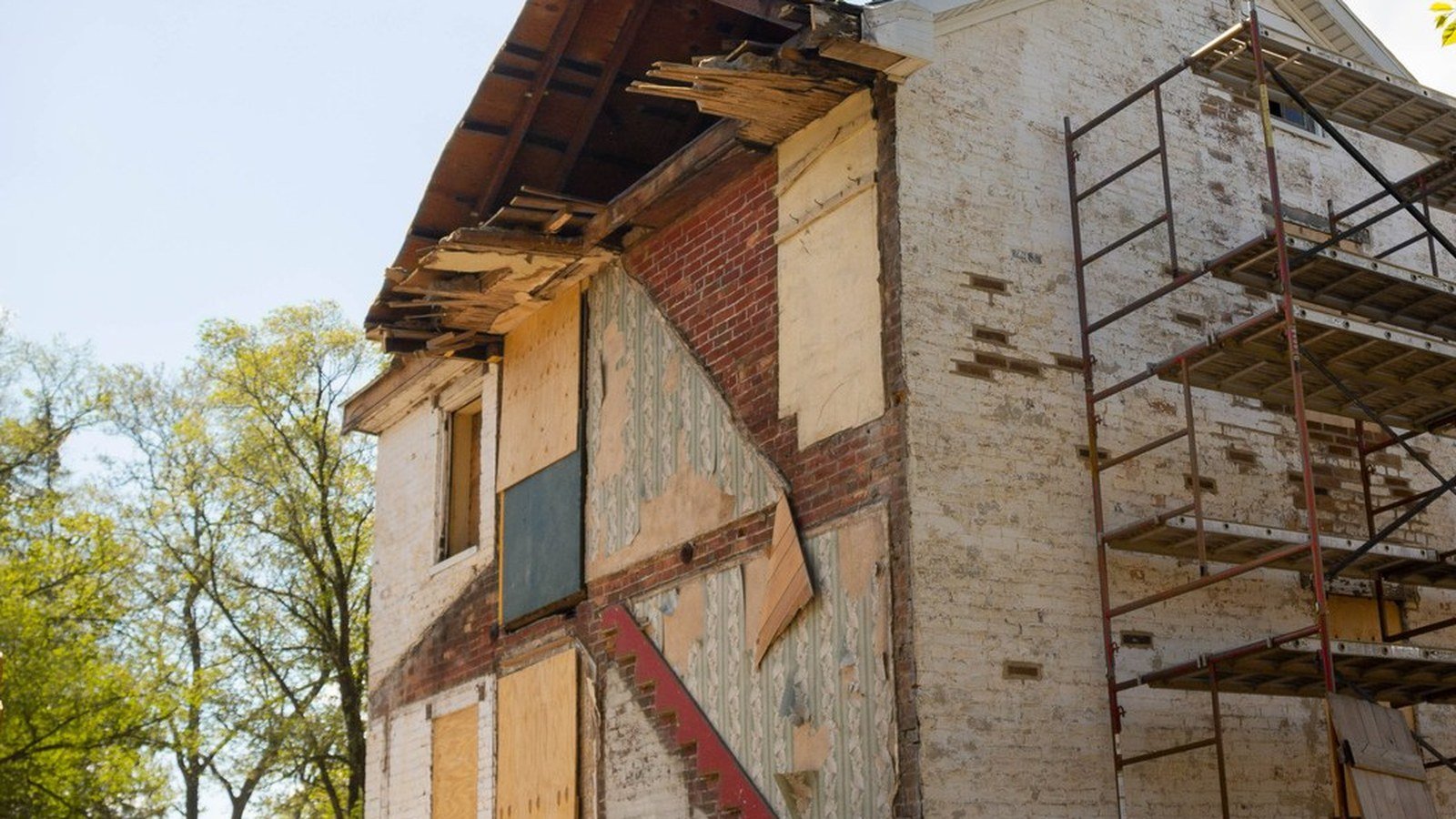
A bricklayer broke his back through a barn roof in Northumberland and a refurbishment worker fell through an unprotected roof light in Fulham. Neither company had put anything in the way of the fall.
Two building contractors were sentenced within five days of each other for failing to protect workers at height, in cases published by the Health and Safety Executive on 6 and 10 August. The facts differ. The failure does not.
Northumberland: a polycarbonate sheet and eight feet of air
A 24 year old bricklayer was part of a team repairing a barn roof at East Fleetham Farm in Seahouses on 5 February 2025. He stepped on a polycarbonate roof sheet and fell about eight feet to the concrete floor below. He broke two vertebrae in his back and fractured his sternum, and required surgery.
The investigation found that his employer had not put adequate measures in place to protect employees or contractors working at height. There was no risk assessment and no safe system of work for the activity being carried out.
Len Smith & Son Building Contractors Limited, of Beadnell in Northumberland, pleaded guilty to breaching sections 2(1) and 3(1) of the Health and Safety at Work etc. Act 1974. It was fined £20,000 and ordered to pay £5,744 in costs by North Tyneside Magistrates Court on 6 August 2026.
Falls from height continue to be the leading cause of workplace fatalities in Great Britain, with 31 people losing their lives in the past year.
Richard McMullen, Inspector, Health and Safety Executive
Fulham: materials passed through an open roof light
On 10 November 2023 a worker was carrying out roof refurbishment work at a domestic property on Langthorne Street in Fulham. He was passing materials through an open, unprotected roof light during a renovation when he fell through the opening onto the concrete floor below, sustaining what the regulator describes as life-changing injuries.
The investigation found that none of the ordinary protections had been used: no scaffolding, no guard rails, no internal crash deck, no harness system. Lowndes Lumb Construction Limited pleaded guilty to breaching Regulation 6(3) of the Work at Height Regulations 2005 and was fined £60,000 with £6,070 in costs at Westminster Magistrates' Court on 3 August 2026.
The inspector in that case, Lydia Edwards, said: "This was a wholly avoidable incident that resulted in a worker suffering life-changing injuries. Had suitable measures been in place to prevent a fall, this incident could have been prevented."
Neither prosecution turned on a control that failed. Both turned on the absence of any control at all, which is the harder position to defend and the more expensive one to be sentenced for.
What the two cases share, and what follows from them
The charging decisions are worth separating. The Fulham case was brought under Regulation 6(3), which requires suitable and sufficient measures to prevent a fall where work at height cannot be avoided or carried out from an existing safe place. The Northumberland case was brought under the general duties in the 1974 Act, sections 2(1) and 3(1), which cover employees and non-employees respectively. That second pairing matters on a site where labour is engaged through subcontracts rather than employment contracts, because the duty to those workers does not depend on who pays them.
Both incidents involved a fragile or open surface: a polycarbonate roof sheet in one, a roof light in the other. Both involved short duration work on a small job, the sort of work most likely to be planned in a yard rather than on paper. Both produced an injury that ended one man's working life as he had known it.
Where an accident of this kind occurs, the enforcement file and the contractual file describe the same events and are usually inconsistent with each other. The regulator asks whether the work was properly planned, appropriately supervised and carried out by competent people. The contract asks who instructed the work, whether the method statement was accepted, whether the principal contractor discharged its duties, and whether the resulting delay and cost fall on the employer or the contractor.
A company that has already pleaded guilty to having no risk assessment will find it awkward to tell an adjudicator that a safe system of work was in place, whatever the technical position on how a plea may be used. Records made before the fall are worth more than any explanation offered after it.