
Tech and AI
Thunder imaged the ground to a hundred metres through a telecoms cable that was already buried there
By Staff Writer | 23 August 2026
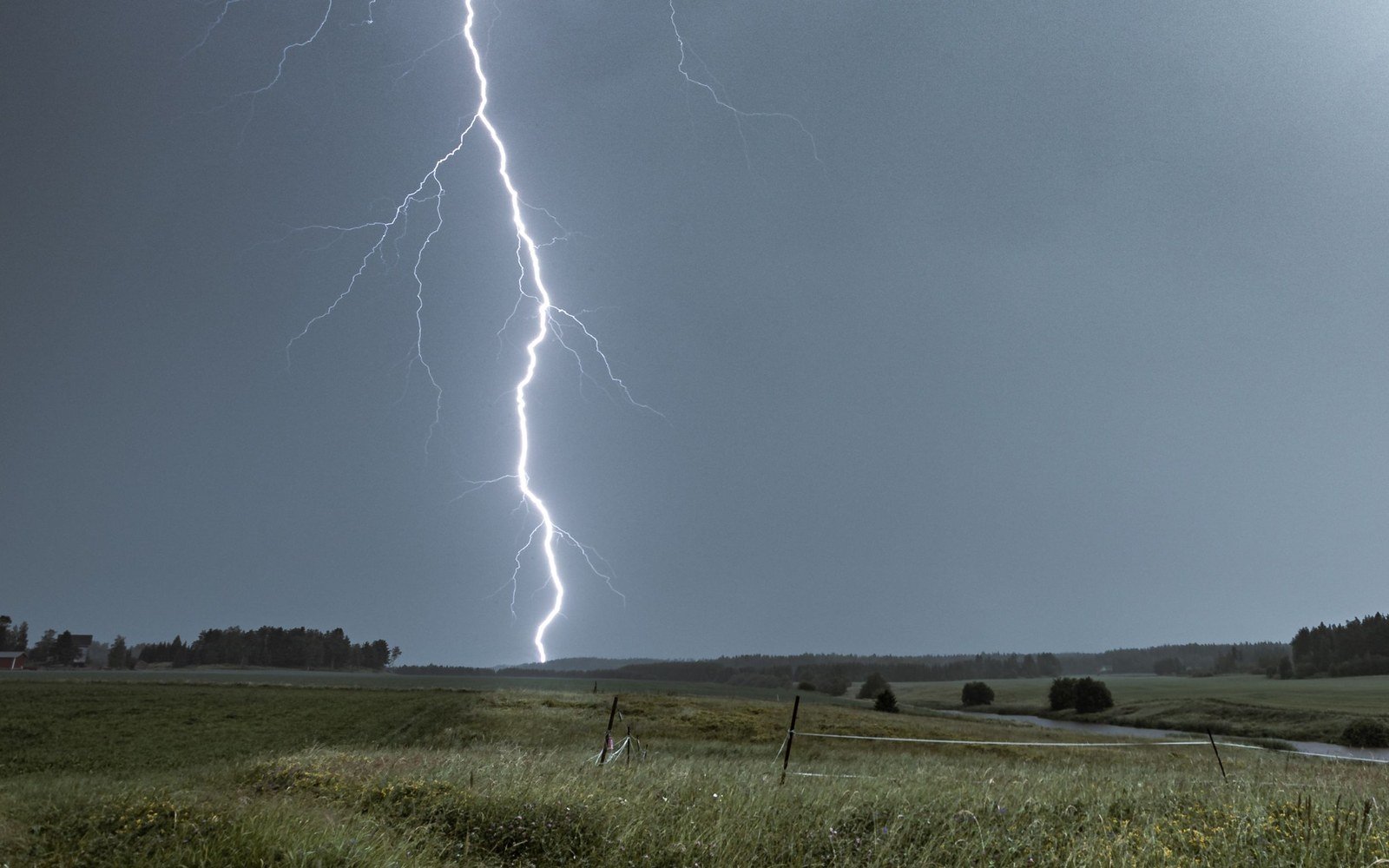
Two and a half years of storms, a dark fibre nobody was using and no equipment on the ground at all. What it found under a campus was weak zones in limestone that nothing else had picked up.
Researchers have used the ground motion produced by thunder, recorded through a telecommunications fibre already buried under a university campus, to build images of the geology beneath it to a depth of about 100 metres. The work was published on 21 August in Science Advances under the title Imaging Earth's subsurface with thunderstorm-generated seismic waves. Two and a half years of records were used, covering more than 450 of these events.
Thunder generates atmospheric acoustic waves that couple into the ground, producing seismic signals
Tieyuan Zhu, associate professor of geosciences at Penn State and corresponding author
The recording method is distributed acoustic sensing. A laser is fired down an existing fibre, about two and a half miles of it, buried roughly a metre below the surface, and the phase of the light that scatters back is watched. Seismic waves passing through the ground stretch the fibre by a tiny amount, which changes the travel time of the light, and the cable becomes a dense line of sensors along its whole length. Nothing is installed on the surface and nothing is dug.
What it found
The campus sits on karst, which is limestone riddled with caverns and fractures and is the ground condition that produces sinkholes. The images picked out several weak zones in the limestone that had not previously been detected. Those findings were checked against logs from boreholes already drilled on the site, and against surface movement measured from orbit, so the result was not left resting on the new method alone.
The first hundred metres is where foundations, basements, tunnels and services live. It is also the depth range conventional seismic surveys cover least economically, because the source has to be put on the ground and paid for every time.
Without incredibly high-resolution sensing, it's difficult to actually piece together what's going on when the thunder hits the ground
Nolan Roth, lead author and postdoctoral researcher at The Ohio State University
Why the source matters
Passive seismic imaging normally relies on earthquakes, which means it works well where earthquakes are common and poorly where they are not. Thunderstorms are the opposite. They are frequent across large parts of the world that are seismically quiet, each event covers tens of square kilometres, and they arrive without being paid for. Where a city already has unused fibre in the ground, the sensing array is in place too.
The same team established in 2019 that buried fibre could detect thunder-generated seismic waves at all. The step taken now is from detection to imaging, and it is a proof of concept on one campus rather than a working survey technique. No commercial ground investigation has been carried out this way.
What it would change if it holds
Ground risk is the most argued-over risk in construction and the least well characterised at tender. Site investigation is priced, programmed and usually cut, and the consequence turns up later as an unforeseen ground conditions claim on a foundation or a tunnel. A method that images the top hundred metres of an urban site continuously, using cables already laid and storms that would happen anyway, attacks that problem from an unfamiliar direction.
It is a long way from a laboratory result to a factual ground investigation report that a designer will sign. But the ambition should interest anyone who has ever argued about a sinkhole: the equipment is already in the ground under most cities, and the survey pays for itself every time it rains hard enough.