
Project launch
Mayo council consents revised SSE battery scheme at Killala
By Staff Writer | 16 August 2026
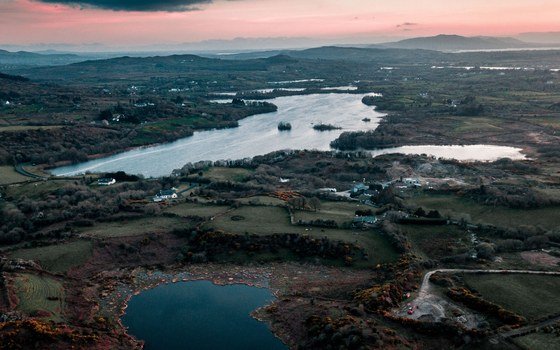
Mayo County Council has approved SSE's revised plans for the Mullafarry battery energy storage system near Killala, lifting the scheme to 80MW and 320MWh.
SSE announced the consent on 13 August 2026. The revision increases the storage the project can deliver, and the company describes the decision as a milestone for the scheme.
The site is in Killala Business Park in North Mayo, on land SSE already owns, adjacent to its existing 104MW Tawnaghmore Power Station. The approved project comprises up to 64 battery storage units together with heating, ventilation and air conditioning systems and supporting infrastructure.
At 80MW and 320MWh the facility would hold up to four hours of reserve electricity capacity. That duration is the commercially relevant number: it determines which grid services the plant can sell and for how long it can hold output when the system is short. Storage of that kind allows more renewable generation to connect by absorbing output when supply is high and releasing it when the system needs it, and it gives the transmission system operator a reserve it can call on to hold the grid stable.
Delivery is not settled. The project remains subject to a final investment decision by SSE, and the company puts construction at up to two years if it proceeds. Once operational the facility would pay commercial rates to Mayo County Council.
Ghislain Demeuldre, Head of Onshore Wind, Solar and Battery Development at SSE Renewables, said: "We welcome Mayo County Council's decision to approve our revised plans for the proposed Mullafarry Battery Energy Storage System."
Mullafarry sits within a wider group of SSE sites in the north west of Ireland. Alongside the operational Tawnaghmore Power Station, the company is progressing the proposed Glenora and Sheskin South wind farm projects in North Mayo with partner FuturEnergy Ireland, and has recently submitted plans for the proposed Crumhach Wind Farm at the site of the existing Kingsmountain and Dunneill wind farms in West Sligo.
What the practitioner should take from this
A planning consent followed by an investment decision is a two-stage commitment, and the interval between the two stages is where contractors are most exposed.
The first point is what a consent actually buys. Approval to build is not a decision to build. Suppliers approached for pricing, battery reservations or grid connection work in the period before a final investment decision are being asked to hold capacity against a project that may not proceed. Reservation fees, exclusivity payments and long-lead procurement in that window need an express contractual home, because the ordinary consequence of a project not proceeding is that the cost lies where it falls.
The second is the effect of a revised consent on an existing procurement. Where a scheme is re-consented at a larger output, any pricing, design or equipment selection carried out against the earlier permission is superseded. On a battery project the change from one storage duration to another alters cell count, containerisation, fire strategy, HVAC load and cable sizing, so a revision that reads as a change of number is a change of design. Anyone holding a price based on the earlier scheme should confirm in writing what it now covers.
The third is grid connection. A storage project's value depends on a connection offer with defined capacity and a defined energisation date, and the construction programme is usually driven by that date rather than by the works. Where the connection slips, the question is whether the construction contract carries a relevant event for it, and on many renewable projects it does not.
No dispute has been reported here. These are the ordinary commercial features of a consented scheme awaiting an investment decision, and the documents worth reading are the ones signed before the decision, not after it.