
Middle East Business
Saudi AI compute is packaged for firms that will not build a data centre
By Staff Writer | 1 September 2026
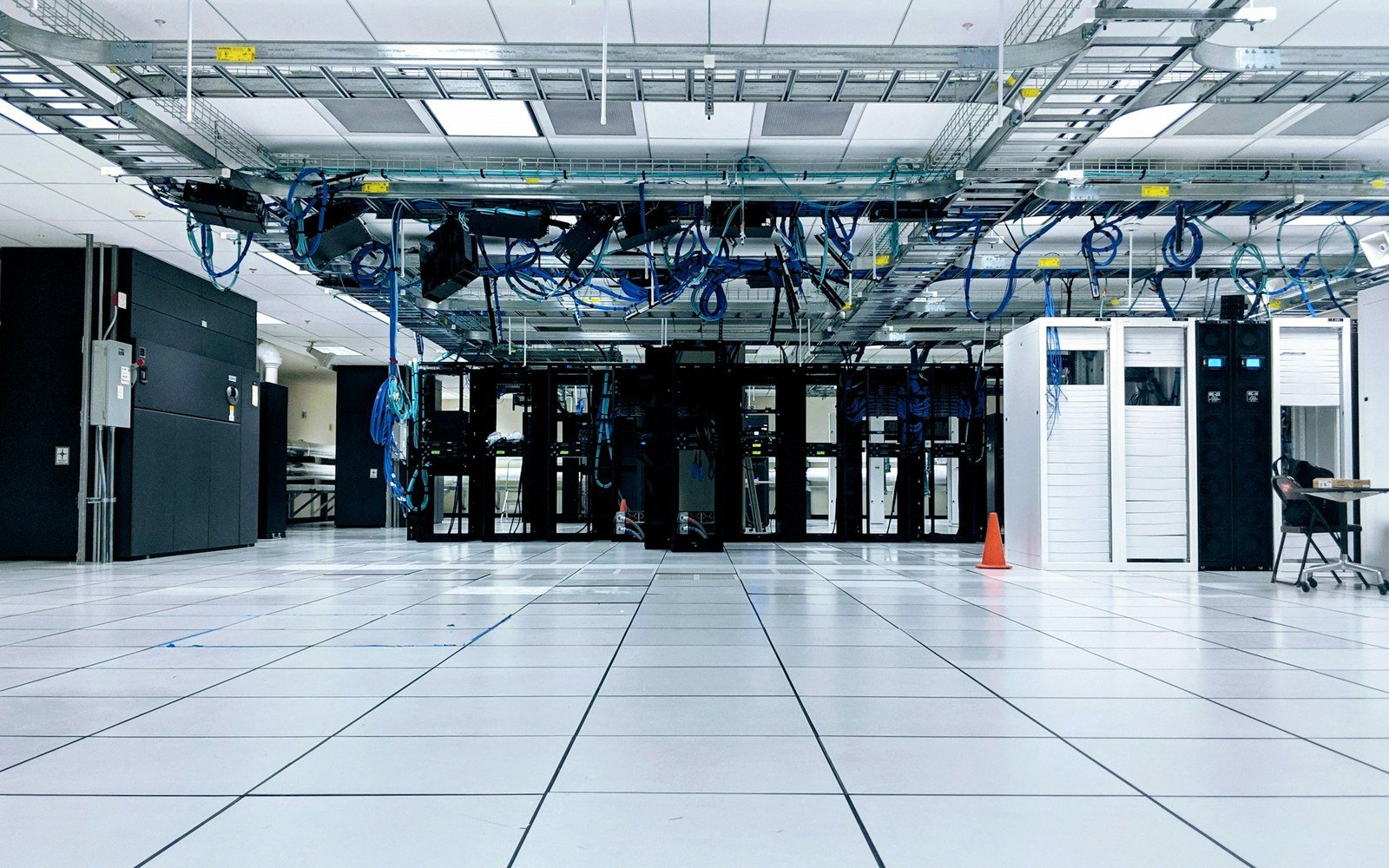
A turnkey unit aimed at oil and gas, financial services and manufacturing, sitting under a build-out measured in hundreds of megawatts.
Humain, the Saudi artificial intelligence company owned by the Public Investment Fund, and the American chip maker AMD have launched a packaged computing product called AI in a Box. It was announced on 31 August 2026 and is aimed at companies in the Kingdom that are at the early stages of adopting the technology and do not want to buy their way into hyperscale infrastructure first.
The product is directed at oil and gas, financial services and manufacturing. It runs on AMD Instinct graphics processors and AMD EPYC central processors, combined with Humain's own software stack, and is sold as a unit a company can start with and add to.
Start with a workload. Prove the value. Scale from there. We want to make the path from the first AI use case to enterprise-scale deployment dramatically simpler.
Tareq Amin, chief executive of Humain
The megawatts behind the box
The product is the small end of a programme that is not small. Under an agreement signed in May 2025, Humain and AMD are to invest up to 10 billion dollars to deploy 500 megawatts of compute capacity over five years, across Saudi Arabia and the United States. A joint venture with Cisco alongside them plans up to 1 gigawatt of capacity in the Kingdom by 2030.
Separately, Humain has agreed a financing framework worth up to 1.2 billion dollars with the National Infrastructure Fund covering as much as 250 megawatts of data centre capacity. That framework is non-binding, and is reported here as what it is rather than as committed spend.
A gigawatt of compute is a construction programme before it is a technology programme. Land, power connections, water, cooling and a substation queue all sit in front of it.
Why this reads as a building story
For anyone working on Gulf projects, the number that matters is not the model but the load. Halls of this kind are heavy consumers of power and cooling, they need high-voltage connections and standby generation, and they tend to be built to programmes that punish delay because the equipment inside them is already ordered.
Packaging compute into an enterprise-sized unit also spreads the demand. A single hyperscale campus concentrates the work in one place; a product sold to banks, refiners and factories puts smaller loads into existing buildings, which is a different kind of work for mechanical and electrical contractors and for the consultants who certify what a building can carry.
For AI to deliver its full impact, high-performance computing needs to be accessible to businesses of every size.
Lisa Su, chair and chief executive of AMD
What is not settled
No price, delivery date or first customer has been published for the product, and no location has been given for the capacity that sits behind it. The Saudi cabinet declared 2026 the year of artificial intelligence in March, which is the policy setting for all of this, but a declaration is not a schedule and nothing here should be read as one.