
Middle East Business
Oman's manufacturing contribution reaches RO 3.7 billion as the ministry sets out the next phase of Industrial Strategy 2040
By Staff Writer | 27 August 2026
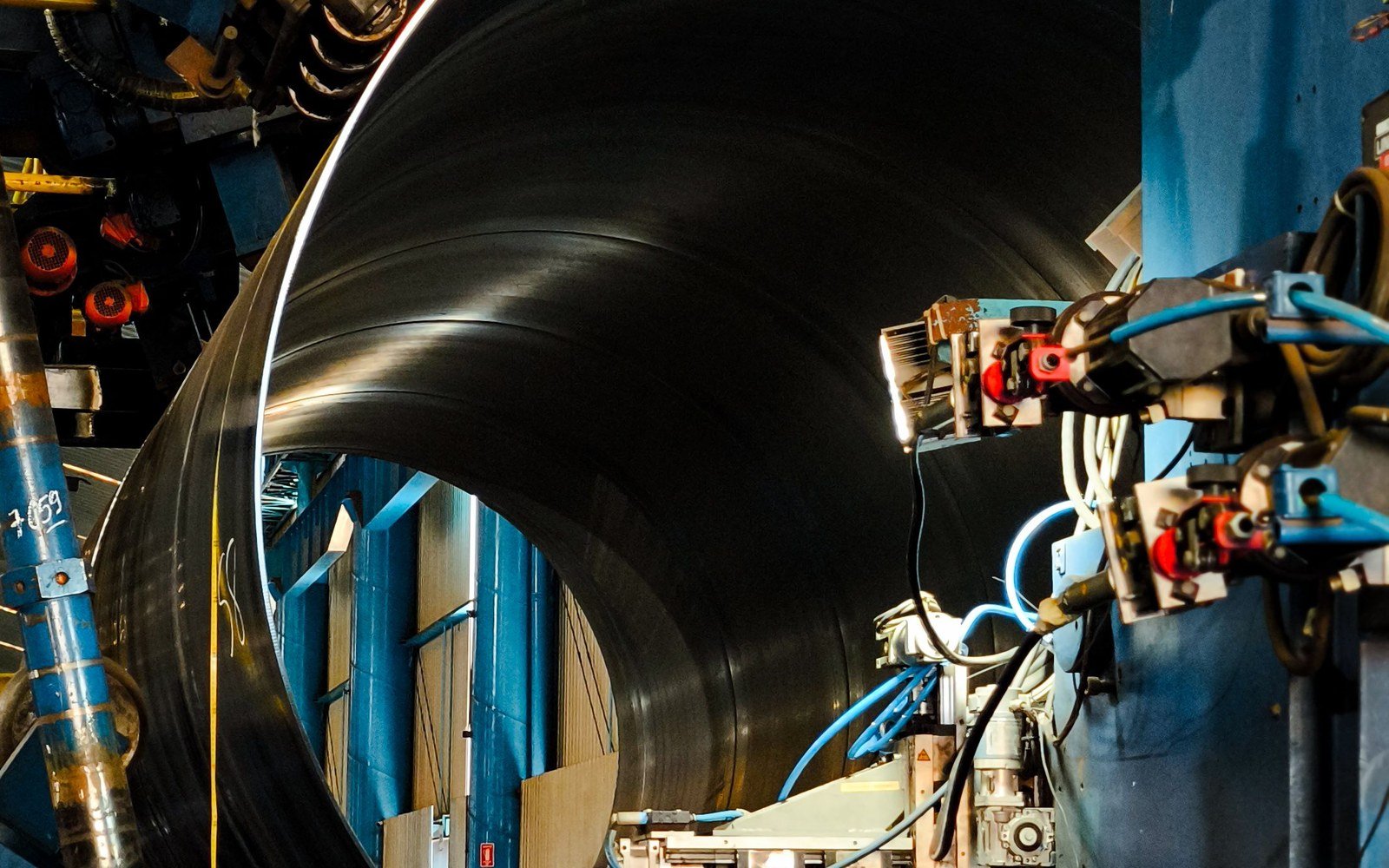
Official figures put manufacturing at RO 3.7 billion of gross domestic product at constant prices at the end of 2025 and RO 869 million in the first quarter of this year, against a 2030 target of RO 5.44 billion.
Oman has published where its industrial sector stands against the targets in Industrial Strategy 2040, and the gap between the two is the part worth reading. Figures issued by the National Centre for Statistics and Information put the manufacturing sector's contribution to gross domestic product at constant prices at approximately RO 3.7 billion at the end of 2025. The first quarter of 2026 accounted for RO 869 million of activity.
The strategy targets RO 5.44 billion by 2030 and RO 10.702 billion by 2040. On the 2025 base that means the sector has to add close to half as much again inside four years, and then roughly double from there over the following decade.
Our ambition is not limited to expanding the size of the industrial sector, but rather extends to building a sustainable, smart and competitive industrial sector capable of innovation, export and integration with other economic sectors, thereby strengthening the Sultanate of Oman's position as an industrial, logistics and investment hub in the region, and supporting the objectives of economic diversification and sustainable development.
Anwar bin Hilal Al Jabri, Minister of Commerce, Industry and Investment Promotion
The export and employment numbers
Non-oil merchandise exports grew by 1.5 per cent to the end of May 2026 against the same period in 2025, reaching RO 2.739 billion. The strategy target for that measure is above RO 10 billion by 2030, covering exports of metal products, chemicals, energy related industries and food products. Re-exports rose by 64.4 per cent over the same period and passed RO 1 billion.
On employment, Eng Ghalib bin Said Al Maamari, Undersecretary of the Ministry of Commerce, Industry and Investment Promotion for Commerce and Industry, said the number of workers in the industrial sector reached approximately 240,226 by the end of 2025, with the strategy targeting around 273,000 by 2030. The growth areas he identified are non-metallic mineral products, food industries, and machinery and equipment manufacturing.
A national target expressed in output value translates into built floor area, power connections and process plant before it translates into anything else. Where an industrial strategy is running behind its own numbers, the schemes that follow tend to be procured quickly, and speed at procurement is where contractual risk is usually accepted rather than priced.
What the ministry says comes next
The minister said the indicators reflect the success of national policies and initiatives that have contributed to strengthening the Omani industrial sector's capacity to transition from expansion in the scale of facilities and production to building a more integrated industrial ecosystem. In an interview with the national news agency, he added that the rising accumulated stock of foreign direct investment in the industrial sector confirms Oman's attractiveness as an industrial investment destination, and reflects growing confidence in its location, its infrastructure, its economic and industrial zones, its investment incentives and its access to regional and international markets.
The stated work for the next phase is partnership with the private sector and investors to accelerate the localisation of priority industries, to increase local content and to support small and medium enterprises linked to the sector.
Reading it as a pipeline indicator
The undersecretary described growth as having covered the expansion of the production base, an increase in output value and the attraction of workforce, alongside deeper local manufacturing and added value. Non-metallic mineral products, named as a growth area, is the category that includes cement, aggregate products and glass, which sit directly behind construction demand.
Two cautions belong on any reading of this. The figures are national aggregates at constant prices, so they do not identify which governorate or which zone the activity sat in. And a target is not a programme: nothing published here names a project, a budget line or a procurement date. What it does establish is the size of the shortfall the ministry is working against, which is usually the better predictor of how much industrial construction is tendered in the next four years.