
Contract award
Lazari appoints Vert Projects for Carreras building refurbishment
By Staff Writer | 12 August 2026
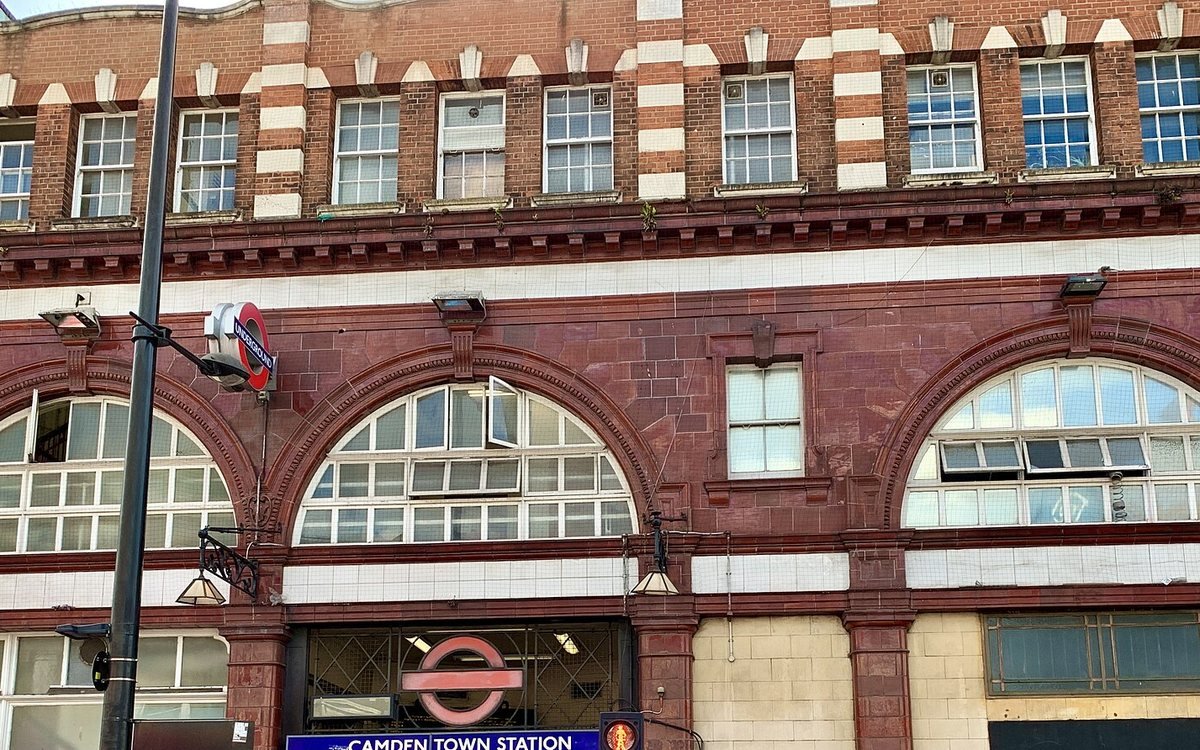
Lazari has appointed Vert Projects as main contractor for the refurbishment of the Carreras building at Mornington Crescent in London, the Egyptian-inspired former Black Cat factory latterly known as Greater London House.
The refurbishment has been designed by dMFK. It covers a new entrance and a reception and lounge area of 6,458 square feet, food and beverage hospitality space, communal co-working facilities and external space in the lightwells. On the sixth floor a roof garden of 5,866 square feet is planned.
The roof garden will accommodate photovoltaic panels alongside planters, climbers, green walls and a green roof. The works also address access to the building and its relationship to the surrounding streets. Completion is due in autumn 2027. No contract value has been published.
Vert Projects holds a design and build contract. The appointed supply chain already includes Gibberd Architects on architectural services, KPA Electrical and ODH Services on electrical and mechanical design and build, Northvale Construction on demolition and Frixos Metalworks on structural and architectural metalwork.
Design and build on a building of this character
The procurement route is the feature of this appointment worth attention. Design and build transfers design responsibility to the contractor, which on a new build is a familiar allocation. On a heavily characterful existing building it is a harder one, because the contractor is accepting responsibility for design that must respond to conditions nobody can fully see until the works are open.
The named supply chain is consistent with that structure. Architectural, electrical and mechanical design have each been placed with a design and build partner rather than retained by the employer, so the design obligation sits with the contracting chain from the outset rather than being novated part way through.
Where that arrangement generates disputes, it is usually at the boundary between the employer's requirements and the contractor's proposals. On a refurbishment the boundary is harder to police, because the employer's requirements are written against assumptions about the existing structure and services which the opening-up may not support. The question that follows is whether an unexpected condition is a change to the requirements or a risk the contractor has already priced, and the answer turns on the wording rather than on any general principle.
The building and the programme
The former Carreras factory was converted to offices in 1958 and sits between Euston, King's Cross and Camden. Lazari acquired it in August 2007 and completed a first substantial internal reconstruction in 2019, work which included refurbishment for a retail occupier that won a British Council for Offices regional award in 2022.
A completion date in autumn 2027 gives a little over two years. The scope is amenity-led rather than structural, which ordinarily helps a programme, but two elements pull the other way. A roof garden carrying photovoltaics, planting and green roof build-up imposes loading and waterproofing requirements on an existing sixth floor structure, and improving access and the relationship to the street means work at the perimeter of an occupied urban block.
Both are the kind of scope where surveys govern the outcome. Where the survey information is thorough and shared before the contract is signed, the risk allocation holds. Where it is thin, the contractor's design responsibility becomes the mechanism through which the employer's uncertainty is transferred, and that is where these projects tend to come apart.