
World News
Iran says it will declare an exclusion zone from the American blockade line to the Strait of Hormuz
By Staff Writer | 7 September 2026
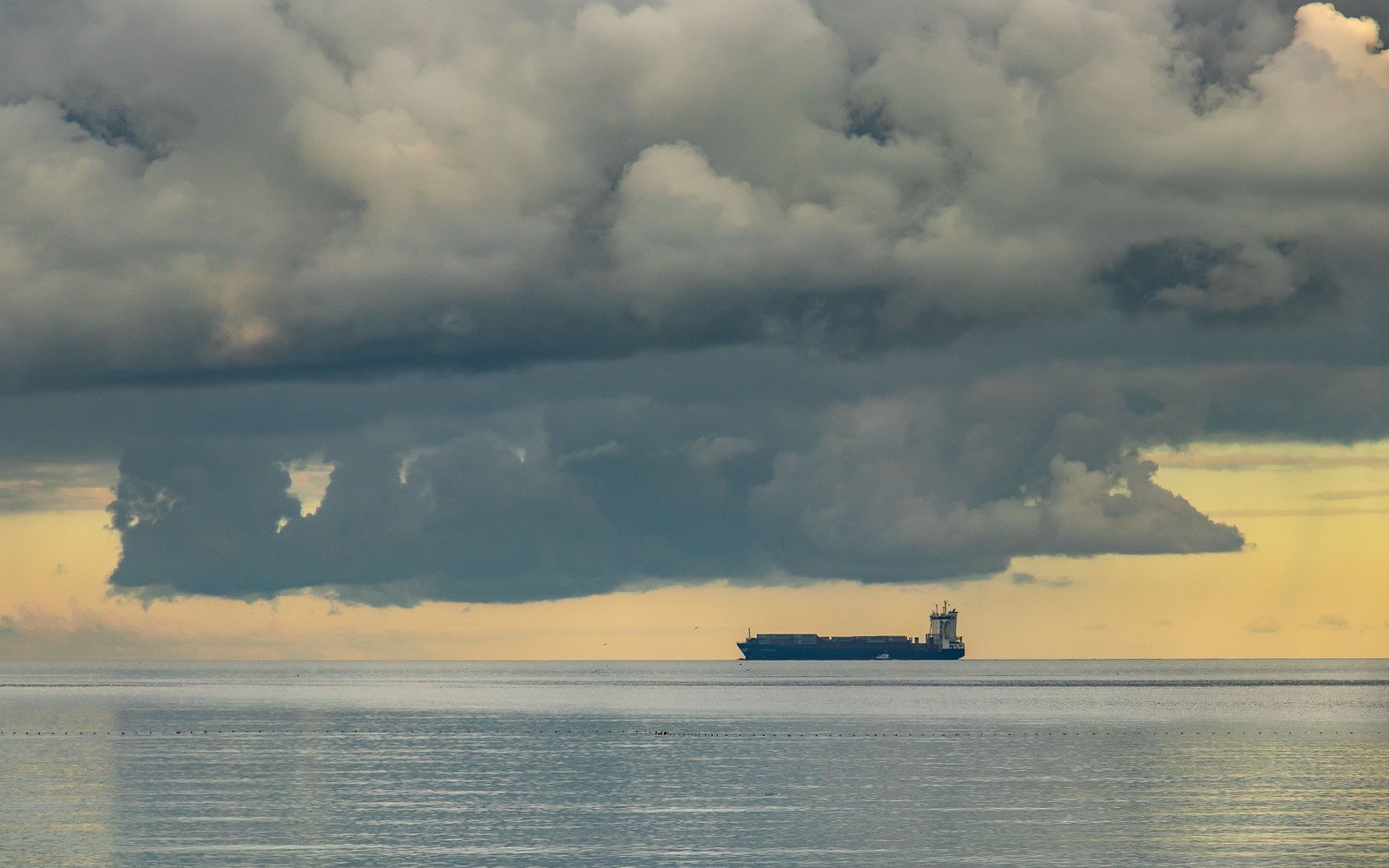
The head of Iran's Supreme National Security Council told state television that any ship identified entering the zone with the intention of transiting the strait would be put on a sanctions list. Central Command says its blockade has now redirected 92 merchant ships.
Iran intends to announce an exclusion zone outside the Strait of Hormuz, its top security official said on Sunday, a day after the United States struck three Iranian oil tankers in response to ballistic missiles fired at American warships. Mohsen Rezaei, the new head of the Supreme National Security Council, told the state broadcaster that the zone would be announced in the coming days and weeks. He said it would begin from the line of the American naval blockade, extend toward the strait, and from there continue into the Gulf.
Any ship that enters this area with the intention of passing through the Strait of Hormuz and is identified will be placed on our sanctions list.
Mohsen Rezaei, head of Iran's Supreme National Security Council
Where Iran places the line of the blockade is not clear. The American blockade, now several weeks old, is aimed at Iranian ports and at stopping Tehran from shipping out its oil. Central Command said on Sunday that more than 20 warships were supporting it, and that as of that day its forces had redirected 92 commercial vessels, disabled three and boarded two. Iran said separately on Sunday that it had struck an unmanned American vessel trying to enter the strait, a claim the American military dismissed as a total lie.
A week since the fighting resumed
The war began on 28 February with American and Israeli strikes on Iran. A memorandum of understanding signed by the United States and Iran in mid-June began to fall apart within days, each side accusing the other of violations, and after a month of relative calm attacks resumed a week ago, with the strait and Iran's southern coast again the targets. At least five people were killed earlier in the week in an American bombardment of the area where a school was hit in the war's opening strikes, according to the same reports.
Mr Rezaei also spoke about the collapsed negotiations. He said Iran had trusted the mediators in Pakistan, Qatar and Oman to restrain whichever side broke the agreement, and that it was now pursuing diplomacy with guarantees. On Telegram, the Speaker of Iran's parliament, Mohammad Bagher Ghalibaf, wrote that the period of proportionate responses to attacks on Iran was over, and that any further attack would meet a response he described as heavier and more painful.
How much oil is getting through
Energy Secretary Chris Wright said on Sunday that an average of nine million barrels of oil a day was passing through the southern route of the strait, with up to a further five million barrels moving by pipeline, and that just under 18 million barrels had passed through early last week. He put the combined flow at roughly two thirds or more of the pre-war level.
Those figures run well ahead of the shipping data. Figures from the analytics firm Kpler showed four vessels transiting the strait on Thursday, and the International Monetary Fund's PortWatch monitor put the seven-day moving average of crossings at four in the week to 30 August. Mr Wright, asked about the gap, said the numbers were not an opinion and that the commercial trackers did not have the insight or the data on what was happening. He described the blockade's mission as two-fold: to stop Iranian crude leaving, and to keep traffic moving through the strait.
So yes, it is the US Navy that's assuring that this flow comes out
Chris Wright, United States Secretary of Energy
Mr Wright said he expected other countries eventually to support the navy's escort effort. Before the war, about a fifth of the world's traded energy passed through the strait. Alongside the naval measures, the United States Treasury on Friday sanctioned a Turkish investment bank and two of its subsidiaries over ties to the Islamic Revolutionary Guard Corps, a week after acting against the UAE branches of an Egyptian bank, and a further Iran-linked bank is expected to be named this week.
For anyone moving cargo through the Gulf, the operative facts this morning are these. One navy says it is escorting ships through the strait and turning back those bound for Iranian ports. The other side says it will shortly publish a zone in which any identified ship intending to transit will be listed for sanctions. The two claims describe the same water, and the ships caught between them will find out first which one is enforced.