
UK Construction and Law
Both Houses approve the building safety levy amendments three weeks before the levy starts on 1 October
By Staff Writer | 8 September 2026
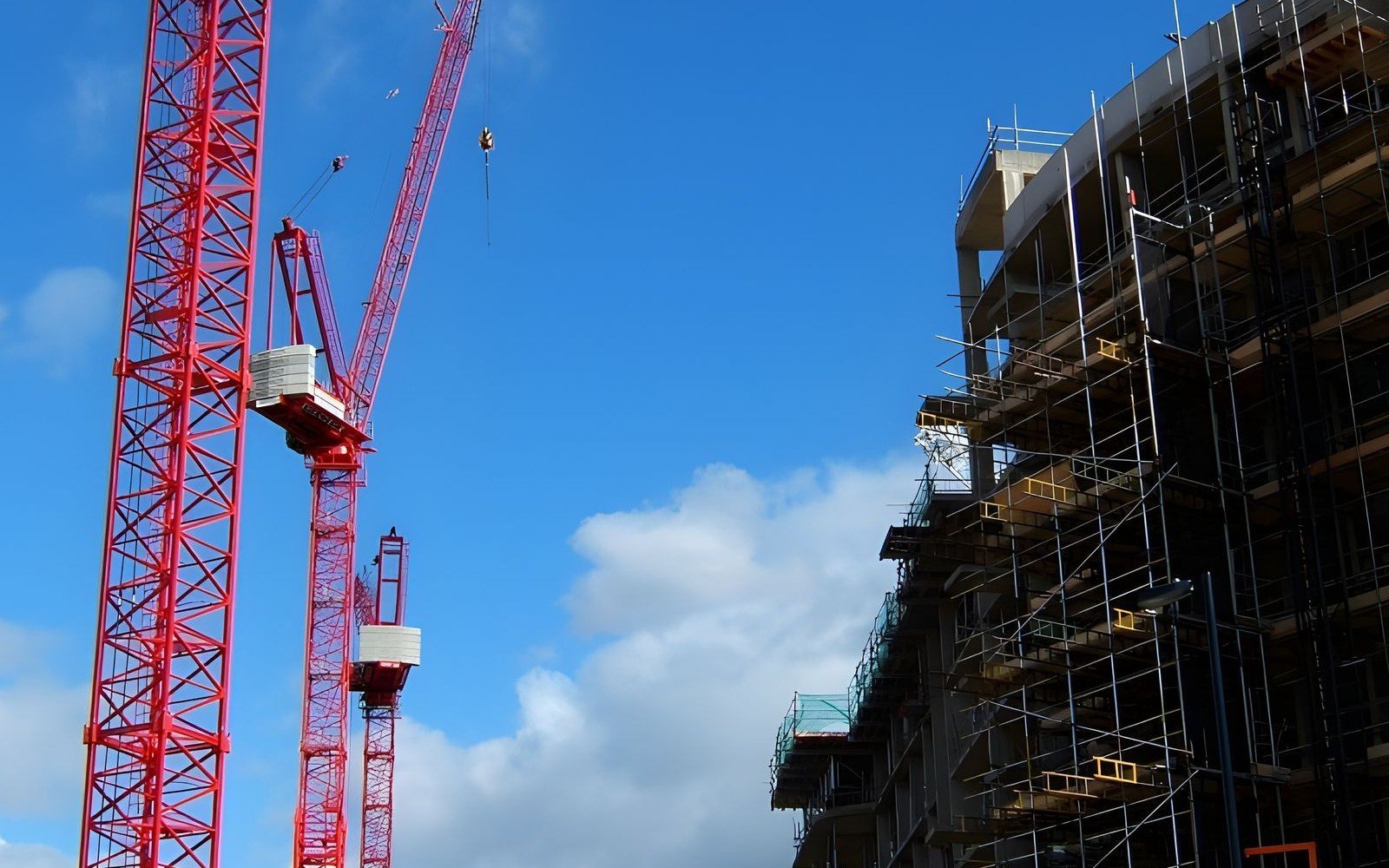
The Lords approved the draft Building Safety Levy (Amendment) (England) Regulations 2026 at 15:48 on 7 September and a Commons committee agreed them at 18:20. They widen the brownfield discount to paved and load-bearing hardstanding, exclude unlawful works and underground floorspace from the 75 per cent test, and correct defects in the 2025 regulations. The levy is charged on building control applications from 1 October 2026.
The draft was laid on 2 July, considered in Grand Committee on 2 September and moved in the Lords Chamber on Monday by Baroness Blake of Leeds, the Minister for Building Safety, Fire and Resilience. The motion was agreed without debate. The Commons committee sat from 18:00 to 18:20 and agreed the question without a division.
What the amendments do
The instrument's own heading records that it is made in consequence of defects in SI 2025/1236, the Building Safety Levy (England) Regulations 2025, and is issued free of charge to recipients of that instrument. Regulation 3 rewrites regulation 21 of the 2025 Regulations, which gives development on previously developed land a 50 per cent discount. It redefines a building as any permanent building and any other permanent man-made structure or erection, states that a structure or erection includes areas reinforced for load-bearing, paved or otherwise surfaced with man-made materials, and plant and machinery, and adds that land is not previously developed by reason of operations that are not lawful within the meaning of section 191 of the Town and Country Planning Act 1990. A new paragraph (4A) says that any underground part of a building extending beyond the above-ground part is left out of the calculation of whether at least 75 per cent of the land is previously developed, and a building that was wholly underground does not count.
The levy regulations were made in November 2025 and will come into force on 1 October 2026. These draft amending regulations will clarify how the levy will work and are intended to come into force on 1 October.
Florence Eshalomi, Minister of State for Homelessness, Democracy, Communities and Faith, Second Delegated Legislation Committee, 7 September 2026
Regulations 4 to 8 amend the determination period, levy information spot checks, levy update notices, revised levy determination notices and levy payment certificates, and Schedule 3. Regulations 9 and 10 amend the Building Regulations 2010 and the Building (Higher-Risk Buildings Procedures) (England) Regulations 2023.
The numbers the minister gave
The Government is committing 5.2 billion pounds of public money to remediation and estimates the levy must raise 3.4 billion pounds, likely over ten years or more, with the target adjustable to the number of buildings and the cost of works. Rates vary by local authority and are indexed to local house prices. Social and affordable housing is exempt, as are sites of fewer than ten units. The minister put the average charge at 1.1 per cent of house prices on greenfield land and 0.55 per cent on previously developed land, and said rates and processes will be reported on at least every three years.
The minister said developers have known of the levy since February 2021 and of its rates since March 2025. The stated purpose of the brownfield change is to remove disputes about whether car parks and hardstanding qualify.
The opposition's arithmetic
The shadow minister, Gareth Bacon, supported remediation but set out the industry's case on viability. He cited Government figures that unsafe aluminium composite material cladding has been removed or replaced on 91 per cent of high-rise residential and public buildings that had it. He listed a 4 per cent corporation tax surcharge worth 2 billion pounds, a self-remediation pledge of more than 4.1 billion pounds and reimbursements of more than 700 million pounds, close to 7 billion pounds in all, and quoted the housebuilders' trade body's estimate of an average 2,320 pounds per unit for the levy. He asked whether the 75 per cent test and the treatment of unlawful operations and underground floorspace will leave fewer sites qualifying for the discount; the minister said the changes correct drafting rather than alter the design of the levy.
The Liberal Democrat spokesman, Gideon Amos, pressed for cladding manufacturers to contribute and for buildings under 11 metres and buildings that do not meet PAS 9980:2022 to be brought within the funding regime. The minister said those properties would continue to be identified and other support explored.
For a developer with a building control application in preparation, the date is the thing. An application made before 1 October 2026 is outside the levy; one made on or after it is inside, and the brownfield discount now turns on whether the hardstanding on your site is lawful, above ground and at least three quarters of the land.