
Tech and AI
Secondhand booksellers report bulk orders with no theme, and suspect they are feeding AI training
By Staff Writer | 16 August 2026
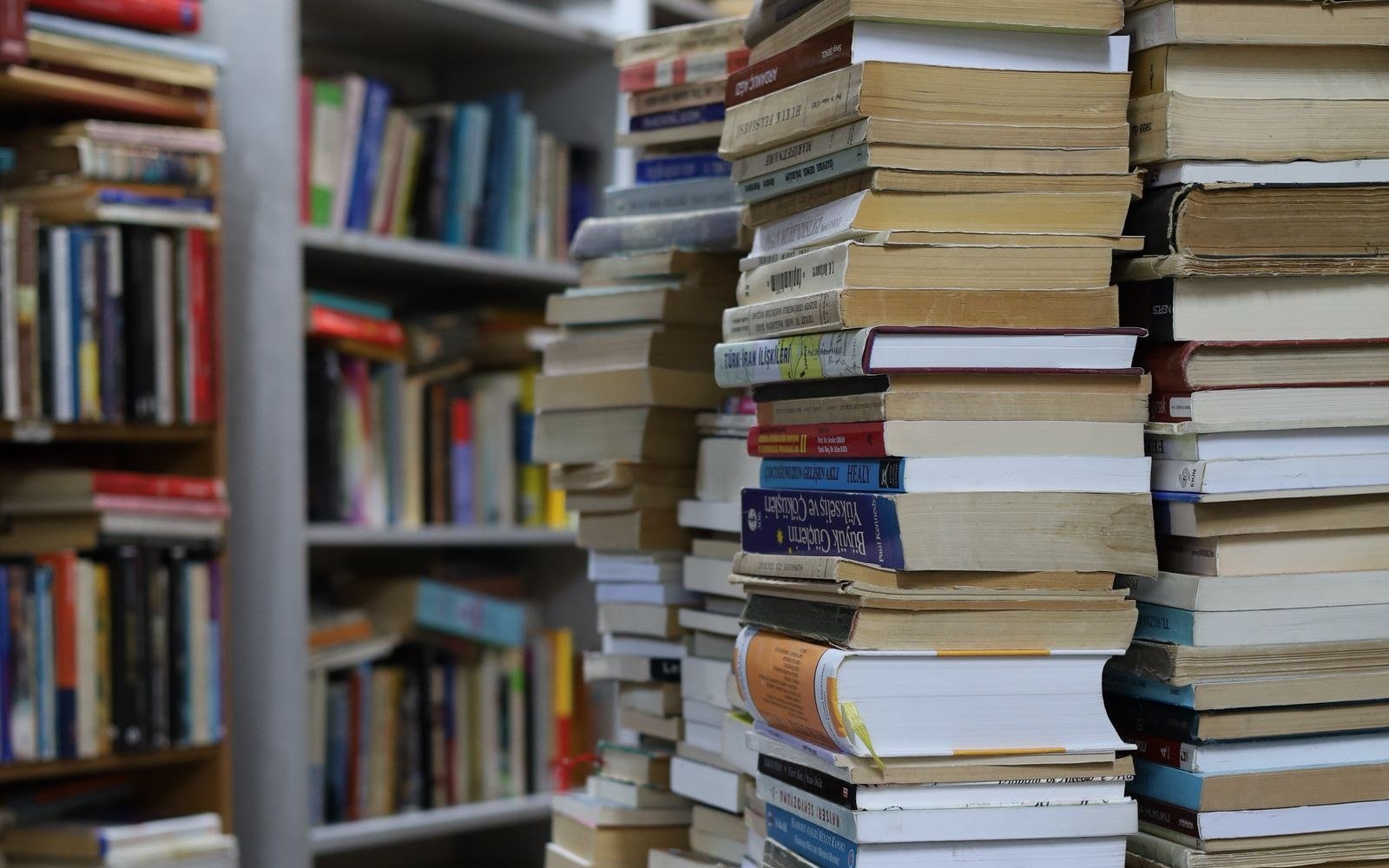
Shops in the UK and Ireland say buyers they cannot identify have been placing large, apparently random orders since May, paying full price and shipping to freight warehouses. One delivery postcode points to units near Heathrow.
Secondhand booksellers across the UK and Ireland have been receiving bulk orders from buyers they cannot place, and they think they know who is behind them. The orders come from addresses in the United States, Canada, continental Europe and Britain. Sellers in the United States, Australia and Europe report the same pattern.
What marks the orders out is that they have no shape. The trade sells by theme: a run of sport, a run of motoring, a collector filling gaps. These do not behave that way.
It's definitely a strange combination of books. Normally a book order is on a theme but this is all over the place
Stuart Manley, co-owner, Barter Books, Alnwick
One order taken by his shop asked for an Estonian translation of a John le Carre novel, a copy of Anne Bronte's Agnes Grey from one specified imprint, and the October 1983 issue of a monthly warship magazine. Manley says he has sold hundreds of unconnected books to three buyers for a total of about £4,000, and that the orders started arriving three months ago.
The same pattern in Ireland and the west country
Jim Shaughnessy, who owns MW Books in Claregalway, has been receiving large and varied orders since May. He described them as sporadic, presumably machine driven and carrying little thematic currency, running from books on agricultural implements in eighteenth century Africa through to biographies of 1950s racing drivers. He added that he did not see that a seller has the right to dictate what a customer does with a purchase, while calling the selection more than curious.
David Gower-Spence, who owns BookLovers of Bath, took a rush of orders for about 200 books between May and July, from buyers other sellers have also named. He said it was overwhelming for a while, and that he is relatively well organised.
One seller who asked not to be named has supplied 6,000 books to similar buyers since January. The buyers pay full price and do not ask for a discount, which is not how bulk buying normally works.
The scale is easier to grasp against a shop's ordinary trade. Manley's business turns over two or three thousand books in a typical week, and one recent bulk order from a Canadian company matched a full week's sales on its own. He says he has "never seen the like of this after 30 years in the second-hand book trade".
Where the books go
The aliases behind the orders are opaque even to experienced sellers, and different buyers have been observed shipping to the same address. One delivery postcode used by several buyers points to a group of freight warehouses near Heathrow airport. Among the named buyers is a Canada based business that describes itself as North America's leading book recycling company.
The suspicion in the trade is that the books are being bought to be scanned and then pulped. Destructive scanning means removing a book's spine so the loose pages can be fed through a scanner at speed, after which the remains go for recycling. It is fast, it is cheap, and it destroys the copy.
Manley's own explanation is short: "My theory is that it's masses and masses of AI money being squandered."
What the developers say
Anthropic, which develops the Claude assistant, has said that its models are trained on a mix of publicly available web data, commercially acquired datasets and data the company generates itself, that sourcing books is a widely used approach for training large language models across the industry, and that none of its data acquisition programmes buy and destroy rare or antiquarian books.
That statement answers the antiquarian point and leaves the ordinary secondhand book where it was. For the trade the immediate effect is commercial rather than legal: stock is moving at a rate that has nothing to do with what readers want, prices are being met without argument, and shelves that took years to build are emptying into unmarked warehouses. A seller who cannot identify the buyer cannot make a decision about the sale, and on the evidence these sellers have, none of them can.