
Tech and AI
Firm putting data centres in orbit doubles its valuation to 2.3 billion dollars, and starts buying launches years ahead
By Staff Writer | 23 August 2026
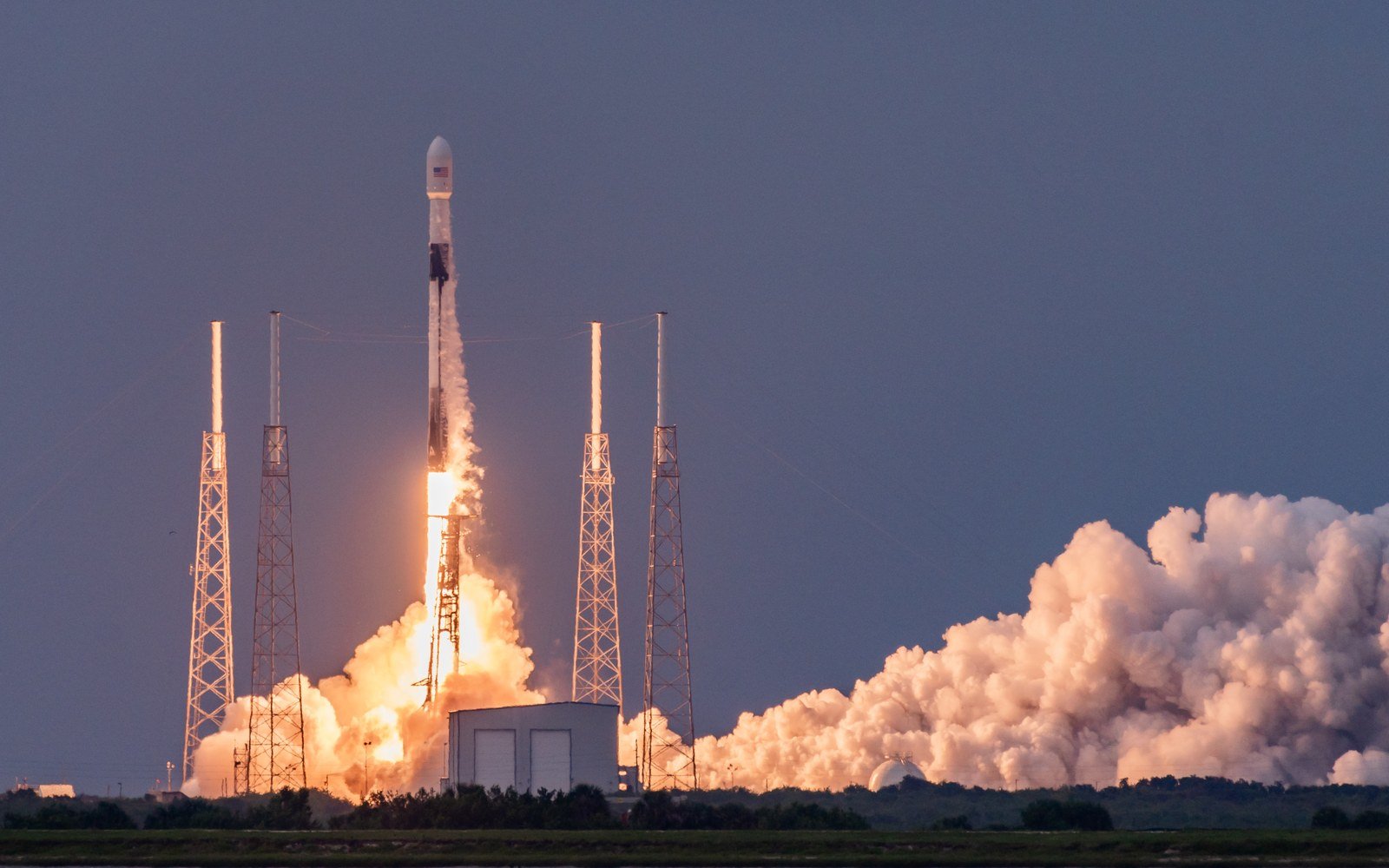
The pitch is that computing goes to the power rather than the other way round. The constraint is no longer chips or capital but room on a rocket.
Starcloud has raised 250 million dollars at a post-money valuation of 2.3 billion dollars, roughly double where it stood in March. Nvidia and Cisco Investments came in as new backers alongside existing ones, and the total raised since the company was founded in 2024 now stands at 450 million dollars. The proposition is straightforward and slightly mad: put the machines in orbit, where sunlight is continuous and heat can be radiated away, and stop fighting terrestrial grids for connections.
Last November we put the first NVIDIA H100 in orbit. Today this fresh capital empowers us to build the infrastructure to launch many more of NVIDIA's most advanced GPUs into space.
Philip Johnston, Co-Founder and Chief Executive of Starcloud
The first spacecraft went up in November 2025 carrying a single data centre grade processor. Since then the company says it has trained a model in orbit, run a version of Google's Gemini there, and worked out how to operate high powered processors in a place where the only way to shed heat is to radiate it. The next spacecraft, about seven times the mass of the first and drawing roughly a hundred times the power, is due to fly in January.
Where the money is going
Three destinations are named: production capacity, engineering work with the chip maker on a module built to survive radiation, and the procurement of future launch allocation. The third of those is the one to read twice.
Rideshare reservations on the workhorse rocket are reported to be unavailable beyond late 2028 or early 2029, as its operator moves toward a much larger vehicle. A firm planning a constellation of 88,000 spacecraft and 20 gigawatts of orbital computing is buying slots that do not exist yet.
Cisco has long been a leader in secure data center infrastructure and looks forward to bringing that expertise to the emerging world of orbital data centers
Aleem Rizvon, Vice President of Cisco Investments
On the ground, the immediate work is a 100,000 square foot production line in Woodinville, Washington, for the third generation spacecraft, a three ton machine in the 200 kilowatt class. That is a factory fit out with the schedule of a launch campaign behind it, which is a demanding brief for anyone building it.
Why it belongs in a construction paper
Because the reason this company exists is the same reason planning committees in Britain and America are now arguing about substations. The energy needed for machine learning has outrun the ability of grids to deliver it in the places developers want to build, and every response to that is a construction problem: behind the meter generation, on site storage, curtailment agreements, liquid cooling, and now this, which is the option of moving the load off the planet.
Nobody should read a 20 gigawatt target as a forecast. It is a fundraising ambition with a great deal between it and a working system, and the honest position today is one flown spacecraft and a second on the pad. What the round does establish is that serious industrial money now treats grid capacity as the binding constraint on computing, and is willing to price alternatives that would have looked ridiculous three years ago. That view is worth holding in mind by anyone whose order book depends on the data centre programme continuing to look sensible on land.