
UK Construction and Law
Solar park consented in Lincolnshire after great negative weight was given to the loss of farmland
By Staff Writer | 22 August 2026
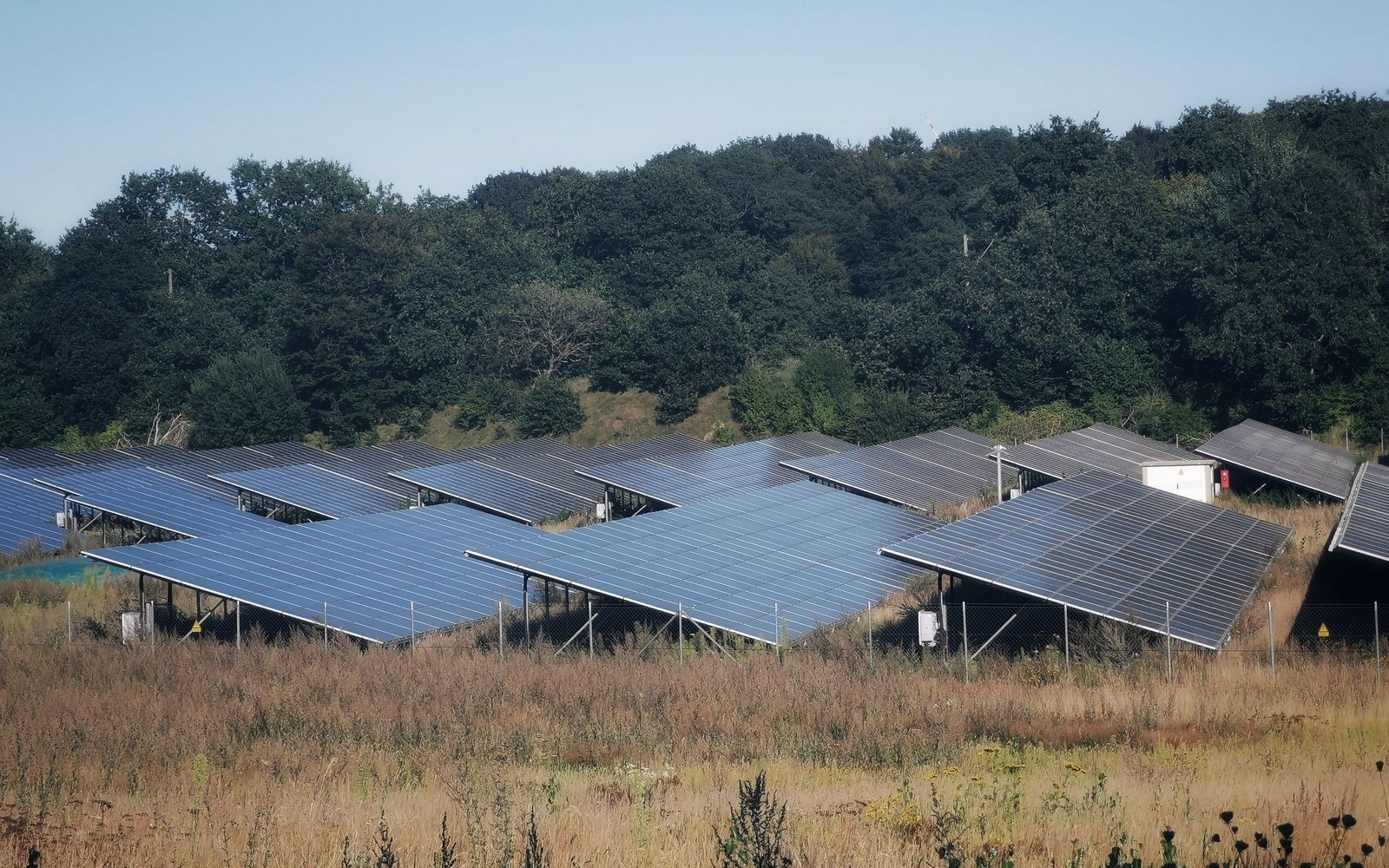
A development consent order was made on 21 August for the Beacon Fen Energy Park, a ground mounted solar generating station with battery storage north east of Sleaford. The examining inspector put great negative weight on the loss of best and most versatile agricultural land, the Secretary of State agreed with that weighting, and consent followed anyway. The decision also refuses the carbon baseline the applicant had used.
The decision was taken by Baroness Curran, Parliamentary Under-Secretary of State at the Department for Energy Security and Net Zero, on behalf of the Secretary of State, under section 114 of the Planning Act 2008. The order was made with modifications. The application was submitted on 8 April 2025, accepted on 1 May 2025, examined from 23 September 2025 to 23 February 2026, and reported on 22 May 2026. The examining authority was a single inspector, Andre Pinto.
The site lies about 6.5 kilometres north east of Sleaford and 2.5 kilometres north of Heckington, mostly within North Kesteven District Council, with the cable corridor and the connection to the Bicker Fen substation reaching into Boston Borough Council. The decision letter records an agreement secured for the generation of 400MW, and the applicant's own statement that the battery system has an overall output capacity of 600MW.
The land use finding, and what it was worth
The inspector recorded permanent loss of 29.99 hectares of agricultural land, about 67.92 per cent of it best and most versatile, and temporary loss of 463.28 hectares, of which 54.98 per cent is best and most versatile. Within the order limits the temporary loss of that better land is 254.7 hectares and the permanent loss is 20.37 hectares. Temporary here means the operational life of the scheme, which is up to 40 years.
Lincolnshire County Council put the total agricultural land lost at 493.27 hectares, of which 277.3 hectares, or 56 per cent, is best and most versatile, and told the examination that cumulative loss of such land across the county is reaching 7,044 hectares with no threshold set for the point at which it becomes unacceptable. The inspector accepted that finding while noting that all considered developments together account for 2 per cent of the county's agricultural land, of which 0.82 per cent is the better grade.
Great negative weight is the heaviest adverse weighting given anywhere in this decision, and the order was made regardless. The need case carried substantial positive weight; landscape and visual effects and residual harm to heritage assets carried moderate negative weight each.
The carbon baseline was refused, and the consent followed
To assess greenhouse gas impacts the applicant compared the lifecycle emissions of the scheme against a counterfactual unabated combined cycle gas turbine facility. The Secretary of State treats that comparator as an inappropriate baseline, because national policy has required combustion power stations above 300MW to be built carbon capture ready since 2011, so unmitigated emissions cannot stand as the point of comparison. She was satisfied nonetheless that the scheme makes a positive contribution to decarbonisation.
The battery compound was treated as associated development. The inspector accepted that it would be a physically dominant feature, and of a capacity larger than the storage proposed in other recently granted orders, and still found that it met the tests of direct relationship, subordinacy, cross subsidisation and proportionality.
The ExA concludes that there is a compelling case in the public interest for the powers sought and that the benefits of the proposed development outweigh the harm to heritage assets, the adverse visual and landscape effects, the adverse cumulative effects and the adverse land use effects due to the loss of best and most versatile land, although the ExA does give great weight to the effects of the proposed development on land use.
Andre Pinto, the examining inspector, in his report to the Secretary of State
What the Secretary of State changed in the order
The modifications repay reading by anyone drafting a draft order. Powers considered too broad were narrowed: the article permitting use of airspace within the order land was deleted as unnecessary and without justification, airspace was removed from the scope of subsoil acquisition, and the notice period for temporary possession was extended to 28 days for consistency with earlier orders. Where consent is deemed to be given after a period has run, the undertaker must now notify the consenting authority of that provision when it applies, which the decision explains is to secure transparency and fairness.
The Crown Estate Commissioners recorded that they disagree with the view that section 135 consent must be unconditional and obtained before an order is made, then gave consent anyway under a separate agreement, subject to particular Crown rights wording in the order.
Any challenge is by judicial review only, in the Planning Court, within six weeks beginning with the day after publication.