
UK Construction and Law
Two anti-dumping measures reach construction plant and steel tube within twenty four hours of each other
By Staff Writer | 21 August 2026
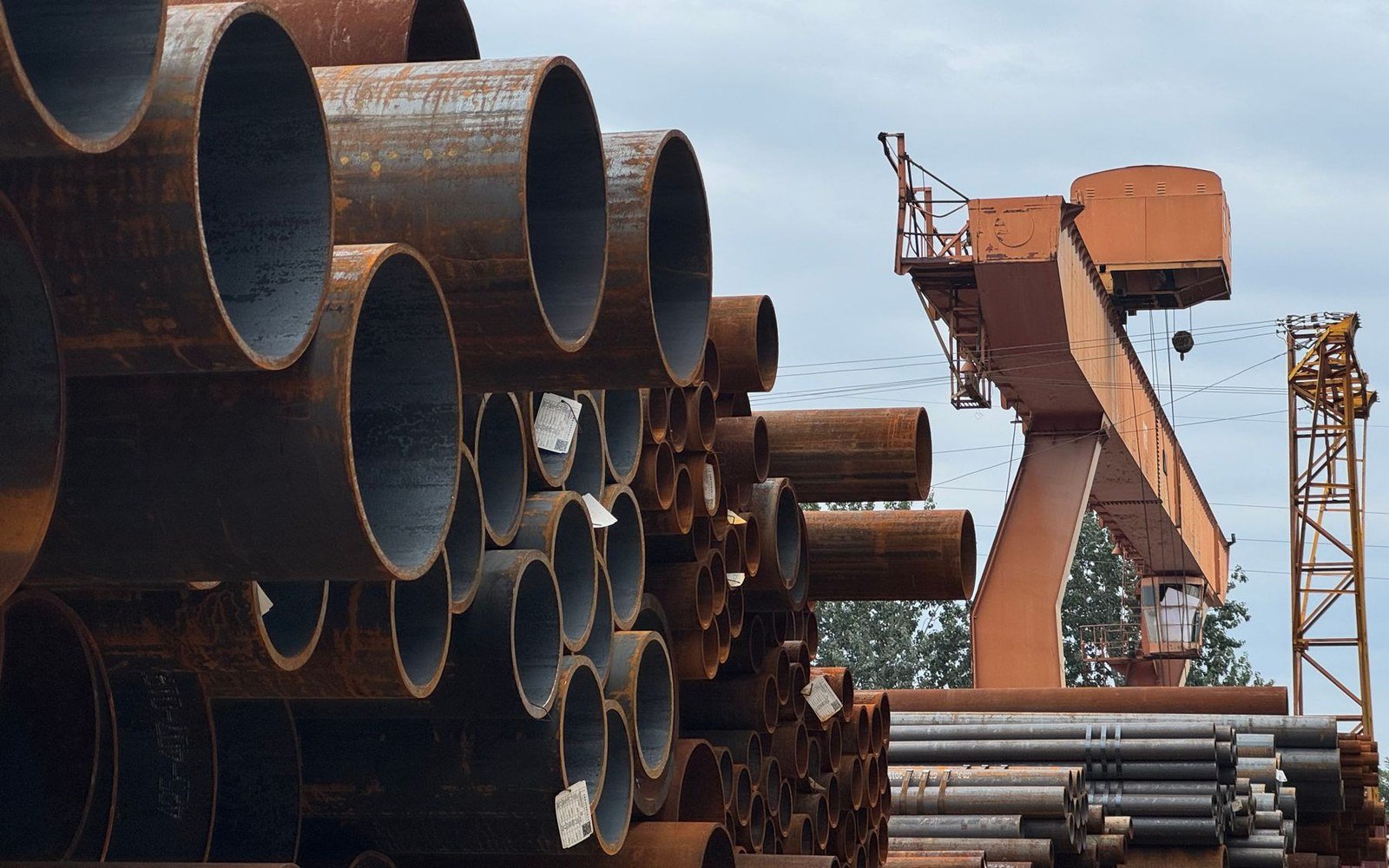
A provisional anti-dumping duty of 16.25 per cent to 71.74 per cent on boom lifts imported from China took effect yesterday, and every importer of those goods must now give a bank guarantee, bond or cash for the estimated duty. A separate measure on welded tube and pipe from Belarus and China, at 38.1 per cent and 90.6 per cent, was extended for five years by a notice that comes into effect today.
Neither measure is aimed at construction, and both land on it. Taken together they change the delivered cost of two of the most ordinary items on a site order: the machine most teams hire to work at height, and the small diameter welded tube that runs through scaffolding, services and handrails.
Boom lifts, in force from yesterday
The Trade Remedies Authority recommended, and the government agreed, a provisional anti-dumping measure on boom lifts originating from China. The duty ranges from 16.25 per cent to 71.74 per cent according to producer, and it came into effect on 20 August 2026. It applies for up to six months, or until a definitive remedy is implemented, whichever is sooner, while the full investigation continues.
The investigation was opened on 19 December on the application of a United Kingdom producer, Niftylift Limited, based in Milton Keynes. The authority found evidence that boom lifts from China are being dumped and have caused or are causing injury to the United Kingdom market, and that provisional measures now were in the economic interest of the country.
Boom lifts play a key role across the country in construction of all types, including in maintaining football stadiums.
Jessica Blakely and Carmen Suarez, Chief Executives of the Trade Remedies Authority
The mechanism matters as much as the rate. A provisional affirmative determination requires every importer of the goods to give a guarantee for the estimated anti-dumping duty on its imports, for six months from 20 August 2026 or until a definitive remedy, whichever comes first. The guarantee may be a bank guarantee, a bond or cash. That is a working capital call on plant hirers and importers from yesterday, quite separate from whatever the definitive rate turns out to be.
Welded tube and pipe, extended for five years from today
The second measure is older and has just been renewed. Trade remedies notice 2026/24 was published on 20 August 2026 and comes into effect the day after publication, which is today. It gives effect to the Secretary of State's decision to accept the authority's recommendation, following expiry review ER0081, that the existing anti-dumping duty on welded tubes and pipes from Belarus and China be extended for a further five years. The review was initiated on 27 January 2026, and the measure would otherwise have expired on 30 January 2026. The duty is now varied from that date and ceases to apply on 30 January 2031.
The rates are unchanged, because the authority found it had not been appropriate to recalculate them. All overseas exporters in Belarus pay 38.1 per cent and all overseas exporters in China pay 90.6 per cent. The goods are welded tubes and pipes of circular cross section, of iron or non-alloy steel, of an external diameter not exceeding 168.3mm. Line pipe for oil or gas pipelines, casing and tubing for drilling, precision tubes, and tube with attached fittings for use in civil aircraft are all outside it.
Two earlier decisions shape what the extension now covers. After an earlier transition review the duty ceased to apply to goods from Russia, and galvanised tube was taken out of the measure. The authority then reconsidered that transition review and reinstated the measure on galvanised tube, so galvanised product is inside the duty that has just been extended.
What a buyer has to do about it
Both notices turn on classification rather than on description. The tube measure names four commodity codes, and goods classified to one of those codes that do not answer the goods description are excluded at nil per cent under a separate additional code, which has to be declared to obtain the exclusion. A tube order placed on price alone, without checking origin and code, can arrive carrying a duty of nearly double its invoice value.
The Trade Remedies Authority is an arm's length body of the Department for Business, Innovation, Science and Trade. It investigates whether a remedy is needed; the decision to impose one is the Secretary of State's.
Neither of these is a price rise a supplier will absorb quietly, and neither is a variation event under most standard forms. The contractor who priced imported plant hire or imported tube in the spring is the one holding the difference.