
Tech and AI
Air traffic controllers will move aircraft off forecast contrail-forming altitudes over the North Atlantic in a 5 million pound trial of AI weather prediction
By Staff Writer | 19 August 2026
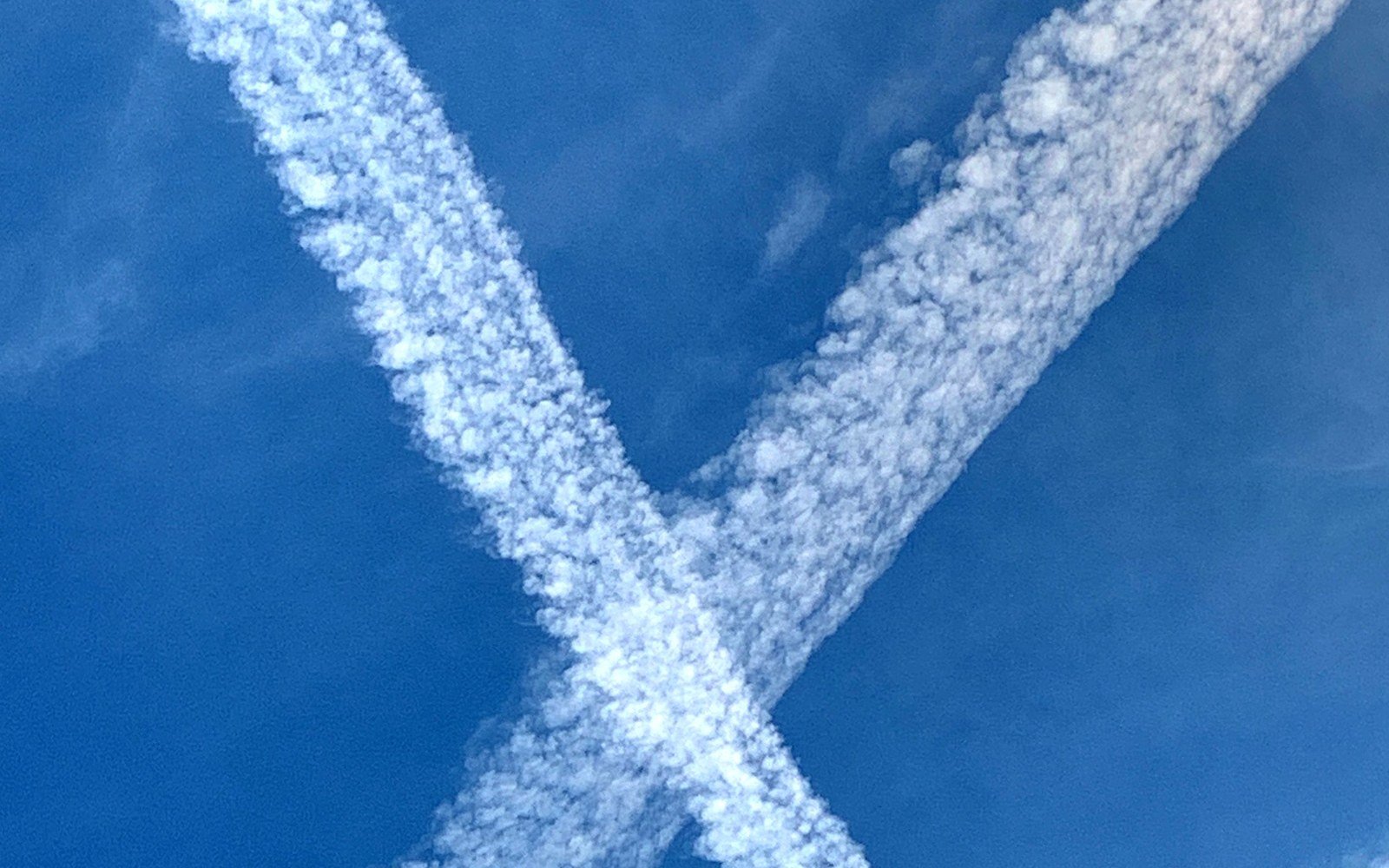
A consortium of Google, the Department for Transport, the Met Office, the UK air navigation provider, Contrails.org, Imperial College London and the University of Cambridge began Operation Blue Skies on 18 August. Over 30 months it will forecast where warming vapour trails will form in Shanwick oceanic airspace and route aircraft around those conditions, mostly by altering altitude by about 2,000 feet.
Contrails are made when hot engine exhaust meets cold air at altitude and ice crystals form. Most vanish in seconds. In cold and humid conditions they persist and spread into thin cloud, and that cloud traps heat which would otherwise leave the atmosphere. The proposition being tested is narrow and testable: if you can predict where those conditions sit, you can fly around them at very little operational cost.
The programme is worth 5 million pounds and runs for 30 months, with 2.65 million pounds of it from the Department for Transport through the Aerospace Technology Institute programme and the rest co-funded by the industry partners. The announcement states that the whole of the government grant goes to the academic, non-profit and aviation partners. Google UK is taking part without charge, putting in 1.4 million pounds in kind as research expertise, engineering time and computing capacity.
How it will work in the air
Satellite images and flight data are used to identify where aircraft have produced contrails before. That is combined with weather patterns to forecast where the conditions will occur next. The forecast goes to the air navigation provider, whose controllers direct pilots away from those layers, through the ordinary communication channels they already use.
The airspace chosen is Shanwick, the eastern half of the North Atlantic corridor, which the announcement says accounts for approximately 5 per cent of global contrail warming, much of it concentrated between November and February.
Trials run on selected evenings and nights in the winters of 2026-2027 and 2027-2028, between 20 and 40 test days each winter, when traffic is lighter. The manoeuvres are minor altitude adjustments within standard operations. Aircraft already change level routinely to avoid turbulence and weather, so passengers should notice nothing.
This trial will allow us to test how contrail avoidance could work within the complex, highly coordinated environment of air traffic management.
Ian Jopson, Director Sustainability at NATS
How much of the problem it addresses
Dr Paul Hodgson, Google's technical lead on the operation, put contrail warming at something like a third of all aviation climate warming, and accepted openly that the precise figure is uncertain, saying researchers are confident it is either quite a large problem or a very large problem. That candour is worth something. A one third share, if it holds, would make vapour trails a larger contributor than the fuel burned on the flights that make them.
We're partnering with Google to back British experts and innovators to find practical ways to make flying cleaner. This is a world-first, and it's British ingenuity leading the way. By testing small tweaks to flight paths over the Atlantic, we can cut the vapour trails left behind by planes.
Keir Mather, Parliamentary Under-Secretary of State at the Department for Transport
The division of work has been set up so that the party with the commercial interest does not mark its own homework. Google builds the prediction models and the satellite verification. The Met Office builds a new UK contrail forecast capability. Imperial College London and the University of Cambridge evaluate the outcomes and provide independent verification of the climate effect. Contrails.org assesses and integrates the forecasts and shapes the trial parameters.
The engineering point
This is a rare instance of a climate measure that requires no new plant, no fuel, no fleet replacement and no airport works. It asks an existing control system to use a better forecast. If it works it is close to free, and if it does not the evidence will be collected in a form other air navigation providers can read.
What the trial cannot settle is whether small gains of this kind keep pace with growth. The government is backing airport expansion at the same time, and the same company running the prediction models is building the data centres that AI demand requires. The arithmetic of that will be argued elsewhere. On its own terms, this one is a well designed experiment with the verification handed to people who are not selling the answer.