
Milestone
Digital in-cab signalling carries its first East Coast passengers
By Staff Writer | 01-09-2026
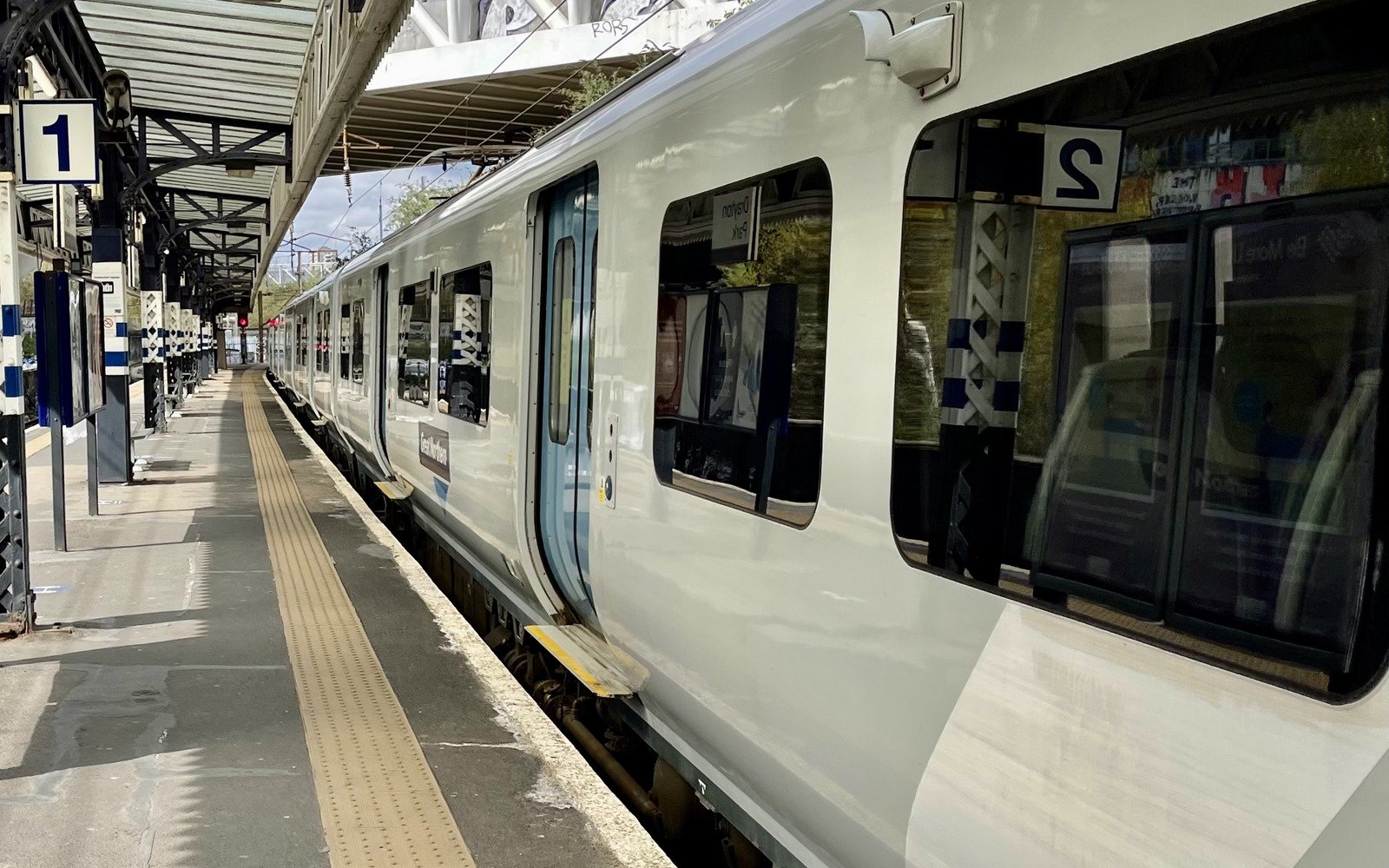
A Great Northern service has become the first passenger train to run under digital in-cab signalling on the East Coast Main Line. The 08.05 to Moorgate was signalled out of Welwyn Garden City station on Monday 31 August 2026. The 15 mile section between Welwyn and Hitchin has been commissioned as an overlay, so trains can pass through it under either conventional lineside signals or the in-cab system.
The work sits inside the East Coast Digital Programme, which the infrastructure manager describes as funded by government at 1.4 billion pounds. That figure is the funding for the programme as a whole. It is not the value of any contract let under it, and no contract sum is published with this announcement.
The overlay is the commercial point. A section that carries both systems at once lets drivers be trained on the live railway before the conventional signals come out.
What has been switched on
The system replaces lineside signals with a screen in the cab that tells the driver how far and how fast the train may travel. The infrastructure manager states that it supervises the train's speed and can bring the train to a stop. The technology is the European Train Control System, and this is its first stage on the East Coast Main Line.
Great Northern's Class 717 fleet transitions in and out of the system when entering and leaving the Welwyn to Hitchin area. The service groups now running under it are the Great Northern trains between Moorgate and Welwyn Garden City, and between Moorgate and Stevenage by way of Hertford North. Those services already begin and end their journeys under the system, because the section between Moorgate and Finsbury Park operates without lineside signals at all. A small number of early morning and late evening services extend to and from Letchworth and so run through a longer stretch of it. More fleets and passenger services are to begin using the in-cab system from 2027.
Who carried out the work, and what the parties say
Siemens Mobility is named as the train control partner and systems integrator on the programme. Its joint chief executive officer and managing director for rail infrastructure and software in the United Kingdom and Ireland, Rob Morris, said the system was tested and validated remotely at the company's digital twin integration lab at Chippenham in Wiltshire.
This milestone proves that the industry is ready for digital signalling on one of the busiest main lines in the country. As the train control partner and systems integrator, we've successfully delivered the European Train Control System, testing and validating it remotely at our digital-twin integration lab in Chippenham, Wiltshire to minimise disruption to services, while maintaining the highest standards of safety.
Rob Morris, joint chief executive officer and managing director for rail infrastructure and software, Siemens Mobility UK and Ireland
This is the start of a generational change in how the East Coast Main Line, which carries more than 20 million passengers each year, is operated. Digital signalling will give passengers and freight customers a more capable and higher performing railway, not just on the East Coast but ultimately across the country.
Ellie Burrows, regional managing director, Network Rail
The infrastructure director at the operator of Great Northern, Adrian Gogay, put the emphasis on what was learned on the earlier scheme between Moorgate and Finsbury Park, and on what the new section now allows across the industry.
This stretch of digitally controlled track between Welwyn and Hitchin provides the opportunity for all operators to train drivers ready for the system to be extended still further.
Adrian Gogay, infrastructure director, GTR
The rail minister, Lord Hendy, described the change as backed by 1.4 billion pounds of government investment and as a demonstration of a commitment to a more reliable and more efficient railway.
The reading for contractors
Two things in this announcement matter to anyone pricing or programming work of this kind. The first is the overlay. Running both signalling systems over the same 15 miles doubles the assurance burden and the maintenance liability for as long as it lasts, and it is being paid for to buy driver training time rather than capacity. Any programme that assumes the conventional signals come out on the day the new system is commissioned has mispriced the transition.
The second is the testing route. Validating the train control system at a laboratory rather than in possessions moves risk off the railway and on to the integrator's own facility, and it changes where the delay sits if the assurance runs late. The announcement records that the section went through what it calls a rigorous process of testing, assurance and approvals before the first service ran, but publishes no dates for that process, no possession count and no cost. It names no further contracts, no dates for the extension beyond 2027 and no value for any element of the works.