
Contract award
Dubai splits a 1.161 billion dirham road corridor into two contracts
By Staff Writer | 01-09-2026
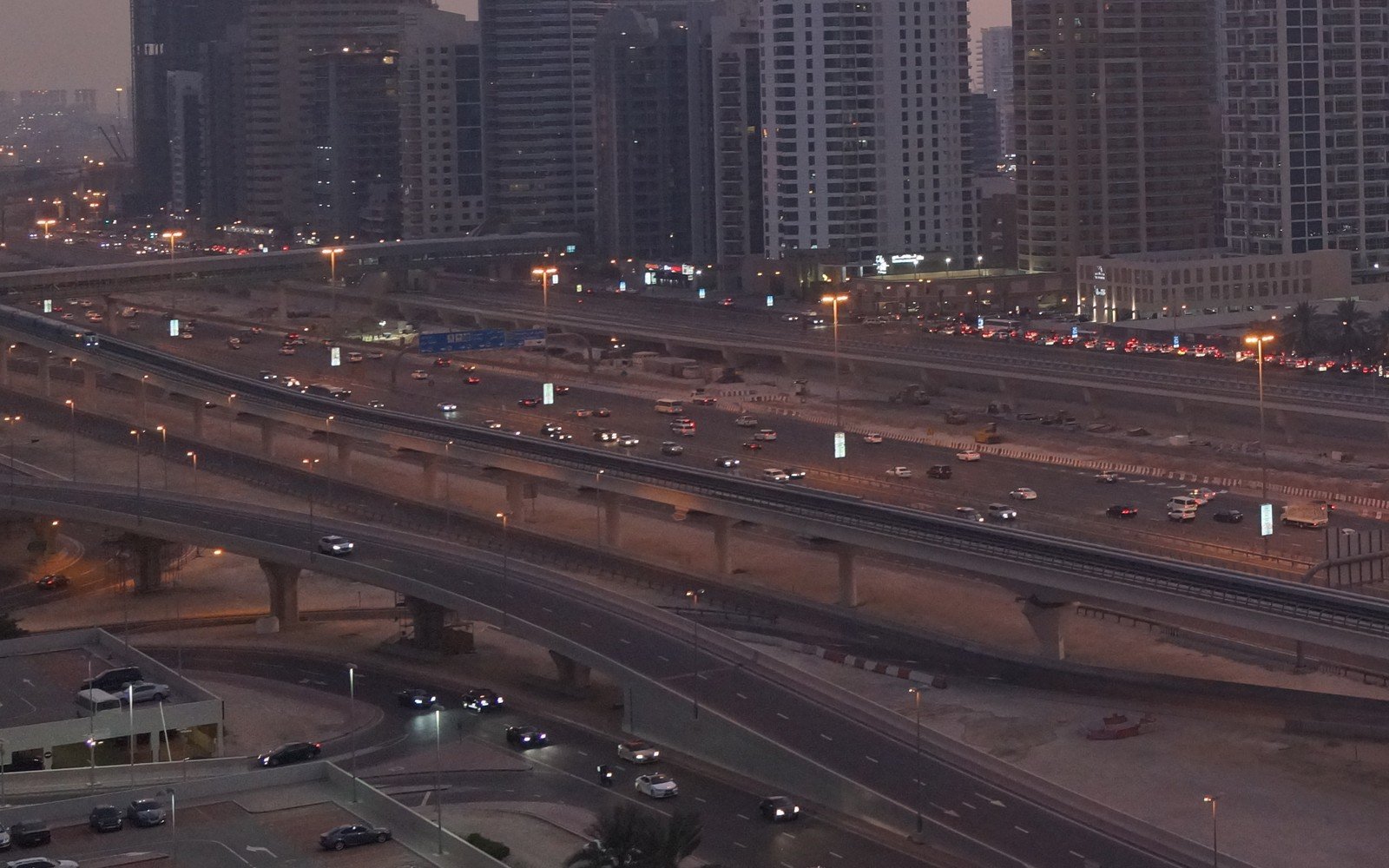
Dubai's Roads and Transport Authority has awarded two contracts for the Al Meydan Street Development Project at a total cost of 1.161 billion dirhams. The authority states that the works were divided into two contracts to accelerate delivery, and that the scheme is scheduled for completion by the end of 2028. The award was published by the authority on 30 August 2026.
The authority describes the project as the development of several key intersections along Al Meydan Street through the construction of 3,700 metres of bridges and 17 kilometres of roads, together with cycling tracks connecting to the existing network, serving residential and development areas with a combined population of more than 500,000.
Neither contractor is named on the authority's announcement, and the split of the 1.161 billion dirhams between the two contracts is not published.
Al Meydan Street is one of Dubai's key strategic corridors, running parallel to and supporting Sheikh Mohammed bin Zayed Road and Al Khail Road. The project will strengthen connectivity across the main road network, provide alternative routes that improve traffic distribution, enhance traffic flow, and increase mobility efficiency between key areas.
Mattar Al Tayer, Director General and Chairman of the Board of Executive Directors, Roads and Transport Authority
Why two contracts and not one
The authority gives its reason on the record. It states that, given the scale of the project and the diversity of its engineering components, the works were divided into two contracts to accelerate implementation and delivery while preserving the overall integration of the scheme.
Splitting a single corridor into two contracts buys parallel working and a second supply chain, and it is a common answer to a fixed completion date on a long linear scheme. It also creates an interface. Two contractors working towards each other along one street, on a live road, share programme dependencies at the boundary and share the traffic management that lets either of them work at all. Where the two scopes meet is where the delay and disruption arguments usually start, and that boundary is not described on the announcement.
What is in each contract
The first contract covers Al Meydan Street from its intersection with Latifa bint Hamdan Street to Umm Suqeim Street, together with Al Marabea' Street from Dubai Hills to Sheikh Mohammed bin Zayed Road, over approximately 14 kilometres. Its principal element is the upgrade of the Al Marabea' and Al Meydan intersection into a grade separated interchange with four lanes in each direction, with bridges extending 1,600 metres in total and a combined capacity of 14,400 vehicles per hour in both directions.
That contract also includes a direct connection between Al Marabea' Street and Sheikh Mohammed bin Zayed Road with three lanes in each direction and a combined capacity of 7,800 vehicles per hour, and a 700 metre elevated link on Dubai to Al Ain Road towards Nad Al Hamar Street serving Nad Al Sheba.
The second contract covers Al Meydan Street from its intersection with First Al Khail Street, through Al Khail Road, to its intersection with Muscat Street, with approximately 2 kilometres of new surface roads linking Al Meydan Street to Latifa bint Hamdan Street. Its principal element is the conversion of the signalised intersection of Al Meydan Street and Muscat Street into a multi level grade separated interchange, comprising bridges extending 1,400 metres in total with four lanes in each direction and a capacity of up to 14,400 vehicles per hour. It also includes an integrated cycling network and underpasses beneath Al Meydan Street to keep the cycle routes continuous.
The performance claims are the authority's own and are reported here as its statements. It says the scheme will raise the capacity of north to south traffic corridors by 18 per cent, and will cut travel time from Al Manama Street and Dubai to Al Ain Road to Umm Suqeim Street from 30 minutes to 10 minutes, which it puts at an improvement of 66 per cent.
The corridor next door
The authority places this award alongside the Latifa bint Hamdan Street Development Project, on which works have recently commenced. That scheme is 12 kilometres long, with seven bridges extending 2,300 metres in total and eight tunnels extending 900 metres, and is also scheduled for completion by the end of 2028.
Taken together the two schemes put two major corridors into the same completion window, in the same part of the city, drawing on the same regional supply chain for structures, asphalt and traffic management. For firms tracking the market that concentration is the useful fact.
What the announcement does not carry is a contractor name for either package, a value for either package taken on its own, a start date on site, or any lot or framework reference. Those figures are not stated here because the authority has not published them.