
World News
Supreme Court lets the election order run, holding that 23 states cannot yet sue over it
By Staff Writer | 26 August 2026
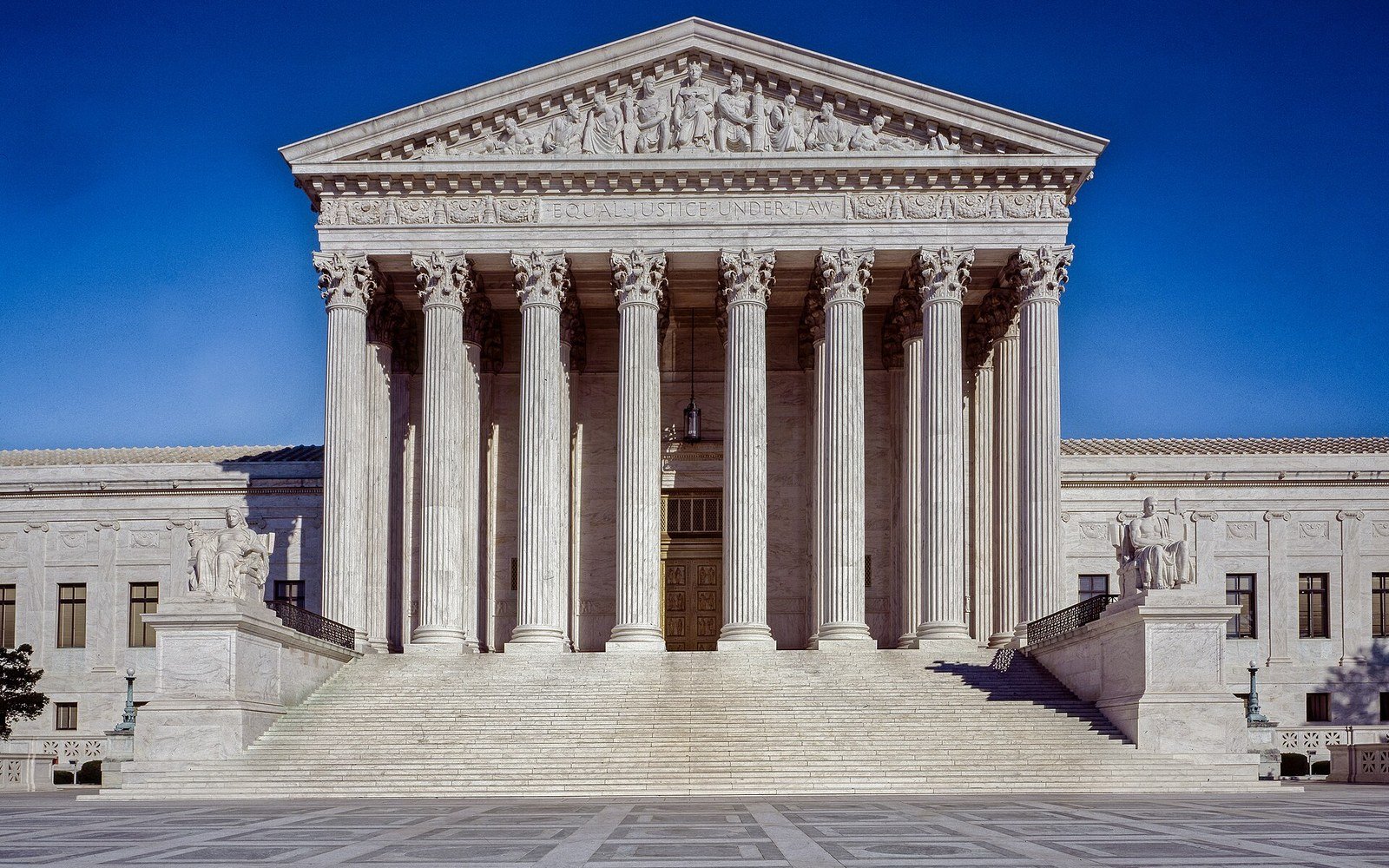
The stay turns on standing and ripeness rather than on the order's lawfulness. No judge has yet held that the order is constitutional, and the court's opinion says so.
The Supreme Court has stayed an injunction that stopped two sections of an executive order on federal elections from taking effect before the November midterms. The order is Executive Order No 14399, published at 91 Federal Register 17125. Twenty three states and the District of Columbia had sued in the District of Massachusetts, won a final judgment forbidding implementation as against them, and kept it through a refusal of a stay in the First Circuit. The government then applied to the Supreme Court, and on 24 August it succeeded.
The government did not have to show that the order is lawful. It had to show that it was likely to win its argument that the district court had no jurisdiction, and that is what the court held.
What the order does, in the court's own description
Three provisions were in issue. Section 2(a) directs the Secretary of Homeland Security to take appropriate action to create state citizenship lists of residents who will be over 18 at an upcoming federal election, and to send them to each state. Section 2(b) requires the Attorney General to prioritise the investigation and, as appropriate, the prosecution of state and local officials who issue federal ballots to ineligible voters. Section 3(b) directs the Postal Service to begin a rulemaking that includes several proposed provisions, one of them a unique barcode on outbound ballot envelopes.
The court treated the qualifying words as decisive. States need not use the lists. The Secretary may compile and send them only to the extent feasible and consistent with applicable law. No proposed provision has to survive into a final rule. On that reading the order is an internal instruction to the President's own subordinates, it imposes nothing on anybody outside the executive branch, and the states suffer no concrete harm from it.
The reasoning runs through what the court called an unduly long chain of inferences: whether the lists are feasible before the midterms, how the Secretary would keep the work consistent with applicable law, and what action he would consider appropriate. Any prediction about that, the court said, quoting an earlier case of its own, is no more than conjecture.
Two dissents, and what they do not say
Justice Sotomayor, joined by Justice Kagan, would have held the challenge justiciable now, reading sections 2(a) and 2(b) together rather than separately: the incomplete list of confirmed citizens is what the prosecutions in the next subsection would run on. She began by narrowing what the decision decides.
Today's decision does not address whether the President's attempts to interfere with States' administration of the November 2026 elections are lawful
Justice Sonia Sotomayor, dissenting, joined by Justice Elena Kagan
Justice Jackson dissented separately and at length, on the equities rather than only on jurisdiction.
This ruling violates well-established precedents concerning this Court's equitable discretion and needlessly injects chaos and uncertainty into the upcoming midterm elections
Justice Ketanji Brown Jackson, dissenting
Her wider objection is that the court's own line of cases now catches election challenges from both directions: too late once an election is close, and too early while an agency has not yet issued a final rule.
Strip the subject matter out and this is a ripeness decision of a kind any construction lawyer will recognise. A direction that is expressed as internal, conditional on feasibility and subject to applicable law is very hard to challenge before it bites, and by the time it bites the timetable has usually moved on. The lesson travels: the point at which an instruction becomes reviewable is a question of drafting as much as of substance.
What is still standing
The stay is not the end of the litigation. It runs while the government's appeal is pending and terminates automatically if certiorari is denied, or on the sending down of the judgment if certiorari is granted. The court closed the per curiam opinion by saying as much itself.
The Court's disposition of this application does not mean that any measure taken by the Government to implement the Order will necessarily be lawful. On that score, time will tell
The Court, per curiam
The injunction stayed on Monday was the one entered in June by the district judge in Massachusetts and upheld by the First Circuit in late July, and it protected only the twenty four jurisdictions that brought that action. A second injunction, entered on 11 August in a separate action brought by non profit groups, extends to every state and was not the subject of Monday's order. The executive order itself was signed on 31 March. No court has yet held that it is constitutional, and both dissents make a point of saying that the majority has not held so either.