
Middle East Construction
Definitive agreements signed for a fourth container terminal at Jeddah Islamic Port, adding up to 2.6 million TEU on an initial 434 million dollars
By Staff Writer | 26 August 2026
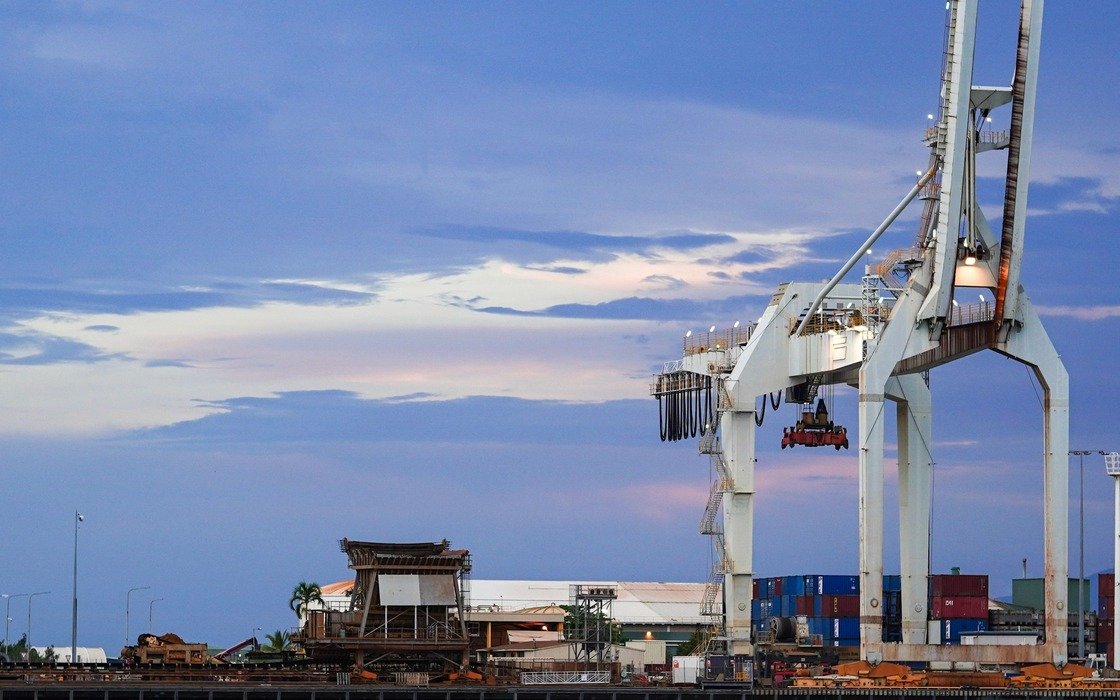
The terminal will be built inside the existing concession and will carry new deep-water berths and ten ship-to-shore cranes. No construction programme, contractor or completion date has been published.
Red Sea Gateway Terminal and CMA CGM Group have signed definitive agreements to develop and operate a fourth container terminal at Jeddah Islamic Port, in collaboration with the Saudi Ports Authority. The signing took place in Paris on Monday alongside a French and Saudi investment roundtable, and was announced on Tuesday.
The figures given are an initial investment of approximately 434 million dollars, which the parties state as 1.6 billion riyals, and additional annual handling capacity of up to approximately 2.6 million twenty foot equivalent units. The word initial is the parties' own and is worth holding on to: the announcement gives no total project cost and no phasing.
What is being built
Terminal 4 is to be created as part of the existing Red Sea Gateway Terminal concession rather than as a separate award. The scope described is new deep-water berths sized to take the largest container vessels now trading, ten new ship-to-shore cranes, and terminal technologies the parties describe as advanced without naming them.
Nothing has been published about how any of that will be procured. There is no named marine works contractor, no dredging package, no design team, no start on site and no completion date. There is no split of the 434 million dollars between marine civils, paving and yard works, and equipment, and the ten cranes alone would ordinarily account for a material share of a figure that size.
Today's signing marks a significant milestone in the development of RSGT and Jeddah Islamic Port. The agreement also reflects our long-term commitment to supporting Saudi Arabia's logistics ambitions as well as our service to valuable customers.
Lars Vang Christensen, Group Chief Executive Officer of Red Sea Gateway Terminal
Why building inside a live concession is the harder job
A greenfield terminal is difficult. A terminal added to a concession that is already handling ships is a different problem, because the marine works, the dredging and the crane installation all have to be sequenced around berths that cannot be closed for long, and access to the site runs through an operating yard.
On a working port the programme risk usually sits in possessions rather than in the permanent works. Where the operator is also the employer, and one of the partners is a shipping line whose own vessels call at the quay, the question of who bears the cost of a berth kept out of service is answered by the joint venture documents rather than by the construction contract.
The commercial logic of the partnership is stated plainly enough by both sides. The terminal operator brings the concession and the local operation, the shipping line brings cargo and a terminal portfolio that it says now runs to interests in 64 terminals worldwide. The Saudi Ports Authority has described the agreement as reflecting the attractiveness of the maritime sector to investors and as building on its own work to develop port infrastructure, and has tied it to the National Transport and Logistics Strategy.
Today, alongside RSGT, we are taking a major new step forward in Jeddah with a state-of-the-art terminal designed to handle the world's largest container vessels and equipped with the most advanced technologies.
Rodolphe Saade, Chairman and Chief Executive Officer of CMA CGM Group
Definitive agreements are the point at which a scheme becomes fundable rather than the point at which it becomes buildable. The next documents that will tell anyone anything are the marine works tender and the crane order, and neither has appeared. Until they do, the only firm numbers in the public record are the investment figure, the capacity figure and the count of cranes.